English Translation
In the name of Allah, the Most Gracious, the Most Merciful
The Principles of Divine Justice
(Qur’anic Perspective)
-
Accountability for What Is Hidden and Manifest
Arabic:
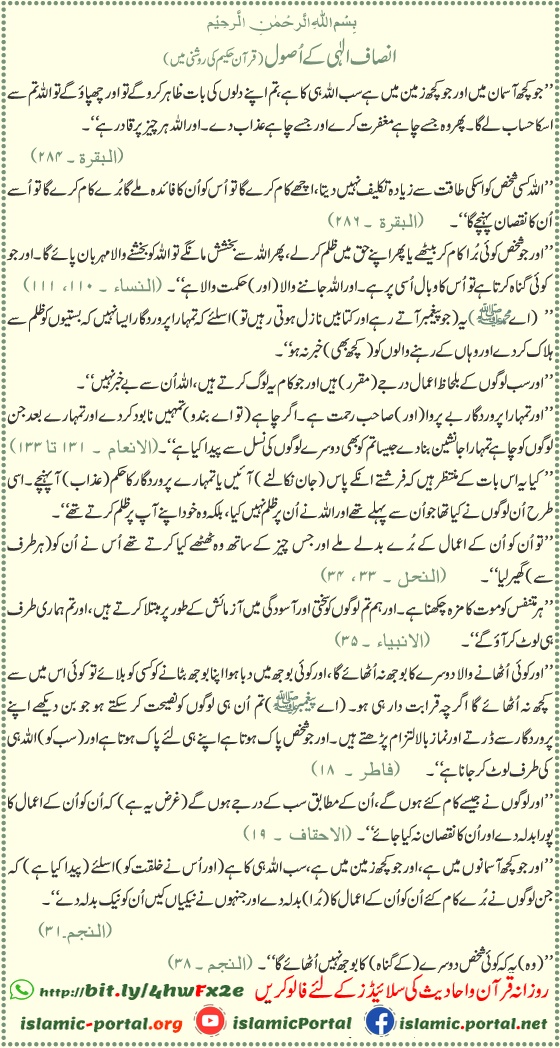
لِّلَّهِ مَا فِي السَّمَاوَاتِ وَمَا فِي الْأَرْضِ ۗ وَإِن تُبْدُوا مَا فِي أَنفُسِكُمْ أَوْ تُخْفُوهُ يُحَاسِبْكُم بِهِ اللَّهُ ۖ فَيَغْفِرُ لِمَن يَشَاءُ وَيُعَذِّبُ مَن يَشَاءُ ۗ وَاللَّهُ عَلَىٰ كُلِّ شَيْءٍ قَدِيرٌ
Transliteration:
Lillāhi mā fī al-samāwāti wa-mā fī al-arḍi, wa-in tubdū mā fī anfusikum aw tukhfūhu yuḥāsibkum bihi Allāh, fa-yaghfiru li-man yashāʾu wa-yuʿadhdhibu man yashāʾ, wa-Allāhu ʿalā kulli shayʾin qadīr
Translation:
"To Allah belongs whatever is in the heavens and whatever is in the earth. Whether you reveal what is within yourselves or conceal it, Allah will call you to account for it. Then He forgives whom He wills and punishes whom He wills. And Allah has power over all things." (Al-Baqarah 284)
-
No Soul Is Burdened Beyond Its Capacity
Arabic:
لَا يُكَلِّفُ اللَّهُ نَفْسًا إِلَّا وُسْعَهَا ۚ لَهَا مَا كَسَبَتْ وَعَلَيْهَا مَا اكْتَسَبَتْ
Transliteration:
Lā yukallifu Allāhu nafsan illā wusʿahā, lahā mā kasabat wa-ʿalayhā mā iktasabat
Translation:
"Allah does not burden a soul beyond its capacity. It shall have the reward of what it has earned, and it shall bear the burden of what it has acquired." (Al-Baqarah 286)
-
Divine Forgiveness and Individual Responsibility
Arabic:
وَمَن يَعْمَلْ سُوءًا أَوْ يَظْلِمْ نَفْسَهُ ثُمَّ يَسْتَغْفِرِ اللَّهَ يَجِدِ اللَّهَ غَفُورًا رَّحِيمًا
وَمَن يَكْسِبْ إِثْمًا فَإِنَّمَا يَكْسِبُهُ عَلَىٰ نَفْسِهِ ۚ وَكَانَ اللَّهُ عَلِيمًا حَكِيمًا
Transliteration:
Wa-man yaʿmal sūʾan aw yaẓlim nafsahu thumma yastaghfiri Allāha yajidi Allāha ghafūran raḥīmā
Wa-man yaksib ithman fa-innamā yaksibuhu ʿalā nafsih, wa-kāna Allāhu ʿalīman ḥakīmā
Translation:
"And whoever commits a wrongdoing or wrongs himself, then seeks forgiveness from Allah, will find Allah Forgiving and Merciful. And whoever earns a sin, he only earns it against himself. And Allah is All-Knowing, All-Wise." (Al-Nisāʾ 110–111)
-
Allah Does Not Destroy Communities Unjustly
Arabic:
ذَٰلِكَ أَن لَّمْ يَكُن رَّبُّكَ مُهْلِكَ الْقُرَىٰ بِظُلْمٍ وَأَهْلُهَا غَافِلُونَ
وَلِكُلٍّ دَرَجَاتٌ مِّمَّا عَمِلُوا ۚ وَمَا رَبُّكَ بِغَافِلٍ عَمَّا يَعْمَلُونَ
وَرَبُّكَ الْغَنِيُّ ذُو الرَّحْمَةِ ۚ إِن يَشَأْ يُذْهِبْكُمْ وَيَسْتَخْلِفْ مِن بَعْدِكُم مَّا يَشَاءُ كَمَا أَنشَأَكُم مِّن ذُرِّيَّةِ قَوْمٍ آخَرِينَ
Transliteration:
Dhālika an lam yakun rabbuka muhlika al-qurā bi-ẓulmin wa-ahluhā ghāfilūn
Wa-li-kullin darajātun mimmā ʿamilū, wa-mā rabbuka bi-ghāfilin ʿammā yaʿmalūn
Wa-rabbuka al-ghaniyyu dhū al-raḥmah, in yashaʾ yudhhibkum wa-yastakhlif min baʿdikum mā yashāʾu kamā anshaʾakum min dhurriyyati qawmin ākharīn
Translation:
"This is because your Lord would not destroy the towns unjustly while their people were unaware. And for all are degrees according to what they have done, and your Lord is not unaware of what they do. And your Lord is the Self-Sufficient, the Possessor of Mercy. If He wills, He can remove you and bring after you whom He wills, just as He produced you from the descendants of another people." (Al-Anʿām 131–133)
-
People Wrong Themselves, Not Allah
Arabic:
هَلْ يَنظُرُونَ إِلَّا أَن تَأْتِيَهُمُ الْمَلَائِكَةُ أَوْ يَأْتِيَ أَمْرُ رَبِّكَ ۚ كَذَٰلِكَ فَعَلَ الَّذِينَ مِن قَبْلِهِمْ ۚ وَمَا ظَلَمَهُمُ اللَّهُ وَلَٰكِن كَانُوا أَنفُسَهُمْ يَظْلِمُونَ
فَأَصَابَهُمْ سَيِّئَاتُ مَا عَمِلُوا وَحَاقَ بِهِم مَّا كَانُوا بِهِ يَسْتَهْزِئُونَ
Transliteration:
Hal yanẓurūna illā an taʾtiyahumu al-malāʾikatu aw yaʾtiya amru rabbik, kadhālika faʿala alladhīna min qablihim, wa-mā ẓalamahumu Allāhu wa-lākin kānū anfusahum yaẓlimūn
Fa-aṣābahum sayyiʾātu mā ʿamilū wa-ḥāqa bihim mā kānū bihi yastahziʾūn
Translation:
"Do they await anything except that the angels should come to them or that the command of your Lord should arrive? Thus did those before them act. Allah did not wrong them, but they were wronging themselves. So the evil consequences of what they did struck them, and they were surrounded by what they used to mock." (Al-Naḥl 33–34)
-
Life as a Test of Hardship and Ease
Arabic:
كُلُّ نَفْسٍ ذَائِقَةُ الْمَوْتِ ۗ وَنَبْلُوكُم بِالشَّرِّ وَالْخَيْرِ فِتْنَةً ۖ وَإِلَيْنَا تُرْجَعُونَ
Transliteration:
Kullu nafsin dhāʾiqatu al-mawt, wa-nabluwukum bi-al-sharri wa-al-khayri fitnah, wa-ilaynā turjaʿūn
Translation:
"Every soul shall taste death. And We test you with evil and with good as a trial, and to Us you will be returned." (Al-Anbiyāʾ 35)
-
No One Bears the Burden of Another
Arabic:
وَلَا تَزِرُ وَازِرَةٌ وِزْرَ أُخْرَىٰ ۚ وَإِن تَدْعُ مُثْقَلَةٌ إِلَىٰ حِمْلِهَا لَا يُحْمَلْ مِنْهُ شَيْءٌ وَلَوْ كَانَ ذَا قُرْبَىٰ ۗ إِنَّمَا تُنذِرُ الَّذِينَ يَخْشَوْنَ رَبَّهُم بِالْغَيْبِ وَأَقَامُوا الصَّلَاةَ ۚ وَمَن تَزَكَّىٰ فَإِنَّمَا يَتَزَكَّىٰ لِنَفْسِهِ ۚ وَإِلَى اللَّهِ الْمَصِيرُ
Transliteration:
Wa-lā taziru wāziratun wizra ukhrā, wa-in tadʿu muthqalatun ilā ḥimlihā lā yuḥmal minhu shayʾun wa-law kāna dhā qurbā, innamā tundhiru alladhīna yakhshawna rabbahum bi-al-ghaybi wa-aqāmū al-ṣalāh, wa-man tazakkā fa-innamā yatazakkā li-nafsih, wa-ilā Allāhi al-maṣīr
Translation:
"No bearer of burdens will bear the burden of another. If a heavily burdened soul calls another to carry part of its burden, nothing of it will be carried, even if he were a close relative. You can only warn those who fear their Lord unseen and establish prayer. And whoever purifies himself does so only for his own benefit, and to Allah is the final return." (Fāṭir 18)
-
People Are Ranked According to Their Deeds
Arabic:
وَلِكُلٍّ دَرَجَاتٌ مِّمَّا عَمِلُوا ۖ وَلِيُوَفِّيَهُمْ أَعْمَالَهُمْ وَهُمْ لَا يُظْلَمُونَ
Transliteration:
Wa-li-kullin darajātun mimmā ʿamilū wa-li-yuwaffiyahum aʿmālahum wa-hum lā yuẓlamūn
Translation:
"And for all are degrees according to what they have done, so that He may fully repay them for their deeds, and they will not be wronged." (Al-Aḥqāf 19)
-
Reward and Punishment According to Deeds
Arabic:
وَلِلَّهِ مَا فِي السَّمَاوَاتِ وَمَا فِي الْأَرْضِ لِيَجْزِيَ الَّذِينَ أَسَاءُوا بِمَا عَمِلُوا وَيَجْزِيَ الَّذِينَ أَحْسَنُوا بِالْحُسْنَى
Transliteration:
Wa-lillāhi mā fī al-samāwāti wa-mā fī al-arḍi li-yajziya alladhīna asāʾū bimā ʿamilū wa-yajziya alladhīna aḥsanū bi-al-ḥusnā
Translation:
"To Allah belongs whatever is in the heavens and whatever is in the earth, so that He may recompense those who did evil for what they did and reward those who did good with the best reward." (Al-Najm 31)
-
No Soul Bears the Sin of Another
Arabic:
أَلَّا تَزِرُ وَازِرَةٌ وِزْرَ أُخْرَىٰ
Transliteration:
Allā taziru wāziratun wizra ukhrā
Translation:
"That no bearer of burdens will bear the burden of another." (Al-Najm 38)