
سات مہلک گناہ

اشاعت: 18-02-2026
شیئر کریں (صدقہ جاریہ):
Saat muhlik gunah Hadith — shirk, jadu, sood aur bade gunahon se bachne ki Islami hidayat

بِسْمِ اللہِ الرَّحْمٰنِ الرَّحِیْمِ

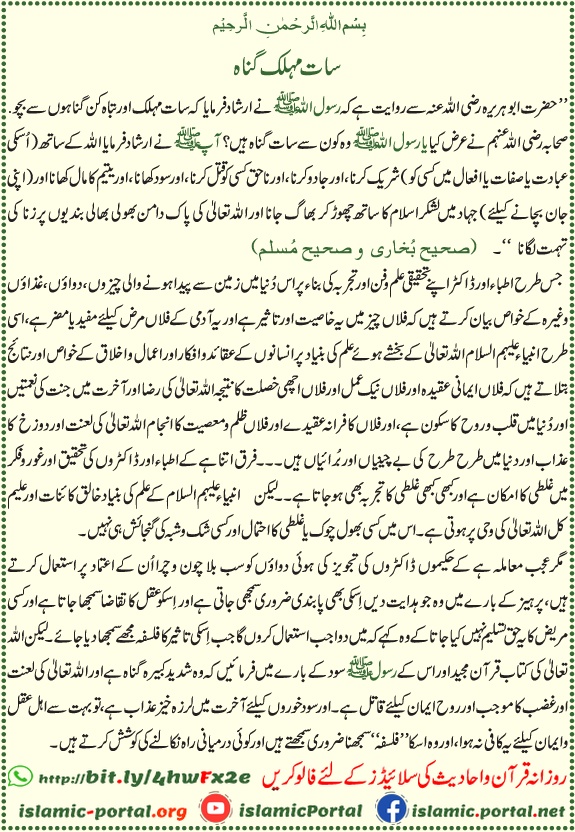
سات مہلک گناہ

  • ”حضرت ابوہریرہ رضی اللہ عنہ سے روایت ہے کہ رسول اللہ نے ارشاد فرمایا کہ سات مہلک اور تباہ کن گناہوں سے بچو۔ صحابہ رضی اللہ عنہم نے عرض کیا یا رسول اللہ وہ کون سے سات گناہ ہیں؟ آپ نے ارشاد فرمایا اللہ کے ساتھ (اُسکی عبادت یا صفات یا افعال میں کسی کو) شریک کرنا، اور جادو کرنا، اور ناحق کسی کو قتل کرنا، اور سود کھانا، اور یتیم کا مال کھانا اور (اپنی جان بچانے کیلئے) جہاد میں لشکر اسلام کا ساتھ چھوڑ کر بھاگ جانا اور اللہ تعالیٰ کی پاک دامن بھولی بھالی بندیوں پر زنا کی تہمت لگانا “۔ (صحیح بُخاری و صحیح مُسلم)

جس طرح اطباء اور ڈاکٹر اپنے تحقیقی علم و فن اور تجربہ کی بناء پر اس دُنیا میں زمین سے پیدا ہونے والی چیزوں، دواؤں، غذاؤں وغیرہ کے خواص بیان کرتے ہیں کہ فلاں چیز میں یہ خاصیت اور تاثیر ہے اور یہ آدمی کے فلاں مرض کیلئے مفید یا مضر ہے، اسی طرح انبیاء علیہم السلام اللہ تعالیٰ کے بخشے ہوئے علم کی بنیاد پر انسانوں کے عقائد و افکار اور اعمال و اخلاق کے خواص اور نتائج بتلاتے ہیں کہ فلاں ایمانی عقیدہ اور فلاں نیک عمل اور فلاں اچھی خصلت کا نتیجہ اللہ تعالیٰ کی رضا اور آخرت میں جنت کی نعمتیں اور دُنیا میں قلب و روح کا سکون ہے، اور فلاں کافرانہ عقیدے اور فلاں ظلم و معصیت کا انجام اللہ تعالیٰ کی لعنت اور دوزخ کا عذاب اور دنیا میں طرح طرح کی بے چینیاں اور بُرائیاں ہیں۔۔۔ فرق اتنا ہے کہ اطباء اور ڈاکٹروں کی تحقیق اور غور و فکر میں غلطی کا امکان ہے اور کبھی کبھی غلطی کا تجربہ بھی ہو جاتا ہے۔۔۔ لیکن انبیاء علیہم السلام کے علم کی بنیاد خالق کائنات اور علیم کل اللہ تعالیٰ کی وحی پر ہوتی ہے۔ اس میں کسی بھول چوک یا غلطی کا احتمال اور کسی شک و شبہ کی گنجائش ہی نہیں۔

مگر عجب معاملہ ہے کے حکیموں ڈاکٹروں کی تجویز کی ہوئی دواؤں کو سب بلا چون و چرا اُن کے اعتماد پر استعمال کرتے ہیں، پرہیز کے بارے میں وہ جو ہدایت دیں اسکی بھی پابندی ضروری سمجھی جاتی ہے اور اسکو عقل کا تقاضا سمجھا جاتا ہے اور کسی مریض کا یہ حق تسلیم نہیں کیا جاتا کہ وہ کہے کہ میں دوا جب استعمال کروں گا جب اسکی تاثیر کا فلسفہ مجھے سمجھا دیا جائے۔ لیکن اللہ تعالیٰ کی کتاب قرآن مجید اور اس کے رسول سود کے بارے میں فرمائیں کہ وہ شدید کبیرہ گناہ ہے اور اللہ تعالیٰ کی لعنت اور غضب کا موجب اور روح ایمان کیلئے قاتل ہے۔ اور سود خوروں کیلئے آخرت میں لرزہ خیز عذاب ہے، تو بہت سے اہل عقل و ایمان کیلئے یہ کافی نہ ہوا، اور وہ اسکا ”فلسفہ“ سمجھنا ضروری سمجھتے ہیں اور کوئی درمیانی راہ نکالنے کی کوشش کرتے ہیں۔

بِسْمِ اللّٰهِ الرَّحْمٰنِ الرَّحِیْمِ
In the name of Allah, the Most Gracious, the Most Merciful

Seven Destructive Sins

Sayyiduna Abu Hurairah (RA) reported that the Messenger of Allah said:
“Avoid the seven destructive and ruinous sins.”
The Companions asked: “O Messenger of Allah, what are those seven?”
He said: “Associating partners with Allah (in His worship, attributes, or actions), practicing sorcery, killing a person unjustly, consuming interest (riba), consuming the wealth of an orphan, fleeing from the battlefield during jihad, and accusing chaste, innocent believing women of adultery.”
(Sahih al-Bukhari, Sahih Muslim)

Just as physicians and doctors, on the basis of their research, knowledge, and experience, explain the properties of things found in this world—such as medicines and foods—stating that a particular thing has a certain effect and is beneficial or harmful for a specific illness, similarly the Prophets (peace be upon them), on the basis of the knowledge granted to them by Allah, explain the nature and consequences of human beliefs, actions, and morals.

They clarify that certain true beliefs, righteous deeds, and noble qualities lead to the pleasure of Allah, the blessings of Paradise in the Hereafter, and peace of heart and soul in this world; while false beliefs, oppression, and sinful actions lead to the curse of Allah, the punishment of Hell in the Hereafter, and various forms of unrest and evil in worldly life.

The difference, however, is that the research and conclusions of physicians and doctors may contain errors, and sometimes mistakes do occur. But the knowledge of the Prophets is based on divine revelation from Allah—the Creator and the All-Knowing. In it, there is no possibility of error, mistake, or doubt.

Yet it is astonishing that people readily use medicines prescribed by doctors without questioning them and consider it necessary to follow their instructions about precautions, seeing this as a demand of reason. No patient is considered justified in saying that he will only take medicine after fully understanding the philosophy behind its effectiveness.

But when the Book of Allah, the Noble Qur’an, and His Messenger declare that interest (riba) is a grave major sin, a cause of Allah’s curse and wrath, destructive for faith, and a source of severe punishment in the Hereafter, many people—even among those who consider themselves rational and believing—do not find this sufficient. Instead, they insist on understanding its “philosophy” and attempt to find some middle way.