بِسْمِ اللہِ الرَّحْمٰنِ الرَّحِیْمِ
نفس کے حقوق و آداب (قرآن و حدیث کی روشنی میں)
اپنی ہیئت درست رکھتا ہے :۔
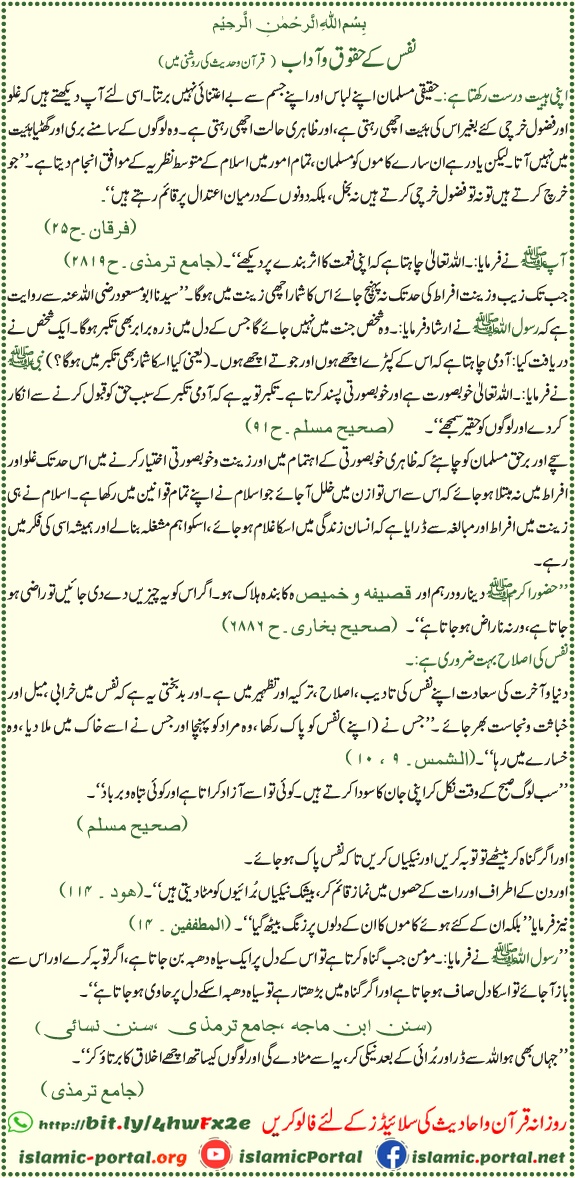
حقیقی مسلمان اپنے لباس اور اپنے جسم سے بے اعتنائی نہیں برتتا۔ اسی لئے آپ دیکھتے ہیں کہ غلو اور فضول خرچی کئے بغیر اس کی ہیئت اچھی رہتی ہے، اور ظاہری حالت اچھی رہتی ہے۔ وہ لوگوں کے سامنے بری اور گھٹیا ہیئت میں نہیں آتا۔ لیکن یاد رہے ان سارے کاموں کو مسلمان، تمام امور میں اسلام کے متوسط نظریہ کے موافق انجام دیتا ہے۔ ”جو خرچ کرتے ہیں تو نہ تو فضول خرچی کرتے ہیں نہ بخل، بلکہ دونوں کے درمیان اعتدال پر قائم رہتے ہیں“۔ (الفرقان ۔ ۶۷)
آپ ﷺ نے فرمایا : اللہ تعالیٰ چاہتا ہے کہ اپنی نعمت کا اثر بندے پر دیکھے“۔ (جامع ترمذی ۔ ح ۲۸۱۹)
جب تک زیب و زینت افراط کی حد تک نہ پہنچ جائے اس کا شمار اچھی زینت میں ہوگا۔ ”سیدنا ابو مسعود رضی اللہ عنہ سے روایت ہے کہ رسول اللہ ﷺ نے ارشاد فرمایا :۔ وہ شخص جنت میں نہیں جائے گا جس کے دل میں ذرہ برابر بھی تکبر ہوگا۔ ایک شخص نے دریافت کیا: آدمی چاہتا ہے کہ اس کے کپڑے اچھے ہوں اور جوتے اچھے ہوں۔ (یعنی کیا اسکا شمار بھی تکبر میں ہوگا؟) نبی ﷺ نے فرمایا :۔ اللہ تعالیٰ خوبصورت ہے اور خوبصورتی پسند کرتا ہے۔ تکبر تو یہ ہے کہ آدمی تکبر کے سبب حق کو قبول کرنے سے انکار کر دے اور لوگوں کو حقیر سمجھے“۔ (صحیح مسلم ۔ ح ۹۱)
سچے اور برحق مسلمان کو چاہئے کہ ظاہری خوبصورتی کے اہتمام میں اور زینت و خوبصورتی اختیار کرنے میں اس حد تک غلو اور افراط میں نہ مبتلا ہو جائے کہ اس سے اس توازن میں خلل آجائے جو اسلام نے اپنے تمام قوانین میں رکھا ہے۔ اسلام نے ہی زینت میں افراط اور مبالغہ سے ڈرایا ہے کہ انسان زندگی میں اسکا غلام ہو جائے، اسکو اہم مشغلہ بنالے اور ہمیشہ اسی کی فکر میں رہے۔
نفس کی اصلاح بہت ضروری ہے :- دنیا و آخرت کی سعادت اپنے نفس کی تادیب، اصلاح، تزکیہ اور تطہیر میں ہے۔ اور بدبختی یہ ہے کہ نفس میں خرابی، میل اور خباثت و نجاست بھر جائے۔ ”جس نے (اپنے) نفس کو پاک رکھا، وہ مراد کو پہنچا اور جس نے اسے خاک میں ملا دیا، وہ خسارے میں رہا“۔ (الشمس ۔ ۹ ، ۱۰)
اور اگر گناہ کر بیٹھے تو توبہ کریں اور نیکیاں کریں تاکہ نفس پاک ہو جائے :-
-
”اور دن کے اطراف اور رات کے حصوں میں نماز قائم کر، بیشک نیکیاں بُرائیوں کو مٹا دیتی ہیں“۔ (ھود ۔ ۱۱۴)
-
نیز فرمایا ”بلکہ ان کے کئے ہوئے کاموں کا ان کے دلوں پر زنگ بیٹھ گیا“۔ (المطففین ۔ ۱۴)
-
”رسول اللہ ﷺ نے فرمایا :۔ مومن جب گناہ کرتا ہے تو اس کے دل پر ایک سیاہ دھبہ بن جاتا ہے، اگر توبہ کرے اور اس سے باز آجائے تو اسکا دل صاف ہو جاتا ہے اور اگر گناہ میں بڑھتا رہے تو سیاہ دھبہ اسکے دل پر حاوی ہو جاتا ہے“۔ (سنن ابن ماجہ ، جامع ترمذی ، سُنن نسائی)
-
”جہاں بھی ہو اللہ سے ڈر اور بُرائی کے بعد نیکی کر، یہ اسے مٹا دے گی اور لوگوں کیساتھ اچھے اخلاق کا برتاؤ کر“۔ (جامع ترمذی)
English Translation
In the name of Allah, the Most Gracious, the Most Merciful
Rights and Etiquettes of the Self (In the Light of Qur’an & Hadith)
Maintaining a Proper Appearance
A true Muslim does not neglect his clothing or his body. Therefore, without exaggeration or extravagance, his appearance remains neat and dignified. He does not present himself before people in a poor or disgraceful state. However, it must be remembered that in all such matters, a Muslim follows the balanced and moderate approach of Islam.
Qur’anic ayah:
Arabic: الَّذِيۡنَ اِذَاۤ اَنۡفَقُوۡا لَمۡ يُسۡرِفُوۡا وَلَمۡ يَقۡتُرُوۡا وَكَانَ بَيۡنَ ذٰلِكَ قَوَامًا
Transliteration: Alladhīna idhā anfaqū lam yusrifū wa lam yaqturū wa kāna bayna dhālika qawāmā
Translation: “And those who, when they spend, are neither extravagant nor miserly, but keep a balance between the two.” (Al-Furqan 67)
The Prophet ﷺ said:
“Allah loves to see the effect of His blessing upon His servant.”
(Jami‘ al-Tirmidhi, Hadith 2819)
Adornment is considered good so long as it does not reach the level of excess.
“Sayyiduna Abu Mas‘ud (RA) reported: The Messenger of Allah ﷺ said: ‘A person will not enter Paradise in whose heart there is even an atom’s weight of arrogance.’ A man asked: ‘A person likes his clothes to be good and his shoes to be good (is this arrogance)?’ The Prophet ﷺ replied: ‘Allah is Beautiful and loves beauty. Arrogance is to reject the truth and to look down upon people.’”
(Sahih Muslim, Hadith 91)
A true and sincere Muslim should not become so excessive in outward adornment and beauty that it disturbs the balance established by Islam in all matters. Islam warns against exaggeration and obsession with adornment to the extent that a person becomes its slave and makes it the central concern of life.
“The Messenger of Allah ﷺ said: ‘Perished is the slave of the dinar and the dirham, and the fine garments. If he is given these, he is pleased; if not, he is displeased.’”
(Sahih Bukhari, Hadith 2886)
Reform and Purification of the Self
The success of this world and the Hereafter lies in disciplining, reforming, purifying, and cleansing one’s self (nafs). Misfortune lies in allowing corruption, impurity, and filth to fill it.
Qur’anic ayah:
Arabic: قَدۡ اَفۡلَحَ مَنۡ زَكّٰٮهَا وَقَدۡ خَابَ مَنۡ دَسّٰٮهَا
Transliteration: Qad aflaḥa man zakkāhā, wa qad khāba man dassāhā
Translation: “He has succeeded who purifies it, and he has failed who corrupts it.” (Ash-Shams 9–10)
The Messenger of Allah ﷺ said:
“All people go out in the morning and sell themselves; some free themselves, and others destroy themselves.”
(Sahih Muslim)
Repentance and Good Deeds Purify the Self
If a person commits sin, he should repent and perform good deeds so that his soul may be purified.
Qur’anic ayah:
Arabic: وَاَقِمِ الصَّلٰوةَ طَرَفَىِ النَّهَارِ وَزُلَفًا مِّنَ الَّيۡلِؕ اِنَّ الۡحَسَنٰتِ يُذۡهِبۡنَ السَّيِّاٰتِؕ
Transliteration: Wa aqimiṣ-ṣalāta ṭarafayi an-nahāri wa zulafan mina al-layl; innal-ḥasanāti yudhhibna as-sayyi’āt
Translation: “Establish prayer at the two ends of the day and in the early part of the night; indeed, good deeds remove bad deeds.” (Hud 114)
Qur’anic ayah:
Arabic: كَلَّا بَلۡ رَانَ عَلٰى قُلُوۡبِهِمۡ مَّا كَانُوۡا يَكۡسِبُوۡنَ
Transliteration: Kallā bal rāna ‘alā qulūbihim mā kānū yaksibūn
Translation: “No! Rather, the stain has covered their hearts because of what they used to earn.” (Al-Mutaffifin 14)
The Messenger of Allah ﷺ said:
“When a believer commits a sin, a black mark appears on his heart. If he repents and refrains, his heart is cleansed; but if he continues in sin, the mark increases until it covers his heart.”
(Sunan Ibn Majah, Jami‘ al-Tirmidhi, Sunan al-Nasa’i)
He ﷺ also said:
“Fear Allah wherever you are, follow up a bad deed with a good deed—it will erase it—and deal with people with good character.”
(Jami‘ al-Tirmidhi)