بِسْمِ اللہِ الرَّحْمٰنِ الرَّحِیْمِ
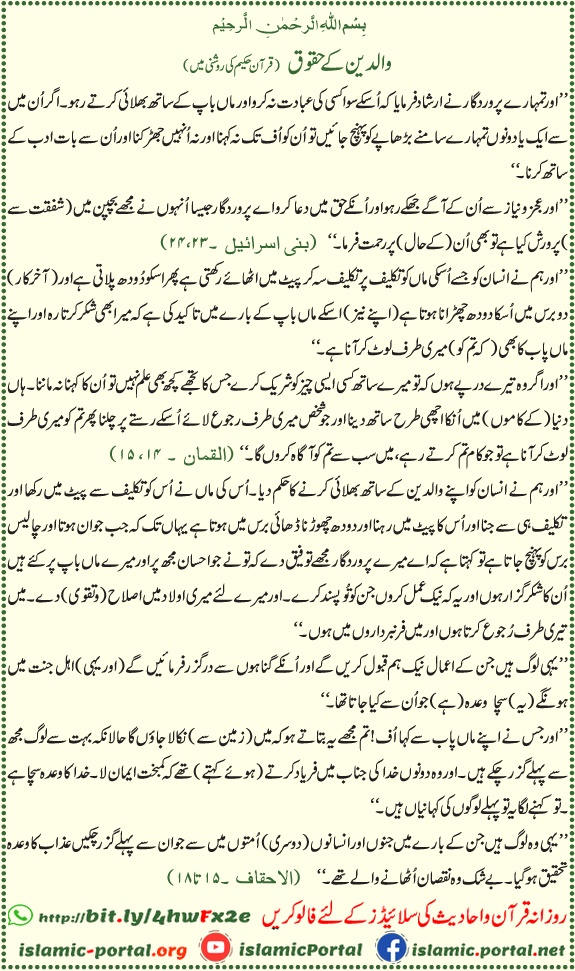
والدین کے حقوق (قرآن حکیم کی روشنی میں)
-
”اور تمہارے پروردگار نے ارشاد فرمایا کہ اُسکے سوا کسی کی عبادت نہ کرو اور ماں باپ کے ساتھ بھلائی کرتے رہو۔ اگر اُن میں سے ایک یا دونوں تمہارے سامنے بڑھاپے کو پہنچ جائیں تو اُن کو اُف تک نہ کہنا اور نہ اُنہیں جھڑکنا اور اُن سے بات ادب کے ساتھ کرنا“۔ ”اور عجز و نیاز سے اُن کے آگے جھکے رہو اور اُنکے حق میں دعا کرو اے پروردگار جیسا اُنہوں نے مجھے بچپن میں (شفقت سے ) پرورش کیا ہے تو بھی اُن (کے حال) پر رحمت فرما“۔ (بنی اسرائیل ۔ ۲۳ ، ۲۴)
-
”اور ہم نے انسان کو جسے اُسکی ماں کو تکلیف پر تکلیف سہ کر پیٹ میں اٹھائے رکھتی ہے پھر اسکو دودھ پلاتی ہے اور (آخر کار) دو برس میں اُسکا دودھ چھڑانا ہوتا ہے (اپنے نیز) اسکے ماں باپ کے بارے میں تاکید کی ہے کہ میرا بھی شکر کرتا رہ اور اپنے ماں باپ کا بھی (کہ تم کو) میری طرف لوٹ کر آنا ہے“۔ ”اور اگر وہ تیرے درپے ہوں کہ تو میرے ساتھ کسی ایسی چیز کو شریک کرے جس کا تجھے کچھ بھی علم نہیں تو اُن کا کہنا نہ ماننا۔ ہاں دنیا (کے کاموں) میں اُنکا اچھی طرح ساتھ دینا اور جو شخص میری طرف رجوع لائے اُسکے رستے پر چلنا پھر تم کو میری طرف لوٹ کر آنا ہے تو جو کام تم کرتے رہے، میں سب سے تم کو آگاہ کروں گا“۔ (لقمان ۔ ۱۴ ، ۱۵)
-
”اور ہم نے انسان کو اپنے والدین کے ساتھ بھلائی کرنے کا حکم دیا۔ اُس کی ماں نے اُس کو تکلیف سے پیٹ میں رکھا اور تکلیف ہی سے جنا اور اُس کا پیٹ میں رہنا اور دودھ چھوڑنا ڈھائی برس میں ہوتا ہے یہاں تک کہ جب جوان ہوتا اور چالیس برس کو پہنچ جاتا ہے تو کہتا ہے کہ اے میرے پروردگار مجھے توفیق دے کہ تو نے جو احسان مجھ پر اور میرے ماں باپ پر کئے ہیں اُن کا شکر گزار ہوں اور یہ کہ نیک عمل کروں جن کو تُو پسند کرے۔ اور میرے لئے میری اولاد میں اصلاح (وتقوی) دے۔ میں تیری طرف رُجوع کرتا ہوں اور میں فرمانبرداروں میں ہوں“۔ ”یہی لوگ ہیں جن کے اعمال نیک ہم قبول کریں گے اور اُنکے گناہوں سے درگزر فرمائیں گے (اور یہی) اہل جنت میں ہونگے (یہ) سچا وعدہ (ہے) جو اُن سے کیا جاتا تھا“۔ ”اور جس نے اپنے ماں باپ سے کہا اُف ! تم مجھے یہ بتاتے ہو کہ میں (زمین سے) نکالا جاؤں گا حالانکہ بہت سے لوگ مجھ سے پہلے گزر چکے ہیں۔ اور وہ دونوں خدا کی جناب میں فریاد کرتے (ہوئے کہتے) تھے کہ کمبخت ایمان لا۔ خدا کا وعدہ سچا ہے تو کہنے لگا یہ تو پہلے لوگوں کی کہانیاں ہیں“۔ ”یہی وہ لوگ ہیں جن کے بارے میں جنوں اور انسانوں (دوسری) اُمتوں میں سے جو ان سے پہلے گزر چکیں عذاب کا وعدہ تحقیق ہو گیا۔ بے شک وہ نقصان اُٹھانے والے تھے“۔ (الاحقاف ۔ ۱۵ تا ۱۸)
English Translation
بِسْمِ اللّٰهِ الرَّحْمٰنِ الرَّحِیْمِ
In the name of Allah, the Most Gracious, the Most Merciful
Rights of Parents
(In the light of the Noble Qur’an)
وَقَضٰى رَبُّكَ اَلَّا تَعۡبُدُوۡۤا اِلَّاۤ اِيَّاهُ وَبِالۡوَالِدَيۡنِ اِحۡسَانًا ؕ اِمَّا يَبۡلُغَنَّ عِنۡدَكَ الۡكِبَرَ اَحَدُهُمَاۤ اَوۡ كِلٰهُمَا فَلَا تَقُلۡ لَّهُمَاۤ اُفٍّ وَّلَا تَنۡهَرۡهُمَا وَقُلۡ لَّهُمَا قَوۡلًا كَرِيۡمًا
وَاخۡفِضۡ لَهُمَا جَنَاحَ الذُّلِّ مِنَ الرَّحۡمَةِ وَقُلۡ رَّبِّ ارۡحَمۡهُمَا كَمَا رَبَّيٰنِىۡ صَغِيۡرًا
Transliteration:
Wa qaḍā rabbuka allā ta‘budū illā iyyāhu wa bil-wālidayni iḥsānā. Immā yablughanna ‘indakal-kibara aḥaduhumā aw kilāhumā fa-lā taqul lahumā uffin wa lā tanharhumā wa qul lahumā qawlan karīmā.
Wakhfiḍ lahumā janāḥa adh-dhulli mina ar-raḥmati wa qul rabbirḥamhumā kamā rabbayānī ṣaghīrā.
Translation:
“And your Lord has decreed that you worship none but Him, and that you show kindness to parents. If one or both of them reach old age in your presence, do not say to them even ‘uff’, nor scold them, but speak to them noble words. And lower to them the wing of humility out of mercy and say: ‘My Lord! Have mercy upon them as they brought me up when I was small.’” (Surah Bani Isra’il 17:23–24)
Qur’anic Ayah:
وَوَصَّيۡنَا الۡاِنۡسَانَ بِوَالِدَيۡهِۚ حَمَلَتۡهُ اُمُّهٗ وَهۡنًا عَلٰى وَهۡنٍ وَّفِصَالُهٗ فِىۡ عَامَيۡنِ اَنِ اشۡكُرۡ لِىۡ وَلِوَالِدَيۡكَۚ اِلَىَّ الۡمَصِيۡرُ
وَاِنۡ جَاهَدٰكَ عَلٰٓى اَنۡ تُشۡرِكَ بِىۡ مَا لَيۡسَ لَكَ بِهٖ عِلۡمٌ فَلَا تُطِعۡهُمَاۚ وَصَاحِبۡهُمَا فِى الدُّنۡيَا مَعۡرُوۡفًا وَّاتَّبِعۡ سَبِيۡلَ مَنۡ اَنَابَ اِلَىَّۚ ثُمَّ اِلَىَّ مَرۡجِعُكُمۡ فَاُنَبِّئُكُمۡ بِمَا كُنۡتُمۡ تَعۡمَلُوۡنَ
Transliteration:
Wa waṣṣaynal-insāna bi-wālidayh. ḥamalathu ummuhu wahnā ‘alā wahnin wa fiṣāluhu fī ‘āmayni anishkur lī wa li-wālidayk, ilayyal-maṣīr.
Wa in jāhadāka ‘alā an tushrika bī mā laysa laka bihī ‘ilmun fa-lā tuṭi‘humā wa ṣāḥibhumā fid-dunyā ma‘rūfā, wattabi‘ sabīla man anāba ilayya, thumma ilayya marji‘ukum fa-unabbi’ukum bimā kuntum ta‘malūn.
Translation:
“And We have enjoined upon man concerning his parents—his mother carried him with hardship upon hardship, and his weaning is in two years—(saying): ‘Be grateful to Me and to your parents; to Me is the return.’
But if they strive to make you associate with Me that of which you have no knowledge, then do not obey them; yet keep their company in this world with kindness, and follow the path of those who turn to Me. Then to Me is your return, and I shall inform you of what you used to do.” (Surah Luqman 31:14–15)
Qur’anic Ayah:
وَ وَصَّیۡنَا الۡاِنۡسَانَ بِوَالِدَیۡهِ اِحۡسَانًا ؕ حَمَلَتۡهُ اُمُّهٗ كُرۡهًا وَّوَضَعَتۡهُ كُرۡهًا ؕ وَحَمۡلُهٗ وَفِصٰلُهٗ ثَلٰثُوۡنَ شَهۡرًا ؕ حَتّٰۤی اِذَا بَلَغَ اَشُدَّهٗ وَبَلَغَ اَرۡبَعِیۡنَ سَنَةً ۙ قَالَ رَبِّ اَوۡزِعۡنِیۡۤ اَنۡ اَشۡكُرَ نِعۡمَتَكَ الَّتِیۡۤ اَنۡعَمۡتَ عَلَیَّ وَعَلٰی وَالِدَیَّ وَاَنۡ اَعۡمَلَ صَالِحًا تَرۡضٰىهُ وَاَصۡلِحۡ لِیۡ فِیۡ ذُرِّیَّتِیۡ ؕ اِنِّیۡ تُبۡتُ اِلَیۡكَ وَاِنِّیۡ مِنَ الۡمُسۡلِمِیۡنَ
Transliteration:
Wa waṣṣaynā al-insāna bi-wālidayhi iḥsānan, ḥamalathu ummuhu kurhan wa waḍaʿathu kurhan, wa ḥamluhu wa fiṣāluhu thalāthūna shahrā. Ḥattā idhā balagha ashuddahu wa balagha arbaʿīna sanatan qāla rabbi awziʿnī an ashkura niʿmataka allatī anʿamta ʿalayya wa ʿalā wālidayya wa an aʿmala ṣāliḥan tarḍāhu wa aṣliḥ lī fī dhurriyyatī, innī tubtu ilayka wa innī mina al-muslimīn.
Translation:
And We have enjoined upon man kindness to his parents. His mother carried him with hardship and gave birth to him with hardship, and his gestation and weaning is thirty months. Until, when he reaches maturity and reaches forty years, he says: “My Lord, enable me to be grateful for Your favor which You have bestowed upon me and upon my parents, and to do righteousness that pleases You, and make righteous for me my offspring. Indeed, I have repented to You, and indeed I am of the Muslims.” (Al-Ahqāf 46:15)
اُولٰٓئِكَ الَّذِیۡنَ نَتَقَبَّلُ عَنۡهُمۡ اَحۡسَنَ مَا عَمِلُوۡا وَنَتَجَاوَزُ عَنۡ سَیِّاٰتِهِمۡ فِیۡۤ اَصۡحٰبِ الۡجَنَّةِ ؕ وَعۡدَ الصِّدۡقِ الَّذِیۡ كَانُوۡا یُوۡعَدُوۡنَ
Transliteration:
Ulāʾika alladhīna nataqabbalu ʿanhum aḥsana mā ʿamilū wa natajāwazu ʿan sayyiʾātihim fī aṣḥābi al-jannah; waʿda aṣ-ṣidqi alladhī kānū yūʿadūn.
Translation:
Those are the ones from whom We will accept the best of what they did and overlook their evil deeds among the companions of Paradise — a true promise which they were promised. (Al-Ahqāf 46:16)
وَالَّذِیۡ قَالَ لِوَالِدَیۡهِ اُفٍّ لَّكُمَاۤ اَتَعِدٰنِنِیۡۤ اَنۡ اُخۡرَجَ وَقَدۡ خَلَتِ الۡقُرُوۡنُ مِنۡ قَبۡلِیۡ ۚ وَهُمَا یَسۡتَغِیۡثٰنِ اللّٰهَ وَیۡلَكَ اٰمِنۡ ؕ اِنَّ وَعۡدَ اللّٰهِ حَقٌّ ۚ فَیَقُوۡلُ مَا هٰذَاۤ اِلَّاۤ اَسَاطِیۡرُ الْاَوَّلِیْنَ
Transliteration:
Wa alladhī qāla li-wālidayhi uffin lakumā ataʿidāninī an ukh’raja wa qad khalati al-qurūnu min qabli, wa humā yastaghīthāni Allāha waylaka āmin; inna waʿda Allāhi ḥaqq, fa yaqūlu mā hādhā illā asāṭīru al-awwalīn.
Translation:
But the one who says to his parents, “Uff to you! Do you promise me that I will be brought forth [from the grave], while generations have passed away before me?” And they both call upon Allah for help, “Woe to you! Believe. Indeed, the promise of Allah is true.” But he says, “This is nothing but the tales of the former peoples.” (Al-Ahqāf 46:17)
اُولٰٓئِكَ الَّذِیۡنَ حَقَّ عَلَیۡهِمُ الۡقُوۡلُ فِیۡۤ اُمَمٍ قَدۡ خَلَتۡ مِنۡ قَبۡلِهِمۡ مِّنَ الۡجِنِّ وَالۡاِنۡسِ ۚ اِنَّهُمۡ كَانُوۡا خٰسِرِیۡنَ
Transliteration:
Ulāʾika alladhīna ḥaqqa ʿalayhimu al-qawlu fī umamin qad khalat min qablihim mina al-jinni wa al-insi; innahum kānū khāsirīn.
Translation:
Those are the ones upon whom the word has come into effect among nations that passed away before them of jinn and humankind. Indeed, they were losers. (Al-Ahqāf 46:18)