بِسْمِ اللہِ الرَّحْمٰنِ الرَّحِیْمِ
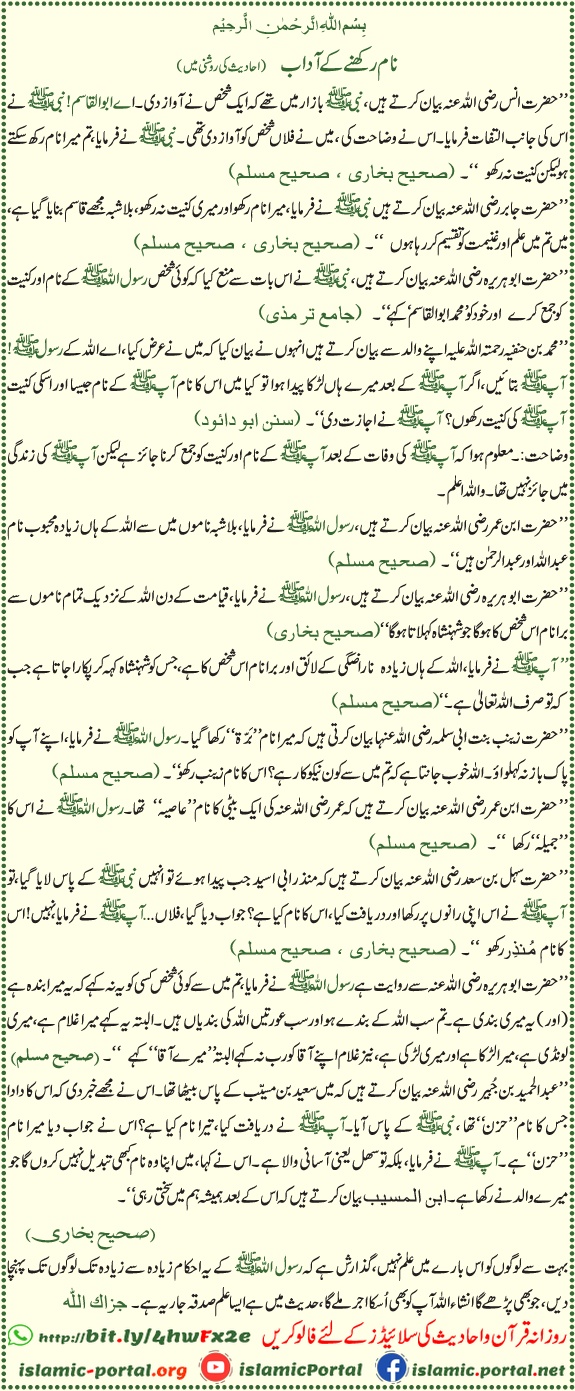
نام رکھنے کے آداب (احادیث کی روشنی میں)
-
”حضرت انس رضی اللہ عنہ بیان کرتے ہیں، نبی ﷺ بازار میں تھے کہ ایک شخص نے آواز دی۔ اے ابوالقاسم ! نبی ﷺ نے اس کی جانب التفات فرمایا۔ اس نے وضاحت کی، میں نے فلاں شخص کو آواز دی تھی۔ نبی ﷺ نے فرمایا، تم میرا نام رکھ سکتے ہو لیکن کنیت نہ رکھو “۔ (صحیح بخاری ، صحیح مسلم)
-
”حضرت جابر رضی اللہ عنہ بیان کرتے ہیں نبی ﷺ نے فرمایا، میرا نام رکھو اور میری کنیت نہ رکھو، بلاشبہ مجھے قاسم بنایا گیا ہے، میں تم میں علم اور غنیمت کو تقسیم کر رہا ہوں “۔ (صحیح بخاری ، صحیح مسلم)
-
”حضرت ابوہریرہ رضی اللہ عنہ بیان کرتے ہیں، نبی ﷺ نے اس بات سے منع کیا کہ کوئی شخص رسول اللہ ﷺ کے نام اور کنیت کو جمع کرے اور خود کو محمد ابوالقاسم کہے“۔ (جامع ترمذی)
-
”محمد بن حنفیہ رحمتہ اللہ علیہ اپنے والد سے بیان کرتے ہیں انہوں نے بیان کیا کہ میں نے عرض کیا، اے اللہ کے رسول ﷺ ! آپ ﷺ بتائیں، اگر آپ ﷺ کے بعد میرے ہاں لڑکا پیدا ہوا تو کیا میں اس کا نام آپ ﷺ کے نام جیسا اور اسکی کنیت آپ ﷺ کی کنیت رکھوں؟ آپ ﷺ نے اجازت دی“۔ (سنن ابو دائود)
وضاحت :۔ معلوم ہوا کہ آپ ﷺ کی وفات کے بعد آپ ﷺ کے نام اور کنیت کو جمع کرنا جائز ہے لیکن آپ ﷺ کی زندگی میں جائز نہیں تھا۔ واللہ اعلم۔
-
”حضرت ابن عمر رضی اللہ عنہ بیان کرتے ہیں، رسول اللہ ﷺ نے فرمایا، بلاشبہ ناموں میں سے اللہ کے ہاں زیادہ محبوب نام عبداللہ اور عبدالرحمٰن ہیں“۔ (صحیح مسلم)
-
”حضرت ابوہریرہ رضی اللہ عنہ بیان کرتے ہیں، رسول اللہ ﷺ نے فرمایا، قیامت کے دن اللہ کے نزدیک تمام ناموں سے برا نام اس شخص کا ہوگا جو شہنشاہ کہلاتا ہوگا“ (صحیح بخاری) آپ ﷺ نے فرمایا، اللہ کے ہاں زیادہ ناراضگی کے لائق اور برا نام اس شخص کا ہے، جس کو شہنشاہ کہہ کر پکارا جاتا ہے جب کہ تو صرف اللہ تعالیٰ ہے“۔ (صحیح مسلم)
-
”حضرت زینب بنت ابی سلمہ رضی اللہ عنہا بیان کرتی ہیں کہ میرا نام ”بَرَّہ“ رکھا گیا۔ رسول اللہ ﷺ نے فرمایا، اپنے آپ کو پاک باز نہ کہلواؤ۔ اللہ خوب جانتا ہے کہ تم میں سے کون نیکو کار ہے؟ اس کا نام زینب رکھو“۔ (صحیح مسلم)
-
”حضرت ابن عمر رضی اللہ عنہ بیان کرتے ہیں کہ عمر رضی اللہ عنہ کی ایک بیٹی کا نام ”عاصیہ“ تھا۔ رسول اللہ ﷺ نے اس کا ”جمیلہ“ رکھا “۔ (صحیح مسلم)
-
”حضرت سہل بن سعد رضی اللہ عنہ بیان کرتے ہیں کہ منذر ابی اسید جب پیدا ہوئے تو انہیں نبی ﷺ کے پاس لایا گیا، تو آپ ﷺ نے اس اپنی رانوں پر رکھا اور دریافت کیا، اس کا نام کیا ہے؟ جواب دیا گیا، فلاں... آپ ﷺ نے فرمایا، نہیں! اس کا نام مُنذِر رکھو “۔ (صحیح بخاری ، صحیح مسلم)
-
”حضرت ابوہریرہ رضی اللہ عنہ سے روایت ہے رسول اللہ ﷺ نے فرمایا تم میں سے کوئی شخص کسی کو یہ نہ کہے کہ یہ میرا بندہ ہے (اور) یہ میری بندی ہے۔ تم سب اللہ کے بندے ہو اور سب عورتیں اللہ کی بندیاں ہیں۔ البتہ یہ کہے میرا غلام ہے، میری لونڈی ہے، میرا لڑکا ہے اور میری لڑکی ہے، نیز غلام اپنے آقا کو رب نہ کہے البتہ ”میرے آقا“ کہے “۔ (صحیح مسلم)
-
”عبدالحمید بن جُبیر رضی اللہ عنہ بیان کرتے ہیں کہ میں سعید بن مسیّب کے پاس بیٹھا تھا۔ اس نے مجھے خبر دی کہ اس کا دادا جس کا نام ”حَزن“ تھا، نبی ﷺ کے پاس آیا۔ آپ ﷺ نے دریافت کیا، تیرا نام کیا ہے؟ اس نے جواب دیا میرا نام ”حَزن“ ہے۔ آپ ﷺ نے فرمایا، بلکہ تو سہل یعنی آسانی والا ہے۔ اس نے کہا، میں اپنا وہ نام کبھی تبدیل نہیں کروں گا جو میرے والد نے رکھا ہے۔ ابن المسیب بیان کرتے ہیں کہ اس کے بعد ہمیشہ ہم میں سختی رہی“۔ (صحیح بخاری)
بہت سے لوگوں کو اس بارے میں علم نہیں، گذارش ہے کہ رسول اللہ ﷺ کے یہ احکام زیادہ سے زیادہ تک لوگوں تک پہنچا دیں، جو بھی پڑھے گا انشاء اللہ آپ کو بھی اُسکا اجر ملے گا، حدیث میں ہے ایسا علم صدقہ جاریہ ہے۔ جزاک اللہ
English Translation
Bismillāh ir-Raḥmān ir-Raḥīm
Etiquettes of Naming (In the Light of Hadith)
“Sayyiduna Anas (RA) reported: The Prophet ﷺ was in the marketplace when a man called out, ‘O Abul-Qasim!’ The Prophet ﷺ turned toward him. The man clarified, ‘I was calling someone else.’ The Prophet ﷺ said: ‘You may keep my name, but do not adopt my kunyah (title: Abul-Qasim).’”
(Sahih Bukhari, Sahih Muslim)
“Sayyiduna Jabir (RA) reported that the Prophet ﷺ said: ‘Keep my name, but do not adopt my kunyah. Indeed, I have been made a distributor; I distribute knowledge and spoils among you.’”
(Sahih Bukhari, Sahih Muslim)
“Sayyiduna Abu Hurairah (RA) reported: The Prophet ﷺ forbade that a person combine the name and kunyah of the Messenger ﷺ and call himself Muhammad Abul-Qasim.”
(Jami‘ Tirmidhi)
“Muhammad bin al-Hanafiyyah (RA) narrated from his father: I asked, ‘O Messenger of Allah ﷺ! If a son is born to me after you, may I name him after you and give him your kunyah?’ The Prophet ﷺ permitted it.”
(Sunan Abu Dawud)
Clarification: It is understood that after the passing of the Prophet ﷺ, combining his name and kunyah became permissible, but during his lifetime it was not allowed. والله أعلم
“Sayyiduna Ibn ‘Umar (RA) reported: The Messenger of Allah ﷺ said: ‘Among the names, the most beloved to Allah are ‘Abdullah and ‘Abdur-Rahman.’”
(Sahih Muslim)
“Sayyiduna Abu Hurairah (RA) reported: The Messenger of Allah ﷺ said: ‘On the Day of Judgment, the most detestable name in the sight of Allah will be that of a person who calls himself “Shahanshah” (King of kings).’”
(Sahih Bukhari)
And he ﷺ also said: “The most disliked and anger-provoking name in the sight of Allah is that of a person who is called ‘Shahanshah,’ whereas the true King is only Allah.”
(Sahih Muslim)
“Sayyidah Zaynab bint Abi Salamah (RA) reported: My name was ‘Barrah.’ The Messenger of Allah ﷺ said: ‘Do not declare yourselves pure; Allah knows best who among you is righteous.’ He renamed her Zaynab.”
(Sahih Muslim)
“Sayyiduna Ibn ‘Umar (RA) reported: One of the daughters of ‘Umar (RA) was named ‘Asiyah. The Messenger of Allah ﷺ renamed her ‘Jamilah.’”
(Sahih Muslim)
“Sayyiduna Sahl bin Sa‘d (RA) reported: When Mundhir ibn Abi Usayd was born, he was brought to the Prophet ﷺ. The Prophet ﷺ placed him on his lap and asked, ‘What is his name?’ They replied, ‘Such-and-such.’ The Prophet ﷺ said: ‘No, his name is Mundhir.’”
(Sahih Bukhari, Sahih Muslim)
“Sayyiduna Abu Hurairah (RA) reported: The Messenger of Allah ﷺ said: ‘None of you should say: this is my slave (male) or this is my slave-girl. All of you are slaves of Allah, and all women are maidservants of Allah. Rather, say: my servant, my maid, my boy, or my girl. And a servant should not call his master “Rabb” (lord); rather, he should say: my master.’”
(Sahih Muslim)
“‘Abdul-Hamid bin Jubair (RA) reported: I was sitting with Sa‘id bin al-Musayyib, and he told me that his grandfather, whose name was ‘Ḥazn’ (hardness), came to the Prophet ﷺ. The Prophet ﷺ asked: ‘What is your name?’ He replied: ‘Ḥazn.’ The Prophet ﷺ said: ‘Rather, you are Sahl (ease).’ He said: ‘I will not change the name given to me by my father.’ Ibn al-Musayyib said: ‘Hardness remained among us after that.’”
(Sahih Bukhari)
Many people are unaware of these teachings. It is requested that the commands of the Messenger of Allah ﷺ be conveyed to as many people as possible. Whoever reads and benefits from them, In shā’ Allāh, you will also share in the reward. In Hadith, such knowledge is described as a form of ongoing charity (Sadaqah Jariyah).
JazākAllāh Khayran.