
مسلمان کا تعلق اپنے نفس کے ساتھ

اشاعت: 18-02-2026
شیئر کریں (صدقہ جاریہ):
Muslim ka nafs se ta‘alluq Quran o Hadith ki roshni mein | jism, rooh aur zindagi ka islami balance

بِسْمِ اللہِ الرَّحْمٰنِ الرَّحِیْمِ

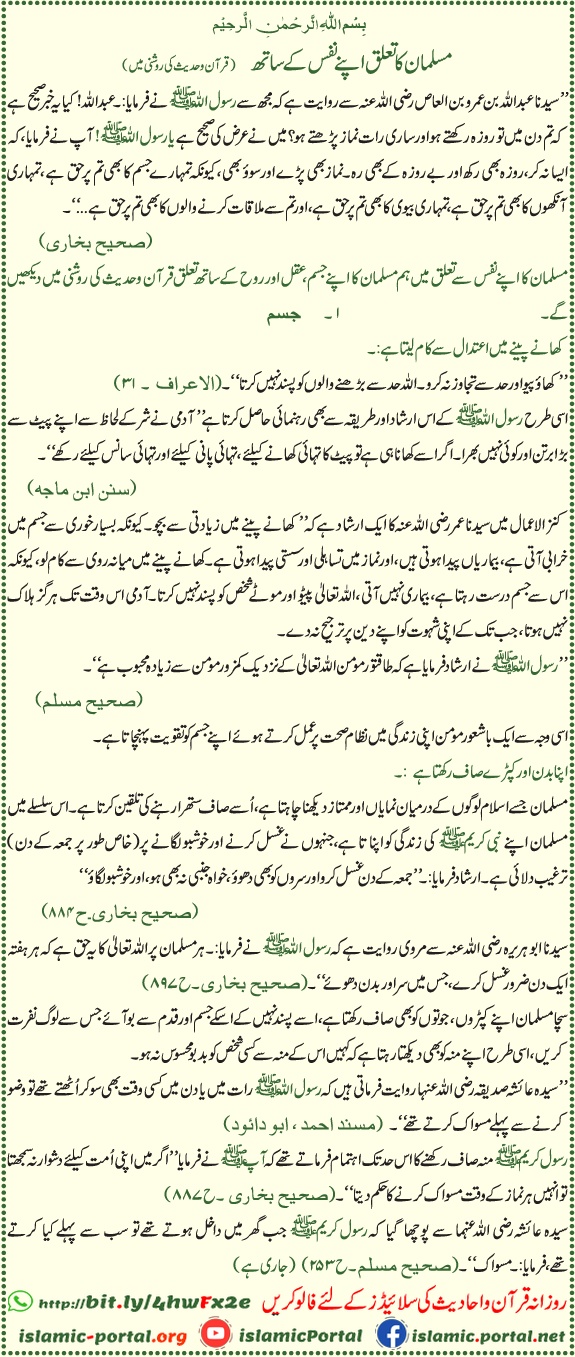
مسلمان کا تعلق اپنے نفس کے ساتھ (قرآن و حدیث کی روشنی میں)

  • ”سیدنا عبداللہ بن عمرو بن العاص رضی اللہ عنہ سے روایت ہے کہ مجھ سے رسول اللہ نے فرمایا:۔ عبداللہ! کیا یہ خبر صحیح ہے کہ تم دن میں تو روزہ رکھتے ہو اور ساری رات نماز پڑھتے ہو؟ میں نے عرض کی صحیح ہے یا رسول اللہ ! آپ نے فرمایا، کہ ایسا نہ کر، روزہ بھی رکھ اور بے روزہ کے بھی رہ۔ نماز بھی پڑھے اور سوؤ بھی، کیونکہ تمہارے جسم کا بھی تم پر حق ہے، تمہاری آنکھوں کا بھی تم پر حق ہے، تمہاری بیوی کا بھی تم پر حق ہے، اور تم سے ملاقات کرنے والوں کا بھی تم پر حق ہے..“۔ (صحیح بخاری)

مسلمان کا اپنے نفس سے تعلق میں ہم مسلمان کا اپنے جسم، عقل اور روح کے ساتھ تعلق قرآن و حدیث کی روشنی میں دیکھیں گے۔

۱- جسم

کھانے پینے میں اعتدال سے کام لیتا ہے :-

  • ”کھاؤ پیو اور حد سے تجاوز نہ کرو۔ اللہ حد سے بڑھنے والوں کو پسند نہیں کرتا“۔ (الاعراف ۔ ۳۱)

اسی طرح رسول اللہ کے اس ارشاد اور طریقہ سے بھی رہنمائی حاصل کرتا ہے ”آدمی نے شر کے لحاظ سے اپنے پیٹ سے بُرا برتن اور کوئی نہیں بھرا۔ اگر اسے کھانا ہی ہے تو پیٹ کا تہائی کھانے کیلئے، تہائی پانی کیلئے اور تہائی سانس کیلئے رکھے“۔ (سنن ابن ماجہ)

کنز العمال میں سیدنا عمر رضی اللہ عنہ کا ایک ارشاد ہے کہ ”کھانے پینے میں زیادتی سے بچو۔ کیونکہ بسیار خوری سے جسم میں خرابی آتی ہے، بیماریاں پیدا ہوتی ہیں، اور نماز میں تساہلی اور سستی پیدا ہوتی ہے۔ کھانے پینے میں میانہ روی سے کام لو، کیونکہ اس سے جسم درست رہتا ہے، بیماری نہیں آتی، اللہ تعالیٰ پیٹو اور موٹے شخص کو پسند نہیں کرتا۔ آدمی اس وقت تک ہرگز ہلاک نہیں ہوتا، جب تک کے اپنی شہوت کو اپنے دین پر ترجیح نہ دے۔

  • ”رسول اللہ نے ارشاد فرمایا ہے کہ طاقتور مومن اللہ تعالیٰ کے نزدیک کمزور مومن سے زیادہ محبوب ہے“۔ (صحیح مسلم)

اسی وجہ سے ایک باشعور مومن اپنی زندگی میں نظام صحت پر عمل کرتے ہوئے اپنے جسم کو تقویت پہنچاتا ہے۔

اپنا بدن اور کپڑے صاف رکھتا ہے :- مسلمان جسے اسلام لوگوں کے درمیان نمایاں اور ممتاز دیکھنا چاہتا ہے، اُسے صاف ستھرا رہنے کی تلقین کرتا ہے۔ اس سلسلے میں مسلمان اپنے نبی کریم کی زندگی کو اپناتا ہے، جنہوں نے غسل کرنے اور خوشبو لگانے پر (خاص طور پر جمعہ کے دن) ترغیب دلائی ہے۔ ارشاد فرمایا:۔ ”جمعہ کے دن غسل کرو اور سروں کو بھی دھوؤ، خواہ جنبی نہ بھی ہو، اور خوشبو لگاؤ“ (صحیح بخاری ۔ ح ۸۸۴)

  • ”سیدنا ابوہریرہ رضی اللہ عنہ سے مروی روایت ہے کہ رسول اللہ نے فرمایا :۔ ہر مسلمان پر اللہ تعالیٰ کا یہ حق ہے کہ ہر ہفتہ ایک دن ضرور غسل کرے، جس میں سر اور بدن دھوئے“۔ (صحیح بخاری ۔ ح ۸۹۷)

سچا مسلمان اپنے کپڑوں، جوتوں کو بھی صاف رکھتا ہے، اسے پسند نہیں کہ اسکے جسم اور قدم سے بو آئے جس سے لوگ نفرت کریں، اسی طرح اپنے منہ کو بھی دیکھتا رہتا ہے کہ کہیں اس کے منہ سے کسی شخص کو بدبو محسوس نہ ہو۔

  • ”سیدہ عائشہ صدیقہ رضی اللہ عنہا روایت فرماتی ہیں کہ رسول اللہ رات میں یا دن میں کسی وقت بھی سو کر اُٹھتے تھے تو وضو کرنے سے پہلے مسواک کرتے تھے“۔ (مسند احمد ، ابو دائود)

رسول کریم منہ صاف رکھنے کا اس حد تک اہتمام فرماتے تھے کہ آپ نے فرمایا ”اگر میں اپنی اُمت کیلئے دشوار نہ سمجھتا تو انہیں ہر نماز کے وقت مسواک کرنے کا حکم دیتا“۔ (صحیح بخاری ۔ ح ۸۸۷)

  • ”سیدہ عائشہ رضی اللہ عنہا سے پوچھا گیا کہ رسول کریم جب گھر میں داخل ہوتے تھے تو سب سے پہلے کیا کرتے تھے، فرمایا:۔ مسواک“۔ (صحیح مسلم ۔ ح ۲۵۳)

بِسْمِ اللہِ الرَّحْمٰنِ الرَّحِیْمِ

A Muslim’s Relationship with His Nafs (Self)

(In the light of Qur’an and Hadith)

“Sayyiduna Abdullah bin ‘Amr bin al-‘As (رضی اللہ عنہ) narrates that the Messenger of Allah said to me:
‘O Abdullah! Is it true that you fast during the day and stand in prayer the entire night?’
I replied: Yes, O Messenger of Allah .
He said: ‘Do not do so. Fast and also leave fasting at times; pray and also sleep. For your body has a right over you, your eyes have a right over you, your wife has a right over you, and those who visit you have a right over you.’”
(Ṣaḥīḥ al-Bukhārī)

In the relationship of a Muslim with his nafs, we will examine — in the light of Qur’an and Hadith — his relationship with his body, intellect, and soul.

1 — The Body

Moderation in eating and drinking

Qur’anic Ayah:

وَكُلُوۡا وَاشۡرَبُوۡا وَلَا تُسۡرِفُوۡا ۚ اِنَّهٗ لَا يُحِبُّ الۡمُسۡرِفِيۡنَ

Transliteration:
Wa kulū wa’šrabū wa lā tusrifū, innahū lā yuḥibbul-musrifīn.

Translation:
“Eat and drink, but do not be excessive. Indeed, He does not like those who exceed limits.” (Al-A‘rāf 31)

Likewise, guidance is obtained from the statement and practice of the Messenger of Allah :

“A human being has filled no vessel worse than his stomach. It is sufficient for the son of Adam to eat a few morsels to keep his back straight. But if he must eat, then one-third for food, one-third for drink, and one-third for breath.”
(Sunan Ibn Mājah)

In Kanz al-‘Ummāl, a statement of Sayyiduna ‘Umar (رضی اللہ عنہ) is reported:

“Avoid excess in eating and drinking, for overeating corrupts the body, causes diseases, and brings laziness in prayer. Adopt moderation in eating and drinking, for it keeps the body healthy and prevents illness. Allah does not like a gluttonous and obese person. A person is not destroyed until he gives preference to his desires over his religion.”

“The strong believer is more beloved to Allah than the weak believer.”
(Ṣaḥīḥ Muslim)

For this reason, a conscious believer strengthens his body by following a disciplined and healthy lifestyle.

Maintaining cleanliness of body and clothing

Islam encourages the Muslim — whom it wishes to see distinguished and exemplary among people — to remain clean and well-groomed.

In this regard, a Muslim follows the life of the Noble Prophet , who encouraged bathing and applying fragrance (especially on Fridays). He said:

“Perform ghusl on Friday, wash your heads even if you are not in a state of janābah, and apply perfume.”
(Ṣaḥīḥ al-Bukhārī, 884)

“Sayyiduna Abu Hurairah (رضی اللہ عنہ) narrates that the Messenger of Allah said: It is the right of Allah upon every Muslim that he should bathe at least once every week, washing his head and body.”
(Ṣaḥīḥ al-Bukhārī, 897)

A true Muslim keeps his clothes and shoes clean. He dislikes that any unpleasant odor should come from his body or feet causing discomfort to others. Likewise, he takes care of the cleanliness of his mouth so that no foul smell harms anyone.

“Sayyidah ‘Ā’ishah (رضی اللہ عنہا) narrates that whenever the Messenger of Allah woke up — whether at night or during the day — he would use the miswāk before performing wuḍū.”
(Musnad Aḥmad, Abū Dāwūd)

The Messenger of Allah was so particular about oral cleanliness that he said:

“If I had not feared hardship for my Ummah, I would have commanded them to use the miswāk before every prayer.”
(Ṣaḥīḥ al-Bukhārī, 887)

“It was asked of Sayyidah ‘Ā’ishah (رضی اللہ عنہا): What did the Messenger of Allah do first when he entered his home?
She replied: ‘He would use the miswāk.’”
(Ṣaḥīḥ Muslim, 253)