بِسْمِ اللہِ الرَّحْمٰنِ الرَّحِیْمِ
جھوٹ (احادیث کی روشنی میں)
-
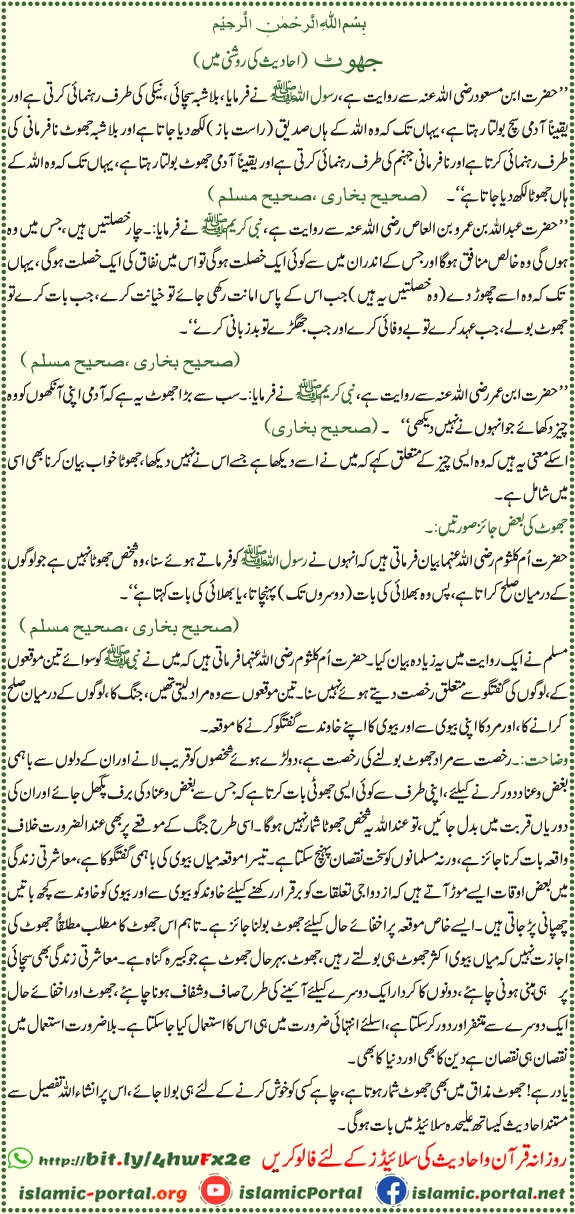
”حضرت ابن مسعود رضی اللہ عنہ سے روایت ہے، رسول اللہ ﷺ نے فرمایا، بلاشبہ سچائی، نیکی کی طرف رہنمائی کرتی ہے اور یقیناً آدمی سچ بولتا رہتا ہے، یہاں تک کہ وہ اللہ کے ہاں صدیق (راست باز) لکھ دیا جاتا ہے اور بلاشبہ جھوٹ نافرمانی کی طرف رہنمائی کرتا ہے اور نافرمانی جہنم کی طرف رہنمائی کرتی ہے اور یقیناً آدمی جھوٹ بولتا رہتا ہے، یہاں تک کہ وہ اللہ کے ہاں جھوٹا لکھ دیا جاتا ہے“۔ (صحیح بخاری ، صحیح مسلم)
-
”حضرت عبداللہ بن عمرو بن العاص رضی اللہ عنہ سے روایت ہے، نبی کریم ﷺ نے فرمایا:۔ چار خصلتیں ہیں، جس میں وہ ہوں گی وہ خالص منافق ہوگا اور جس کے اندر ان میں سے کوئی ایک خصلت ہوگی تو اس میں نفاق کی ایک خصلت ہوگی، یہاں تک کہ وہ اسے چھوڑ دے (وہ خصلتیں یہ ہیں) جب اس کے پاس امانت رکھی جائے تو خیانت کرے، جب بات کرے تو جھوٹ بولے، جب عہد کرے تو بے وفائی کرے اور جب جھگڑے تو بد زبانی کرے“۔ (صحیح بخاری ، صحیح مسلم)
-
”حضرت ابن عمر رضی اللہ عنہما سے روایت ہے، نبی کریم ﷺ نے فرمایا: سب سے بڑا جھوٹ یہ ہے کہ آدمی اپنی آنکھوں کو وہ چیز دکھائے جو انہوں نے نہیں دیکھی“۔ (صحیح بخاری) اس کے معنی یہ ہیں کہ وہ ایسی چیز کے متعلق کہے کہ میں نے اسے دیکھا ہے جسے اس نے نہیں دیکھا، جھوٹا خواب بیان کرنا بھی اسی میں شامل ہے۔
جھوٹ کی بعض جائز صورتیں :-
مسلم نے ایک روایت میں یہ زیادہ بیان کیا۔ حضرت ام کلثوم رضی اللہ عنہا فرماتی ہیں کہ میں نے نبی ﷺ کو سوائے تین موقعوں کے، لوگوں کی گفتگو سے متعلق رخصت دیتے ہوئے نہیں سنا۔ تین موقعوں سے وہ مراد لیتی تھیں، جنگ کا، لوگوں کے درمیان صلح کرانے کا، اور مرد کا اپنی بیوی سے اور بیوی کا اپنے خاوند سے گفتگو کرنے کا موقعہ۔
وضاحت :۔ رخصت سے مراد جھوٹ بولنے کی رخصت ہے، دو لڑے ہوئے شخصوں کو قریب لانے اور ان کے دلوں سے باہمی بغض و عناد دور کرنے کیلئے، اپنی طرف سے کوئی ایسی جھوٹی بات کرتا ہے کہ جس سے بغض و عناد کی برف پگھل جائے اور ان کی دوریاں قربت میں بدل جائیں، تو عنداللہ یہ شخص جھوٹا شمار نہیں ہوگا۔ اسی طرح جنگ کے موقعے پر بھی عندالضرورت خلاف واقعہ بات کرنا جائز ہے، ورنہ مسلمانوں کو سخت نقصان پہنچ سکتا ہے۔ تیسرا موقعہ میاں بیوی کی باہمی گفتگو کا ہے، معاشرتی زندگی میں بعض اوقات ایسے موڑ آتے ہیں کہ ازدواجی تعلقات کو برقرار رکھنے کیلئے خاوند کو بیوی سے اور بیوی کو خاوند سے کچھ باتیں چھپانی پڑ جاتی ہیں۔ ایسے خاص موقعہ پر اخفائے حال کیلئے جھوٹ بولنا جائز ہے۔ تاہم اس جھوٹ کا مطلب مطلقاً جھوٹ کی اجازت نہیں کہ میاں بیوی اکثر جھوٹ ہی بولتے رہیں، جھوٹ بہرحال جھوٹ ہے جو کبیرہ گناہ ہے۔ معاشرتی زندگی بھی سچائی پر ہی مبنی ہونی چاہئے، دونوں کا کردار ایک دوسرے کیلئے آئینے کی طرح صاف و شفاف ہونا چاہئے، جھوٹ اور اخفائے حال ایک دوسرے سے تنفر اور دور کر سکتا ہے، اسلئے انتہائی ضرورت میں ہی اس کا استعمال کیا جاسکتا ہے۔ بلاضرورت استعمال میں نقصان ہی نقصان ہے دین کا بھی اور دنیا کا بھی۔
یاد رہے! جھوٹ مذاق میں بھی جھوٹ شمار ہوتا ہے، چاہے کسی کو خوش کرنے کے لئے ہی بولا جائے، اس پر انشاء اللہ تفصیل سے مستند احادیث کیساتھ علیحدہ سلائیڈ میں بات ہوگی۔
English Translation
In the name of Allah, the Most Gracious, the Most Merciful
Falsehood (In the Light of Hadith)
“Hazrat Ibn Mas‘ud (may Allah be pleased with him) narrates that the Messenger of Allah ﷺ said: Indeed truth leads to righteousness, and righteousness leads to Paradise. A man continues to speak the truth until he is recorded with Allah as truthful. And indeed falsehood leads to disobedience, and disobedience leads to Hell. A man continues to speak falsehood until he is recorded with Allah as a liar.” (Sahih al-Bukhari, Sahih Muslim)
“Hazrat Abdullah bin Amr bin al-‘As (may Allah be pleased with him) narrates that the Prophet ﷺ said: There are four traits; whoever possesses them is a pure hypocrite, and whoever possesses one of them has a trait of hypocrisy until he abandons it: when he is entrusted, he betrays; when he speaks, he lies; when he makes a covenant, he breaks it; and when he disputes, he uses abusive language.” (Sahih al-Bukhari, Sahih Muslim)
“Hazrat Ibn Umar (may Allah be pleased with them both) narrates that the Prophet ﷺ said: The greatest lie is that a person makes his eyes see what they did not see.” (Sahih al-Bukhari)
Its meaning is that he claims to have seen something which he did not see; narrating a false dream is also included in this.
Some permissible situations of falsehood:
“Hazrat Umm Kulthum (may Allah be pleased with her) narrates that she heard the Messenger of Allah ﷺ saying: The one who reconciles between people is not a liar; he conveys good or speaks good.” (Sahih al-Bukhari, Sahih Muslim)
In a narration of Muslim it is further stated: Hazrat Umm Kulthum (may Allah be pleased with her) said: I did not hear the Prophet ﷺ permitting anything from people’s speech except in three situations: in war, in reconciling between people, and in the conversation of a man with his wife and a wife with her husband.
Clarification:
Permission here refers to the allowance of speaking contrary to fact in order to reconcile two disputing persons and remove mutual hatred and enmity from their hearts; if a person says something from his side that melts the hostility and brings them closer, then in the sight of Allah he will not be regarded as a liar. Likewise, at the time of war, speaking contrary to fact when necessary is permissible; otherwise severe harm may come upon the Muslims. The third situation is the mutual conversation between husband and wife. In social life, certain situations arise in which, to maintain marital relations, a husband may have to conceal certain matters from his wife and a wife from her husband. In such specific situations, speaking contrary to fact for concealment of circumstances is permissible. However, this does not mean an absolute permission for lying such that husband and wife continue to lie frequently. Falsehood remains falsehood and is a major sin. Social life should be based upon truthfulness; the character of both should be clear and transparent like a mirror for one another. Falsehood and concealment can create aversion and distance; therefore it may only be used in extreme necessity. Its use without necessity brings nothing but harm—both in religion and in worldly life.
Remember: falsehood spoken even in jest is counted as falsehood, even if it is said to please someone. God willing, this will be discussed in detail with authentic hadith in a separate slide.