
چھینک مارنے اور جمائی لینے کے آداب

اشاعت: 19-02-2026
شیئر کریں (صدقہ جاریہ):
Cheenk aane ki dua aur jamai ke adaab hadith ki roshni mein — sunnat tareeqe aur islami rehnumai

بِسْمِ اللہِ الرَّحْمٰنِ الرَّحِیْمِ

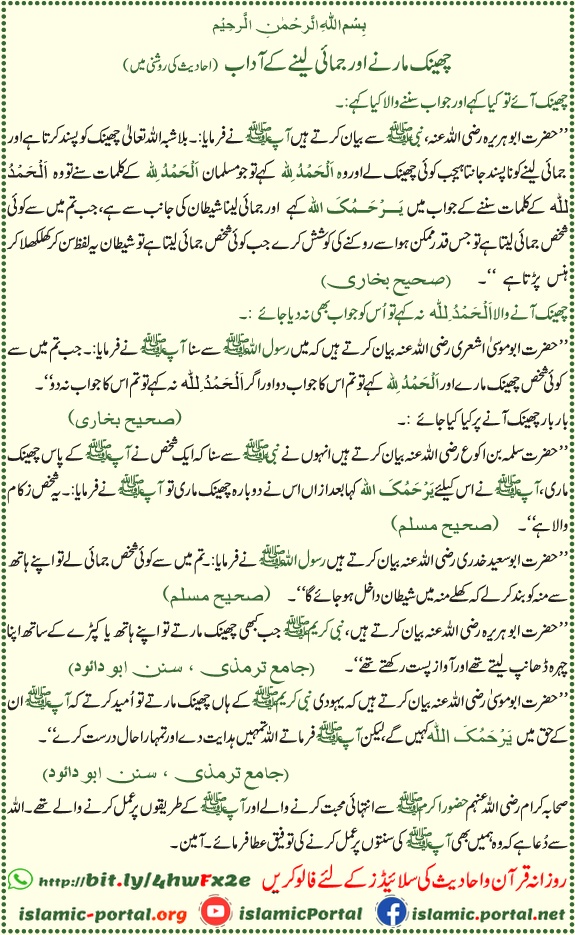
چھینک مارنے اور جمائی لینے کے آداب (احادیث کی روشنی میں)

چھینک آئے تو کیا کہے اور جواب سننے والا کیا کہے :-

  • ”حضرت ابوہریرہ رضی اللہ عنہ، نبی سے بیان کرتے ہیں آپ نے فرمایا :- بلاشبہ اللہ تعالیٰ چھینک کو پسند کرتا ہے اور جمائی لینے کو ناپسند جانتا ہے جب کوئی چھینک لے اور وہ اَلْحَمْدُ لِلہ کہے تو جو مسلمان اَلْحَمْدُ لِلہ کے کلمات سنے تو وہ اَلْحَمْدُ لِلہ کے کلمات سننے کے جواب میں یَرْحَمُکَ اللہ کہے اور جمائی لینا شیطان کی جانب سے ہے، جب تم میں سے کوئی شخص جمائی لیتا ہے تو جس قدر ممکن ہو اسے روکنے کی کوشش کرے جب کوئی شخص جمائی لیتا ہے تو شیطان یہ لفظ سن کر کھلکھلا کر ہنس پڑتا ہے “ ۔ (صحیح بخاری)

چھینک آنے والا اَلْحَمْدُ لِلہ نہ کہے تو اُس کو جواب بھی نہ دیا جائے :-

  • ”حضرت ابوموسیٰ اشعری رضی اللہ عنہ بیان کرتے ہیں کہ میں رسول اللہ سے سنا آپ نے فرمایا :- جب تم میں سے کوئی شخص چھینک مارے اور اَلْحَمْدُ لِلہ کہے تو تم اس کا جواب دو اور اگر اَلْحَمْدُ لِلہ نہ کہے تو تم اس کا جواب نہ دو“ ۔ (صحیح بخاری)

بار بار چھینک آنے پر کیا کیا جائے :-

  • ”حضرت سلمہ بن اکوع رضی اللہ عنہ بیان کرتے ہیں انہوں نے نبی سے سنا کہ ایک شخص نے آپ کے پاس چھینک ماری، آپ نے اس کیلئے یَرْحَمُکَ اللہ کہا بعد ازاں اس نے دوبارہ چھینک ماری تو آپ نے فرمایا :- یہ شخص زکام والا ہے“ ۔ (صحیح مسلم)

  • ”حضرت ابوسعید خدری رضی اللہ عنہ بیان کرتے ہیں رسول اللہ نے فرمایا : تم میں سے کوئی شخص جمائی لے تو اپنے ہاتھ سے منہ کو بند کرلے کہ کھلے منہ میں شیطان داخل ہو جائے گا“ ۔ (صحیح مسلم)

  • ”حضرت ابوہریرہ رضی اللہ عنہ بیان کرتے ہیں، نبی کریم جب کبھی چھینک مارتے تو اپنے ہاتھ یا کپڑے کے ساتھ اپنا چہرہ ڈھانپ لیتے تھے اور آواز پست رکھتے تھے“ ۔ (جامع ترمذی ، سنن ابو دائود)

  • ”حضرت ابوموسیٰ رضی اللہ عنہ بیان کرتے ہیں کہ یہودی نبی کریم کے ہاں چھینک مارتے تو اُمید کرتے کہ آپ ان کے حق میں یَرْحَمُکَ اللہ کہیں گے، لیکن آپ فرماتے اللہ تمہیں ہدایت دے اور تمہارا حال درست کرے“ ۔ (جامع ترمذی ، سنن ابو دائود)

صحابہ کرام رضی اللہ عنہم حضور اکرم سے انتہائی محبت کرنے والے اور آپ کے طریقوں پر عمل کرنے والے تھے۔ اللہ سے دُعا ہے کہ وہ ہمیں بھی آپ کی سنتوں پر عمل کرنے کی توفیق عطا فرمائے۔ آمین۔

In the name of Allah, the Most Gracious, the Most Merciful

Etiquettes of Sneezing and Yawning (In the Light of Hadith)

What one should say when sneezing and what the listener should reply:

“Hazrat Abu Hurairah (may Allah be pleased with him) narrates from the Prophet that he said: Indeed Allah loves sneezing and dislikes yawning. When one of you sneezes and says al-ḥamdu lillāh, then every Muslim who hears the words al-ḥamdu lillāh should say in reply yarḥamukallāh. Yawning is from Satan; when one of you yawns, he should try to suppress it as much as possible. When a person yawns, Satan laughs loudly upon hearing it.” (Sahih al-Bukhari)

If the one who sneezes does not say al-ḥamdu lillāh, then he should not be replied to:

“Hazrat Abu Musa al-Ash‘ari (may Allah be pleased with him) narrates that I heard the Messenger of Allah say: When one of you sneezes and says al-ḥamdu lillāh, then reply to him; and if he does not say al-ḥamdu lillāh, then do not reply to him.” (Sahih al-Bukhari)

What should be done when sneezing repeatedly:

“Hazrat Salamah bin al-Akwa‘ (may Allah be pleased with him) narrates that he heard the Prophet that a man sneezed in his presence; he said yarḥamukallāh for him. Then he sneezed again, so he said: This man has a cold.” (Sahih Muslim)

“Hazrat Abu Sa‘id al-Khudri (may Allah be pleased with him) narrates that the Messenger of Allah said: When one of you yawns, he should cover his mouth with his hand, for Satan enters into the open mouth.” (Sahih Muslim)

“Hazrat Abu Hurairah (may Allah be pleased with him) narrates that whenever the Prophet sneezed, he would cover his face with his hand or his garment and keep his voice low.” (Jami‘ al-Tirmidhi, Sunan Abu Dawud)

“Hazrat Abu Musa (may Allah be pleased with him) narrates that the Jews would sneeze in the presence of the Prophet hoping that he would say yarḥamukallāh for them, but he would say: May Allah guide you and rectify your condition.” (Jami‘ al-Tirmidhi, Sunan Abu Dawud)

The noble Companions (may Allah be pleased with them) had immense love for the Messenger of Allah and were devoted to following his ways. May Allah grant us also the ability to act upon his Sunnahs. Ameen.