بِسْمِ اللہِ الرَّحْمٰنِ الرَّحِیْمِ
آداب دعا (۱) (احادیث کی روشنی میں)
عزم و جزم :-
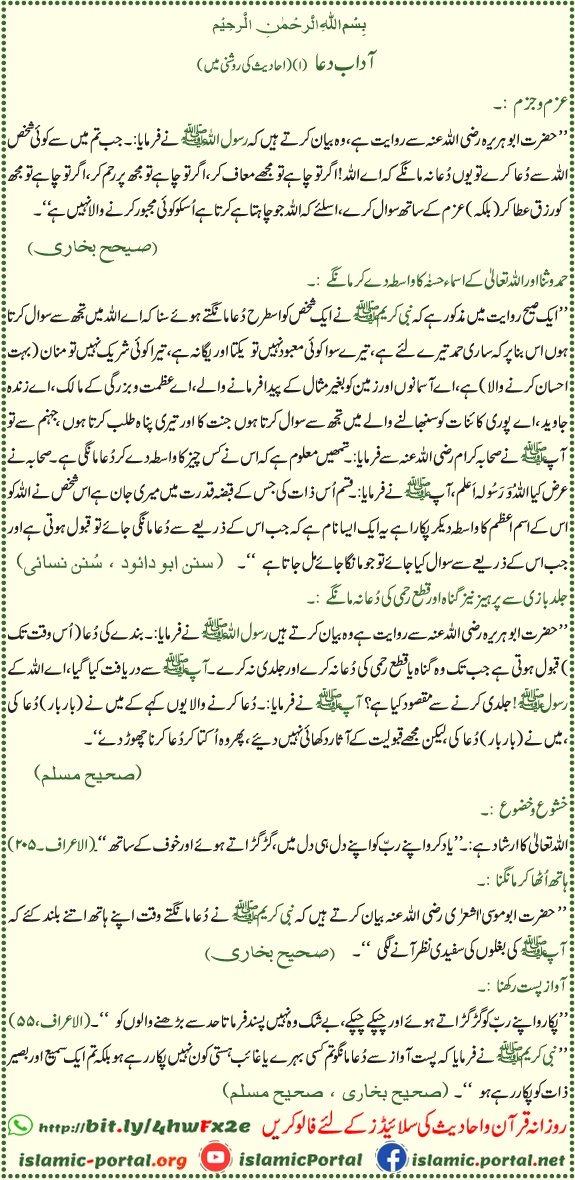
"حضرت ابوہریرہ رضی اللہ عنہ سے روایت ہے، وہ بیان کرتے ہیں کہ رسول اللہ ﷺ نے فرمایا: جب تم میں سے کوئی شخص اللہ سے دُعا کرے تو یوں دُعا نہ مانگے کہ اے اللہ! اگر تو چاہے تو مجھے معاف کر، اگر تو چاہے تو مجھ پر رحم کر، اگر تو چاہے تو مجھے رزق عطا کر (بلکہ) عزم کے ساتھ سوال کرے، اسلئے کہ اللہ جو چاہتا ہے کرتا ہے اُسکو کوئی مجبور کرنے والا نہیں ہے"۔ (صحیح بخاری)
حمد و ثنا اور اللہ تعالیٰ کے اسماءِ حسنہ کا واسطہ دے کر مانگے :-
"ایک صحیح روایت میں مذکور ہے کہ نبی کریم ﷺ نے ایک شخص کو اسطرح دُعا مانگتے ہوئے سنا کہ اے اللہ میں تجھ سے سوال کرتا ہوں اس بناء پر کہ ساری حمد تیرے لئے ہے، تیرے سوا کوئی معبود نہیں تو یکتا اور یگانہ ہے، تیرا کوئی شریک نہیں تو منان (بہت احسان کرنے والا) ہے، اے آسمانوں اور زمین کو بغیر مثال کے پیدا فرمانے والے، اے عظمت و بزرگی کے مالک، اے زندہ جاوید، اے پوری کائنات کو سنبھالنے والے میں تجھ سے سوال کرتا ہوں جنت کا اور تیری پناہ طلب کرتا ہوں، جہنم سے تو آپ ﷺ نے صحابہ کرام رضی اللہ عنہ سے فرمایا: تمھیں معلوم ہے کہ اس نے کس چیز کا واسطہ دے کر دُعا مانگی ہے۔ صحابہ نے عرض کیا اللہ و رَسُوْلُہٗ اَعْلَم، آپ ﷺ نے فرمایا: قسم اُس ذات کی جس کے قبضہ قدرت میں میری جان ہے اس شخص نے اللہ کو اُس کے اسمِ اعظم کا واسطہ دیکر پکارا ہے یہ ایک ایسا نام ہے کہ جب اس کے ذریعے سے دُعا مانگی جائے تو قبول ہوتی ہے اور جب اس کے ذریعے سے سوال کیا جائے تو جو مانگا جائے مل جاتا ہے"۔ (سنن ابو دائود ، سُنن نسائی)
جلد بازی سے پرہیز نیز گناہ اور قطع رحمی کی دُعا نہ مانگے :-
"حضرت ابوہریرہ رضی اللہ عنہ سے روایت ہے وہ بیان کرتے ہیں رسول اللہ ﷺ نے فرمایا: بندے کی دُعا (اُس وقت تک) قبول ہوتی ہے جب تک وہ گناہ یا قطع رحمی کی دُعا نہ کرے اور جلدی نہ کرے۔ آپ ﷺ سے دریافت کیا گیا، اے اللہ کے رسول ﷺ ! جلدی کرنے سے مقصود کیا ہے؟ آپ ﷺ نے فرمایا: دُعا کرنے والا یوں کہے کے میں نے (بار بار) دُعا کی، میں نے (بار بار) دُعا کی، لیکن مجھے قبولیت کے آثار دکھائی نہیں دیئے، پھر وہ اُکتا کر دُعا کرنا چھوڑ دے"۔ (صحیح مسلم)
خشوع و خضوع :-
اللہ تعالیٰ کا ارشاد ہے: ”یاد کرو اپنے ربّ کو اپنے دل ہی دل میں، گڑگڑاتے ہوئے اور خوف کے ساتھ“ (الاعراف ۔ ۲۰۵)
ہاتھ اٹھا کر مانگنا :-
"حضرت ابوموسیٰ اشعری رضی اللہ عنہ بیان کرتے ہیں کہ نبی کریم ﷺ نے دُعا مانگتے وقت اپنے ہاتھ اتنے بلند کئے کہ آپ ﷺ کی بغلوں کی سفیدی نظر آنے لگی"۔ (صحیح بخاری)
آواز پست رکھنا :-
"پکارو اپنے ربّ کو گڑگڑاتے ہوئے اور چپکے چپکے، بے شک وہ نہیں پسند فرماتا حد سے بڑھنے والوں کو"۔ (الاعراف ۔ ۵۵)
"نبی کریم ﷺ نے فرمایا کہ پست آواز سے دُعا مانگو تم کسی بہرے یا غائب ہستی کو نہیں پکار رہے ہو بلکہ تم ایک سمیع اور بصیر ذات کو پکار رہے ہو"۔ (صحیح مسلم ، صحیح بخاری)
قرآن و احادیث کی تعلیمات کو تمام انسانوں تک پہنچانے میں ہمارا ساتھ دیں۔ جزاک اللہ ۔www.islamic-portal.org
English Translation
In the Name of Allah, the Most Gracious, the Most Merciful
Etiquettes of Supplication (1) — In the Light of Hadith
Firm resolve and certainty
Abu Hurayrah رضي الله عنه narrates that the Messenger of Allah ﷺ said: When any one of you supplicates to Allah, he should not say: O Allah, forgive me if You will; O Allah, have mercy on me if You will; O Allah, grant me provision if You will. Rather, he should ask with firm resolve, for Allah does whatever He wills and none can compel Him.
(Sahih al-Bukhari)
Begin with praise of Allah and invoke His Beautiful Names
In an authentic narration, it is mentioned that the Prophet ﷺ heard a man supplicating in this manner: O Allah, I ask You because all praise belongs to You; there is no deity except You. You are One, without partner; You are Al-Mannan (the Bestower of great favors); O Originator of the heavens and the earth without precedent; O Possessor of majesty and honor; O Ever-Living, O Sustainer of all existence, I ask You for Jannah and seek Your protection from Jahannam.
The Prophet ﷺ then said to the Companions رضي الله عنهم: Do you know by what means he supplicated? They replied: Allah and His Messenger know best. He ﷺ said: By the One in Whose Hand is my soul, he called upon Allah using His Greatest Name; when supplication is made through it, it is accepted, and when asked through it, what is sought is granted.
(Sunan Abu Dawud, Sunan al-Nasa’i)
Avoid haste and do not supplicate for sin or severing family ties
Abu Hurayrah رضي الله عنه narrates that the Messenger of Allah ﷺ said: A servant’s supplication continues to be accepted as long as he does not supplicate for sin or the severing of family ties, and as long as he is not hasty.
It was asked: O Messenger of Allah ﷺ, what does haste mean?
He ﷺ said: A person says, I supplicated again and again, but I did not see my supplication being answered; then he becomes weary and abandons supplication.
(Sahih Muslim)
Humility and submission
Allah Ta‘ala says:
وَاذْكُر رَّبَّكَ فِى نَفْسِكَ تَضَرُّعًا وَخِيفَةً
(al-A‘raf 205)
(Remember your Lord within yourself with humility and fear.)
Raising the hands while supplicating
Abu Musa al-Ash‘ari رضي الله عنه narrates that the Prophet ﷺ raised his hands so high in supplication that the whiteness of his armpits became visible.
(Sahih al-Bukhari)
Keeping the voice low
Allah Ta‘ala says:
ٱدْعُوا رَبَّكُمْ تَضَرُّعًا وَخُفْيَةً ۚ إِنَّهُۥ لَا يُحِبُّ ٱلْمُعْتَدِينَ
(al-A‘raf 55)
(Call upon your Lord with humility and privately. Indeed, He does not love the transgressors.)
The Prophet ﷺ said: Supplicate in a low voice, for you are not calling upon one who is deaf or absent; rather, you are calling upon One who is All-Hearing and All-Seeing.
(Sahih Muslim, Sahih al-Bukhari)