بِسْمِ اللَّهِ الرَّحْمَنِ الرَّحِيمِ
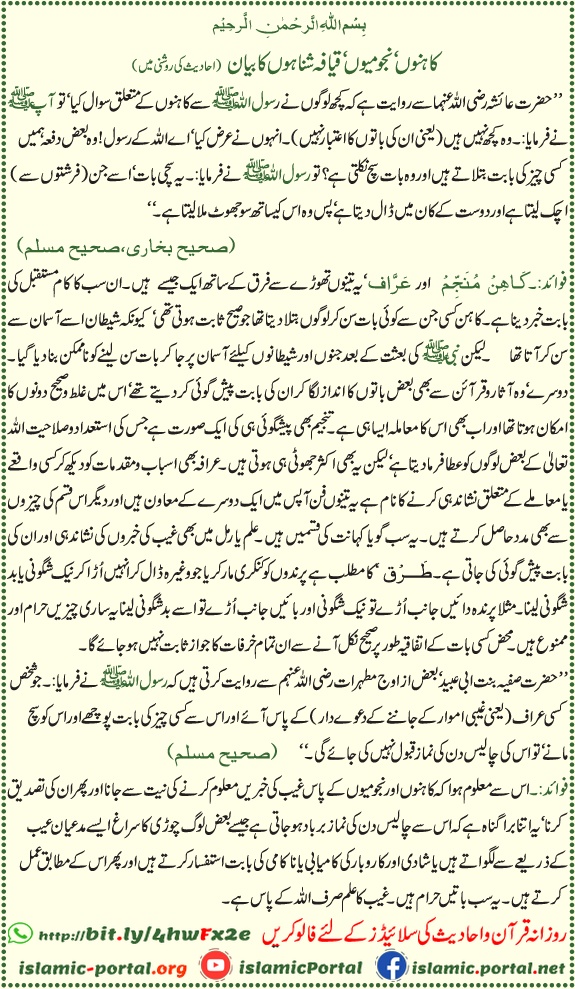
کاہنوں‘ نجومیوں‘ قیافہ شناسوں کا بیان (احادیث کی روشنی میں)
” حضرت عائشہ رضی اللہ عنہا سے روایت ہے کہ کچھ لوگوں نے رسول اللہ ﷺ سے کاہنوں کے متعلق سوال کیا‘ تو آپ ﷺ نے فرمایا :- وہ کچھ نہیں ہیں (یعنی ان کی باتوں کا اعتبار نہیں)۔ انہوں نے عرض کیا‘ اے اللہ کے رسول ! وہ بعض دفعہ ہمیں کسی چیز کی بابت بتلاتے ہیں اور وہ بات سچ نکلتی ہے؟ تو رسول اللہ ﷺ نے فرمایا :- یہ سچی بات‘ اسے جن (فرشتوں سے) اچک لیتا ہے اور دوست کے کان میں ڈال دیتا ہے‘ پس وہ اس کیساتھ سو جھوٹ ملا لیتا ہے۔ “ (صحیح بخاری ، صحیح مسلم)
فوائد :- کَاھِنُ ، مُنَجَّمُ اور عَرَّافُ ‘ یہ تینوں تھوڑے سے فرق کے ساتھ ایک جیسے ہیں۔ ان سب کا کام مستقبل کی بابت خبر دینا ہے۔ کاہن کسی جن سے کوئی بات سن کر لوگوں بتلا دیتا تھا جو صحیح ثابت ہوتی تھی‘ کیونکہ شیطان اسے آسمان سے سن کر آتا تھا ۔ لیکن نبی ﷺ کی بعثت کے بعد جنوں اور شیطانوں کیلئے آسمان پر جا کر بات سن لینے کو ناممکن بنا دیا گیا۔ دوسرے‘ وہ آثار و قرائن سے بھی بعض باتوں کا انداز لگا کر ان کی بابت پیش گوئی کر دیتے تھے‘ اس میں غلط و صحیح دونوں کا امکان ہوتا تھا اور اب بھی اس کا معاملہ ایسا ہی ہے۔ تنجیم بھی پیشگوئی ہی کی ایک صورت ہے جس کی استعداد و صلاحیت اللہ تعالیٰ کے بعض لوگوں کو عطا فرما دیتا ہے‘ لیکن یہ بھی اکثر جھوٹی ہی ہوتی ہیں۔ عرافہ بھی اسباب و مقدمات کو دیکھ کر کسی واقعے یا معاملے کے متعلق نشاندہی کرنے کا نام ہے یہ تینوں فن آپس میں ایک دوسرے کے معاون ہیں اور دیگر اس قسم کی چیزوں سے بھی مدد حاصل کرتے ہیں۔ یہ سب گویا کہانت کی قسمیں ہیں۔ علم یا رمل میں بھی غیب کی خبروں کی نشاندہی اور ان کی بابت پیش گوئی کی جاتی ہے۔ ’طَرِق‘ کا مطلب ہے پرندوں کو کنکری مار کر یا جو وغیرہ ڈال کر انہیں اڑا کر نیک شگونی یا بد شگونی لینا۔ مثلا پرندہ دائیں جانب اڑے تو نیک شگونی اور بائیں جانب اڑے تو اسے بدشگونی لینا یہ ساری چیزیں حرام اور ممنوع ہیں۔ محض کسی بات کے اتفاقیہ طور پر صحیح نکل آنے سے ان تمام خرافات کا جواز ثابت نہیں ہو جائے گا۔
” حضرت صفیہ بنت ابی عبید‘ بعض ازواج مطہرات رضی اللہ عنہم سے روایت کرتی ہیں کہ رسول اللہ ﷺ نے فرمایا :- جو شخص کسی عراف (یعنی غیبی اموار کے جاننے کے دعوے دار) کے پاس آئے اور اس سے کسی چیز کی بابت پوچھے اور اس کو سچ مانے‘ تو اس کی چالیس دن کی نماز قبول نہیں کی جائے گی۔ “ (صحیح مسلم)
فوائد :- اس سے معلوم ہوا کہ کاہنوں اور نجومیوں کے پاس غیب کی خبریں معلوم کرنے کی نیت سے جانا اور پھر ان کی تصدیق کرنا‘ یہ اتنا بڑا گناہ ہے کہ اس سے چالیس دن کی نماز برباد ہو جاتی ہے جیسے بعض لوگ چوری کا سراغ ایسے مدعیان غیب کے ذریعے سے لگواتے ہیں یا شادی اور کاروبار کی کامیابی یا ناکامی کی بابت استفسار کرتے ہیں اور پھر اس کے مطابق عمل کرتے ہیں۔ یہ سب باتیں حرام ہیں۔ غیب کا علم صرف اللہ کے پاس ہے۔
English Translation
بِسْمِ اللَّهِ الرَّحْمَنِ الرَّحِيمِ
Soothsayers, Astrologers, and Physiognomists — In the Light of Hadith
“Hazrat ‘A’ishah رضي الله عنها narrates that some people asked the Messenger of Allah ﷺ about soothsayers (kāhins). He ﷺ said: ‘They are nothing (i.e., their statements carry no weight).’ They said: ‘O Messenger of Allah! Sometimes they tell us something and it turns out to be true.’ The Messenger of Allah ﷺ replied: ‘That true word is snatched by a jinn (from the angels) and conveyed into the ear of his companion; then he mixes a hundred lies with it.’” (صحیح بخاری ، صحیح مسلم)
Benefits:
Kāhin (soothsayer), Munajjim (astrologer), and ‘Arrāf (fortune-teller) are similar, with slight differences. All of them claim to give information about the future. A kāhin would hear something from a jinn and convey it to people, which sometimes proved true because devils used to eavesdrop from the heavens. However, after the advent of the Prophet ﷺ, it was made impossible for jinn and devils to ascend to the heavens to eavesdrop.
Secondly, they also make predictions based on signs and circumstantial indicators, which may sometimes be correct and sometimes incorrect—and this remains the case even today. Astrology (Tanjīm) is also a form of prediction; some individuals are granted certain abilities in this regard by Allah, yet such predictions are mostly false. ‘Arrāfah likewise involves identifying events or matters based on causes and preliminary indications. These disciplines support one another and often draw assistance from similar practices. All of these are essentially forms of soothsaying.
Likewise, in practices such as ‘Ilm al-Raml (geomancy), claims are made about unseen matters and predictions are offered. “Tariq” refers to practices such as striking birds with pebbles or scattering grain to make them fly, then deriving good or bad omens from the direction of their flight—for example, considering flight to the right as a good omen and to the left as a bad omen. All such practices are حرام (unlawful) and prohibited. The fact that some statements may coincidentally turn out to be true does not justify these superstitions.
“Hazrat Safiyyah bint Abi ‘Ubayd narrates from some of the Mothers of the Believers رضي الله عنهن that the Messenger of Allah ﷺ said: ‘Whoever approaches an ‘arrāf (one who claims knowledge of unseen matters), asks him about something, and believes him, his Salah (prayer) will not be accepted for forty days.’” (صحیح مسلم)
Benefits:
This shows that going to soothsayers and astrologers with the intention of learning about unseen matters and then believing them is such a grave sin that one’s Salah for forty days is rendered void of acceptance. For example, some people consult such claimants of the unseen to trace stolen items or to inquire about success or failure in marriage and business, and then act according to their guidance. All such matters are حرام. Knowledge of the unseen belongs solely to Allah.