بِسْمِ اللَّهِ الرَّحْمَنِ الرَّحِيمِ
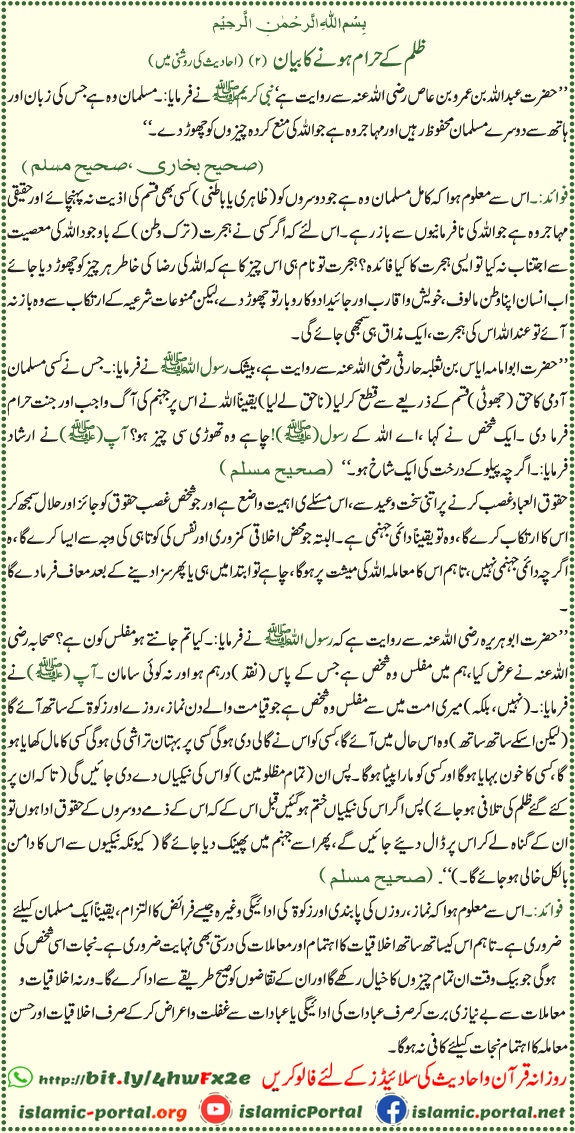
ظلم کے حرام ہونے کا بیان (۲) (احادیث کی روشنی میں)
” حضرت عبداللہ بن عمر بن عاص رضی اللہ عنہ سے روایت ہے‘ نبی کریم ﷺ نے فرمایا:۔ مسلمان وہ ہے جس کی زبان اور ہاتھ سے دوسرے مسلمان محفوظ رہیں اور مہاجر وہ ہے جو اللہ کی منع کردہ چیزوں کو چھوڑ دے“۔ (صحیح بخاری ، صحیح مسلم)
فوائد :۔ اس سے معلوم ہوا کہ کامل مسلمان وہ ہے جو دوسروں کو (ظاہری یا باطنی) کسی بھی قسم کی اذیت نہ پہنچائے اور حقیقی مہاجر وہ ہے جو اللہ کی نافرمانیوں سے باز رہے۔ اس لئے کہ اگر کسی نے ہجرت (ترک وطن) کے باوجود اللہ کی معصیت سے اجتناب نہ کیا تو ایسی ہجرت کا کیا فائدہ؟ ہجرت تو نام ہی اس چیز کا ہے کہ اللہ کی رضا کی خاطر ہر چیز کو چھوڑ دیا جائے اب انسان اپنا وطن مالوف، خویش واقارب اور جائیداد و کاروبار تو چھوڑ دے، لیکن ممنوعات شرعیہ کے ارتکاب سے وہ باز نہ آئے تو عنداللہ اس کی ہجرت، ایک مذاق ہی سمجھی جائے گی۔
” حضرت ابوامامہ ایاس بن ثعلبہ حارثی رضی اللہ عنہ سے روایت ہے، بیشک رسول اللہ ﷺ نے فرمایا:۔ جس نے کسی مسلمان آدمی کا حق (جھوٹی) قسم کے ذریعے سے قطع کرلیا (ناحق لے لیا) یقیناً اللہ نے اس پر جہنم کی آگ واجب اور جنت حرام فرما دی۔ ایک شخص نے کہا ،اے اللہ کے رسول (ﷺ)! چاہے وہ تھوڑی سی چیز ہو؟ آپ (ﷺ) نے ارشاد فرمایا:۔ اگرچہ پیلو کے درخت کی ایک شاخ ہو۔“ (صحیح مسلم)
حقوق العباد غصب کرنے پر اتنی سخت وعید سے، اس مسئلے کی اہمیت واضح ہے اور جو شخص غصب حقوق کو جائز اور حلال سمجھ کر اس کا ارتکاب کرے گا، وہ تو یقیناً دائمی جہنمی ہے۔ البتہ جو محض اخلاقی کمزوری اور نفس کی کوتاہی کی وجہ سے ایسا کرے گا ، وہ اگرچہ دائمی جہنمی نہیں، تاہم اس کا معاملہ اللہ کی مشیت پر ہوگا، چاہے تو ابتدا میں ہی یا پھر سزا دینے کے بعد معاف فرما دے گا۔
مفلس کون ہے؟
” حضرت ابوہریرہ رضی اللہ عنہ سے روایت ہے کہ رسول اللہ ﷺ نے فرمایا:۔ کیا تم جانتے ہو مفلس کون ہے؟ صحابہ رضی اللہ عنہ نے عرض کیا، ہم میں مفلس وہ شخص ہے جس کے پاس (نقد) درہم ہو اور نہ کوئی سامان۔ آپ (ﷺ) نے فرمایا:۔ (نہیں، بلکہ) میری امت میں سے مفلس وہ شخص ہے جو قیامت والے دن نماز، روزے اور زکوۃ کے ساتھ آئے گا (لیکن اسکے ساتھ ساتھ) وہ اس حال میں آئے گا، کسی کو اس نے گالی دی ہوگی کسی پر بہتان تراشی کی ہوگی کسی کا مال کھایا ہو گا، کسی کا خون بہایا ہوگا اور کسی کو مارا پیٹا ہوگا۔ پس ان (تمام مظلومین) کو اس کی نیکیاں دے دی جائیں گی (تاکہ ان پر کئے گئے ظلم کی تلافی ہو جائے) پس اگر اس کی نیکیاں ختم ہوگئیں قبل اس کے کہ اس کے ذمے دوسروں کے حقوق ادا ہوں تو ان کے گناہ لے کر اس پر ڈال دیئے جائیں گے ، پھر اسے جہنم میں پھینک دیا جائے گا (کیونکہ نیکیوں سے اس کا دامن بالکل خالی ہو جائے گا)۔“ (صحیح مسلم)
فوائد :۔ اس سے معلوم ہوا کہ نماز، روزوں کی پابندی اور زکوۃ کی ادائیگی وغیرہ جیسے فرائض کا التزام، یقیناً ایک مسلمان کیلئے ضروری ہے۔ تاہم اس کیساتھ ساتھ اخلاقیات کا اہتمام اور معاملات کی درستی بھی نہایت ضروری ہے۔ نجات اسی شخص کی ہوگی جو بیک وقت ان تمام چیزوں کا خیال رکھے گا اور ان کے تقاضوں کو صحیح طریقے سے ادا کرے گا۔ ورنہ اخلاقیات و معاملات سے بے نیازی برت کر صرف عبادات کی ادائیگی یا عبادات سے غفلت و اعراض کر کے صرف اخلاقیات اور حسن معاملہ کا اہتمام نجات کیلئے کافی نہ ہوگا۔
English Translation
بِسْمِ اللَّهِ الرَّحْمَنِ الرَّحِيمِ
The Prohibition of Oppression (Zulm) (2) — In the Light of Hadith
“Hazrat ‘Abdullah ibn ‘Amr ibn al-‘As رضي الله عنه narrates that the Noble Prophet ﷺ said: ‘A Muslim is the one from whose tongue and hand other Muslims remain safe, and a Muhajir (one who migrates) is the one who abandons what Allah has forbidden.’” (صحیح بخاری ، صحیح مسلم)
Benefits:
From this it is understood that a complete Muslim is one who does not cause any form of harm—outward or inward—to others, and a true Muhajir is one who refrains from disobedience to Allah. For if a person migrates (leaves his homeland) yet does not abstain from disobedience to Allah, then what benefit is there in such migration? Hijrah truly means to abandon everything for the sake of Allah’s pleasure. If a person leaves his homeland, relatives, property, and business, yet does not refrain from prohibited acts, then in the sight of Allah such migration would be nothing more than a mockery.
“Hazrat Abu Umamah Iyas ibn Tha‘labah al-Harith رضي الله عنه narrates that the Messenger of Allah ﷺ said: ‘Whoever usurps the right of a Muslim through a (false) oath, Allah has certainly made Hellfire obligatory for him and Jannah (Paradise) حرام (forbidden) upon him.’ A man asked: ‘O Messenger of Allah ﷺ! Even if it is something small?’ He ﷺ replied: ‘Even if it is a twig of the peelu tree.’” (صحیح مسلم)
The severe warning regarding the usurpation of حقوق العباد (rights of people) clearly shows the gravity of this matter. Whoever commits such an act while considering it lawful and permissible will certainly be among the dwellers of Hell eternally. However, one who does so out of moral weakness and the shortcomings of the النفس (lower self), though not an eternal dweller of Hell, will remain subject to Allah’s will—He may forgive him immediately or after administering punishment.
Who Is the Bankrupt (Muflis)?
“Hazrat Abu Hurairah رضي الله عنه narrates that the Messenger of Allah ﷺ said: ‘Do you know who the bankrupt one is?’ The Companions رضي الله عنهم replied: ‘Among us, the bankrupt is the one who has neither money nor possessions.’ He ﷺ said: ‘(No,) the bankrupt person from my Ummah is the one who will come on the Day of Judgment with Salah (prayer), Sawm (fasting), and Zakah (charity), but he will also come having insulted someone, slandered someone, unlawfully consumed someone’s wealth, shed someone’s blood, and beaten someone. So his good deeds will be distributed among these oppressed people (as compensation). If his good deeds are exhausted before the rights due upon him are fulfilled, then their sins will be taken and placed upon him, and then he will be thrown into Hell.’” (صحیح مسلم)
Benefits:
This shows that observing Salah, fasting, and giving Zakah—along with other obligations—is certainly essential for a Muslim. However, alongside these, maintaining good character and rectifying one’s dealings with others is equally necessary. Salvation belongs only to the one who fulfills all these aspects together and properly meets their demands. Otherwise, neglecting ethics and dealings while performing acts of worship alone—or neglecting acts of worship while relying solely on good character and conduct—will not be sufficient for salvation.