بِسْمِ اللہِ الرَّحْمٰنِ الرَّحِیْمِ
دعائے استخارہ (احادیث کی روشنی میں)
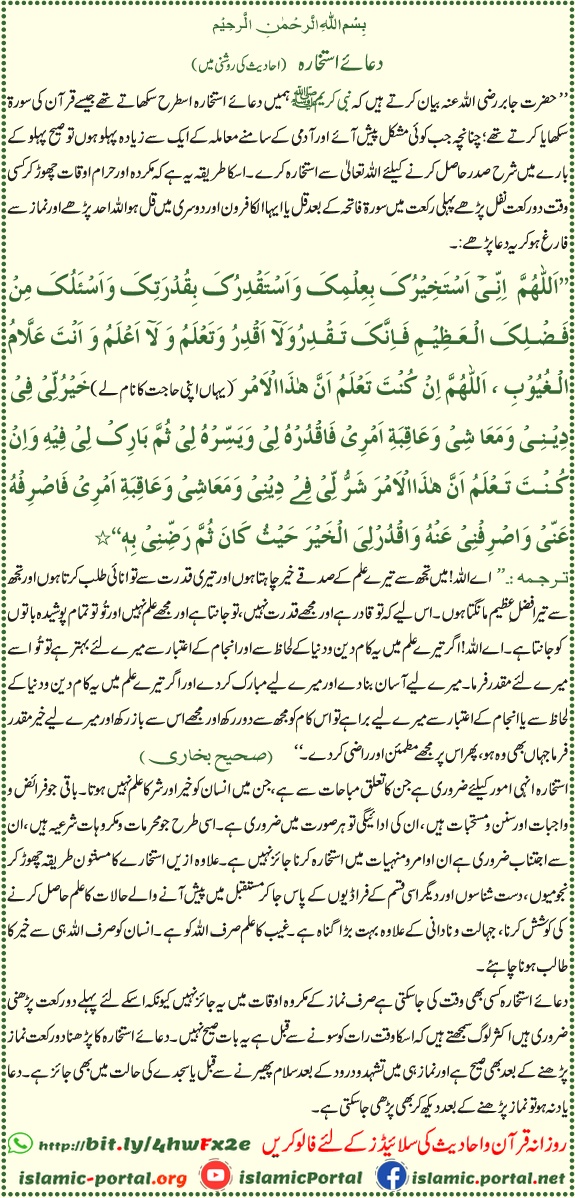
”حضرت جابر رضی اللہ عنہ بیان کرتے ہیں کہ نبی کریم ﷺ ہمیں دعائے استخارہ اسطرح سکھاتے تھے جیسے قرآن کی سورۃ سکھایا کرتے تھے؛ چنانچہ جب کوئی مشکل پیش آئے اور آدمی کے سامنے معاملہ کے ایک سے زیادہ پہلو ہوں تو صحیح پہلو کے بارے میں شرح صدر حاصل کرنے کیلئے اللہ تعالیٰ سے استخارہ کرے۔ اسکا طریقہ یہ ہے کہ مکروہ اور حرام اوقات چھوڑ کر کسی وقت دو رکعت نفل پڑھے پہلی رکعت میں سورۃ فاتحہ کے بعد قل یا ایہاالکافرون اور دوسری میں قل ہواللہ احد پڑھے اور نماز سے فارغ ہو کر یہ دُعا پڑھے :-“
اَللّٰهُمَّ اِنِّیْ اَسْتَخِیْرُکَ بِعِلْمِکَ وَ اَسْتَقْدِرُکَ بِقُدْرَتِکَ وَ اَسْئَلُکَ مِنْ فَضْلِکَ الْعَظِیْمِ فَاِنَّکَ تَقْدِرُ وَ لَا اَقْدِرُ وَ تَعْلَمُ وَ لَا اَعْلَمُ وَ اَنْتَ عَلَّامُ الْغُیُوْبِ، اَللّٰهُمَّ اِنْ کُنْتَ تَعْلَمُ اَنَّ هٰذَا الْاَمْرَ (یہاں اپنی حاجت کا نام لے) خَیْرٌ لِّیْ فِیْ دِیْنِیْ وَ مَعَاشِیْ وَ عَاقِبَةِ اَمْرِیْ فَاقْدُرْهُ لِیْ وَ یَسِّرْهُ لِیْ ثُمَّ بَارِکْ لِیْ فِیْهِ وَ اِنْ کُنْتَ تَعْلَمُ اَنَّ هٰذَا الْاَمْرَ شَرٌّ لِّیْ فِیْ دِیْنِیْ وَ مَعَاشِیْ وَ عَاقِبَةِ اَمْرِیْ فَاصْرِفْهُ عَنِّیْ وَ اصْرِفْنِیْ عَنْهُ وَ اقْدُرْ لِیَ الْخَیْرَ حَیْثُ کَانَ ثُمَّ رَضِّنِیْ بِهِ“
ترجمہ :۔ ”اے اللہ! میں تجھ سے تیرے علم کے صدقے خیر چاہتا ہوں اور تیری قدرت سے توانائی طلب کرتا ہوں اور تجھ سے تیرا فضل عظیم مانگتا ہوں۔ اس لیے کہ تو قادر ہے اور مجھے قدرت نہیں، تو جانتا ہے اور مجھے علم نہیں اور تُو تو تمام پوشیدہ باتوں کو جانتا ہے۔ اے اللہ! اگر تیرے علم میں یہ کام دین و دنیا کے لحاظ سے اور انجام کے اعتبار سے میرے لئے بہتر ہے تو تُو اسے میرے لئے مقدر فرما۔ میرے لیے آسان بنادے اور میرے لیے مبارک کر دے اور اگر تیرے علم میں یہ کام دین و دنیا کے لحاظ سے یا انجام کے اعتبار سے میرے لیے برا ہے تو اس کام کو مجھ سے دور رکھ اور مجھے اس سے باز رکھ اور میرے لیے خیر مقدر فرما جہاں بھی وہ ہو، پھر اس پر مجھے مطمئن اور راضی کر دے۔“ (صحیح بخاری)
استخارہ انہی امور کیلئے ضروری ہے جن کا تعلق مباحات سے ہے، جن میں انسان کو خیر اور شر کا علم نہیں ہوتا۔ باقی جو فرائض و واجبات اور سنن و مستحبات ہیں، ان کی ادائیگی تو ہر صورت میں ضروری ہے۔ اسی طرح جو محرمات و مکروہات شرعیہ ہیں، ان سے اجتناب ضروری ہے ان اوامر و منہیات میں استخارہ کرنا جائز نہیں ہے۔ علاوہ ازیں استخارے کا مسنون طریقہ چھوڑ کر نجومیوں، دست شناسوں اور دیگر اسی قسم کے فراڈیوں کے پاس جا کر مستقبل میں پیش آنے والے حالات کا علم حاصل کرنے کی کوشش کرنا، جہالت و نادانی کے علاوہ بہت بڑا گناہ ہے۔ غیب کا علم صرف اللہ کو ہے۔ انسان کو صرف اللہ ہی سے خیر کا طالب ہونا چاہئے۔
دعائے استخارہ کسی بھی وقت کی جاسکتی ہے صرف نماز کے مکروہ اوقات میں یہ جائز نہیں کیونکہ اسکے لئے پہلے دو رکعت پڑھنی ضروری ہیں اکثر لوگ سمجھتے ہیں کہ اسکا وقت رات کو سونے سے قبل ہے یہ بات صحیح نہیں۔ دعائے استخارہ کا پڑھنا دو رکعت نماز پڑھنے کے بعد بھی صحیح ہے اور نماز ہی میں تشہد و درود کے بعد سلام پھیرنے سے قبل یا سجدے کی حالت میں بھی جائز ہے۔ دعا یاد نہ ہو تو نماز پڑھنے کے بعد دیکھ کر بھی پڑھی جاسکتی ہے۔
قرآن و احادیث کی تعلیمات کو تمام انسانوں تک پہنچانے میں ہمارا ساتھ دیں۔ جزاک اللہ ۔www.islamic-portal.org
English Translation
In the Name of Allah, the Most Gracious, the Most Merciful
Supplication of Istikhārah (In the Light of Hadith)
Jabir رضي الله عنه narrates that the Prophet ﷺ used to teach us the supplication of Istikhārah just as he taught a Surah of the Quran. Whenever a person faces a matter in which multiple options exist and guidance is needed regarding the correct course, he should seek Istikhārah from Allah to attain clarity and ease of heart. Its method is that, avoiding disliked and prohibited times, one offers two rak‘ahs of voluntary prayer: in the first rak‘ah reciting al-Fātiḥah followed by “Qul yā ayyuhā al-kāfirūn,” and in the second reciting al-Fātiḥah followed by “Qul huwa Allāhu aḥad.” After completing the prayer, the following supplication should be recited:
اَللّٰهُمَّ اِنِّیْ اَسْتَخِیْرُکَ بِعِلْمِکَ وَاَسْتَقْدِرُکَ بِقُدْرَتِکَ وَاَسْئَلُکَ مِنْ فَضْلِکَ الْعَظِیْمِ فَاِنَّکَ تَقْدِرُ وَلَا اَقْدِرُ وَتَعْلَمُ وَلَا اَعْلَمُ وَاَنْتَ عَلَّامُ الْغُیُوْبِ، اَللّٰهُمَّ اِنْ کُنْتَ تَعْلَمُ اَنَّ هٰذَا الْاَمْرَ (یہاں اپنی حاجت کا نام لے) خَیْرٌ لِّیْ فِیْ دِیْنِیْ وَمَعَاشِیْ وَعَاقِبَةِ اَمْرِیْ فَاقْدُرْهُ لِیْ وَیَسِّرْهُ لِیْ ثُمَّ بَارِکْ لِیْ فِیْهِ وَ اِنْ کُنْتَ تَعْلَمُ اَنَّ هٰذَا الْاَمْرَ شَرٌّ لِّیْ فِیْ دِیْنِیْ وَمَعَاشِیْ وَعَاقِبَةِ اَمْرِیْ فَاصْرِفْهُ عَنِّیْ وَاصْرِفْنِیْ عَنْهُ وَاقْدُرْ لِیَ الْخَیْرَ حَیْثُ کَانَ ثُمَّ رَضِّنِیْ بِهِ
(Sahih al-Bukhari)
Transliteration: Allahumma inni astakhiruka bi ‘ilmika wa astaqdiruka bi qudratika wa as’aluka min fadlikal-‘azim, fa innaka taqdiru wa la aqdiru wa ta‘lamu wa la a‘lamu wa anta ‘allamul-ghuyub.
Allahumma in kunta ta‘lamu anna hazal-amra (yahan apni hajat ka naam lein) khairul-li fi deeni wa ma‘ashi wa ‘aqibati amri faqdurhu li wa yassirhu li thumma barik li fihi. Wa in kunta ta‘lamu anna hazal-amra sharrul-li fi deeni wa ma‘ashi wa ‘aqibati amri fasrifhu ‘anni wasrifni ‘anhu waqdur li al-khaira haisu kana thumma raddini bihi.
Translation:
“O Allah, I seek goodness from You by Your knowledge, and I seek ability from You by Your power, and I ask You from Your immense bounty. For indeed You have power and I do not have power; You know and I do not know; and You are the Knower of the unseen. O Allah, if You know that this matter (mention your need here) is good for me in my religion, my livelihood, and the outcome of my affairs, then decree it for me, make it easy for me, and bless it for me. And if You know that this matter is bad for me in my religion, my livelihood, and the outcome of my affairs, then turn it away from me and turn me away from it, and decree for me the good wherever it may be, and then make me content with it.”
Istikhārah is prescribed for matters that fall within permissible choices (mubāḥāt), where a person is uncertain about benefit or harm. As for obligations, duties, Sunnah acts, and recommended deeds, they must be performed regardless, and Istikhārah is not required for them. Similarly, prohibited and disliked matters must be avoided; Istikhārah is not performed regarding them.
Furthermore, abandoning the Prophetic method of Istikhārah and instead consulting astrologers, fortune-tellers, palm readers, or similar individuals to learn about future events is ignorance and a grave sin. Knowledge of the unseen belongs only to Allah. A believer must seek goodness only from Allah.
Istikhārah may be performed at any time except during the disliked times of prayer, since it involves offering two rak‘ahs beforehand. Many people assume it must be done only before sleeping at night; this is incorrect. The supplication may be recited after completing the two rak‘ahs, within the prayer after tashahhud and ṣalawāt before salām, or even during prostration. If the supplication is not memorized, it may be read after the prayer while looking at the text.
Help us spread the teachings of the Quran and Hadith to all people. Jazak Allah.