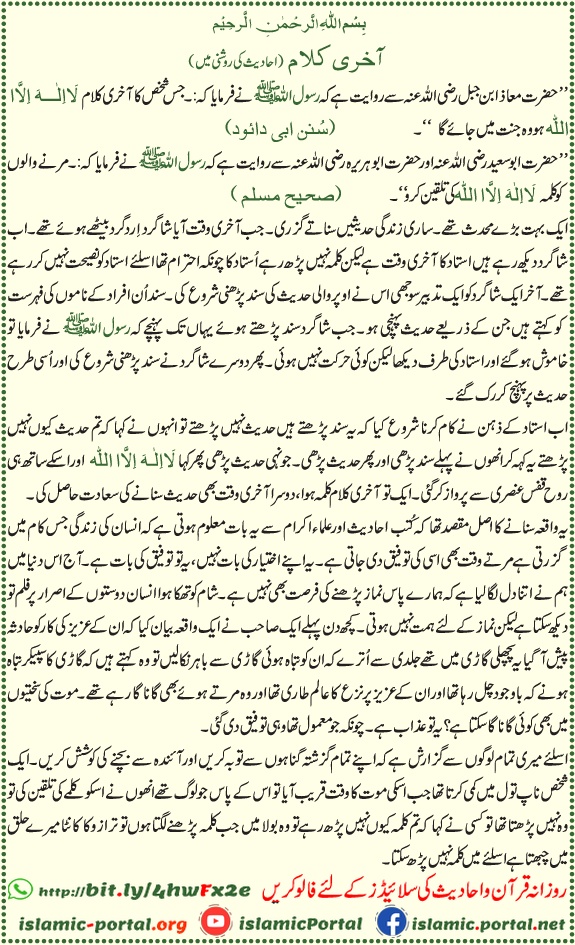
بِسْمِ اللہِ الرَّحْمٰنِ الرَّحِیْمِ
آخری کلام (احادیث کی روشنی میں)
-
”حضرت معاذ بن جبل رضی اللہ عنہ سے روایت ہے کہ رسول اللہ ﷺ نے فرمایا کہ :- جس شخص کا آخری کلام لَآ اِلٰهَ اِلَّا اللہ ہو وہ جنت میں جائے گا “۔ (سنن ابی دائود)
-
”حضرت ابوسعید رضی اللہ عنہ اور حضرت ابوہریرہ رضی اللہ عنہ سے روایت ہے کہ رسول اللہ ﷺ نے فرمایا کہ :- مرنے والوں کو کلمہ لَآ اِلٰهَ اِلَّا اللہ کی تلقین کرو“۔ (صحیح مسلم)
ایک بہت بڑے محدث تھے۔ ساری زندگی حدیثیں سناتے گزری۔ جب آخری وقت آیا شاگرد اِرد گرد بیٹھے ہوئے تھے۔ اب شاگرد دیکھ رہے ہیں استاد کا آخری وقت ہے لیکن کلمہ نہیں پڑھ رہے اُستاد کا چونکہ احترام تھا اسلئے استاد کو نصیحت نہیں کر رہے تھے۔ آخر ایک شاگرد کو ایک تدبیر سوجھی اس نے اوپر والی حدیث کی سند پڑھنی شروع کی۔ سند اُن افراد کے ناموں کی فہرست کو کہتے ہیں جن کے ذریعے حدیث پہنچی ہو۔ جب شاگرد سند پڑھتے ہوئے یہاں تک پہنچے کہ رسول اللہ ﷺ نے فرمایا تو خاموش ہو گئے اور استاد کی طرف دیکھا لیکن کوئی حرکت نہیں ہوئی۔ پھر دوسرے شاگرد نے سند پڑھنی شروع کی اور اُسی طرح حدیث پر پہنچ کر رک گئے۔
اب استاد کے ذہن نے کام کرنا شروع کیا کہ یہ سند پڑھتے ہیں حدیث نہیں پڑھتے تو انہوں نے کہا کہ تم حدیث کیوں نہیں پڑھتے یہ کہہ کر انہوں نے پہلے سند پڑھی اور پھر حدیث پڑھی۔ جونہی حدیث پڑھی پھر کہا لَآ اِلٰهَ اِلَّا اللہ اور اسکے ساتھ ہی روح قفس عنصری سے پرواز کر گئی۔ ایک تو آخری کلام کلمہ ہوا، دوسرا آخری وقت بھی حدیث سنانے کی سعادت حاصل کی۔
یہ واقعہ سنانے کا اصل مقصد تھا کہ کُتب احادیث اور علماء اکرام سے یہ بات معلوم ہوتی ہے کہ انسان کی زندگی جس کام میں گزرتی ہے مرتے وقت بھی اسی کی توفیق دی جاتی ہے۔ یہ اپنے اختیار کی بات نہیں، یہ تو توفیق کی بات ہے۔ آج اس دنیا میں ہم نے اتنا دل لگا لیا ہے کہ ہمارے پاس نماز پڑھنے کی فرصت بھی نہیں ہے۔ شام کو تھکا ہوا انسان دوستوں کے اصرار پر فلم تو دیکھ سکتا ہے لیکن نماز کے لئے ہمت نہیں ہوتی۔ کچھ دن پہلے ایک صاحب نے ایک واقعہ بیان کیا کہ ان کے عزیز کی کار کو حادثہ پیش آگیا یہ پچھلی گاڑی میں تھے جلدی سے اُترے کہ ان کو تباہ ہوئی گاڑی سے باہر نکالیں تو وہ کہتے ہیں کہ گاڑی کا سپیکر تباہ ہونے کہ باوجود چل رہا تھا اور ان کے عزیز پر نزع کا عالم طاری تھا اور وہ مرتے ہوئے بھی گانا گا رہے تھے۔ موت کی سختیوں میں بھی کوئی گانا گا سکتا ہے؟ یہ تو عذاب ہے۔ چونکہ جو معمول تھا وہی توفیق دی گئی۔
اسلئے میری تمام لوگوں سے گزارش ہے کہ اپنے تمام گزشتہ گناہوں سے توبہ کریں اور آئندہ سے بچنے کی کوشش کریں۔ ایک شخص ناپ تول میں کمی کرتا تھا جب اسکی موت کا وقت قریب آیا تو اس کے پاس جو لوگ تھے انھوں نے اسکو کلمے کی تلقین کی تو وہ نہیں پڑھتا تھا تو کسی نے کہا کہ تم کلمہ کیوں نہیں پڑھ رہے تو وہ بولا میں جب کلمہ پڑھنے لگتا ہوں تو ترازو کا کانٹا میرے حلق میں چھبتا ہے اسلئے میں کلمہ نہیں پڑھ سکتا۔
English Translation
In the name of Allah, the Most Gracious, the Most Merciful
The Final Words (In the Light of Hadith)
“Sayyiduna Mu‘adh ibn Jabal رضي الله عنه narrated that the Messenger of Allah ﷺ said: ‘Whoever’s last words are لَآ اِلٰهَ اِلَّا الله will enter Jannah (Paradise).’” (Sunan Abi Dawud)
“Sayyiduna Abu Sa‘id رضي الله عنه and Sayyiduna Abu Hurayrah رضي الله عنه narrated that the Messenger of Allah ﷺ said: ‘Prompt your dying ones to say the kalimah لَآ اِلٰهَ اِلَّا الله.’” (Sahih Muslim)
There was a great muhaddith (Hadith scholar) who spent his entire life teaching Hadith. When his final moments arrived, his students were seated around him. The students observed that their teacher was nearing death, yet he was not reciting the kalimah. Out of deep respect, they hesitated to directly advise him.
Finally, one student devised a method: he began reciting the sanad (chain of transmission) of the above Hadith. A sanad refers to the list of narrators through whom a Hadith has been transmitted. When the student reached the point in the sanad where it ended with “the Messenger of Allah ﷺ said,” he stopped and looked at his teacher, but there was no response. Then another student began reciting the sanad and similarly stopped at the Hadith.
The teacher’s mind then became alert; he realized they were reciting the sanad but not the Hadith itself. He said, “Why do you not recite the Hadith?” Then he himself recited the sanad and then the Hadith. As soon as he completed the Hadith, he recited لَآ اِلٰهَ اِلَّا الله—and with these words, his soul departed from his body. Thus, his final words were the kalimah, and at his last moment he was also blessed with the honour of narrating Hadith.
The purpose of relating this incident is that from the books of Hadith and from the scholars, it is understood that whatever a person spends his life engaged in, he is granted tawfiq (divine enablement) for the same at the time of death. This is not merely within one’s control; it is a matter of tawfiq from Allah.
Today, we have become so absorbed in worldly life that we scarcely find time even for Salah. In the evening, a tired person may watch a film at the insistence of friends, yet he lacks the strength for prayer. Some days ago, a man narrated an incident: his relative met with a car accident. He was in the vehicle behind and rushed to pull him out of the wreckage. He said that although the car’s speaker was destroyed, it was still playing—and his relative, in the throes of death, was singing a song even as he was dying. Can a person sing in the agony of death? This is nothing but a punishment. Since that had been his habitual practice in life, the same was granted to him at the time of death.
Therefore, I earnestly appeal to everyone: repent from all past sins and strive to avoid them in the future. There was a man who used to cheat in weights and measures. When his death approached, those around him prompted him to recite the kalimah, but he could not. Someone asked, “Why do you not recite the kalimah?” He replied, “Whenever I try to recite it, the needle of the scale pierces my throat, and I am unable to utter the kalimah.”