بِسْمِ اللّٰهِ الرَّحْمٰنِ الرَّحِيْمِ
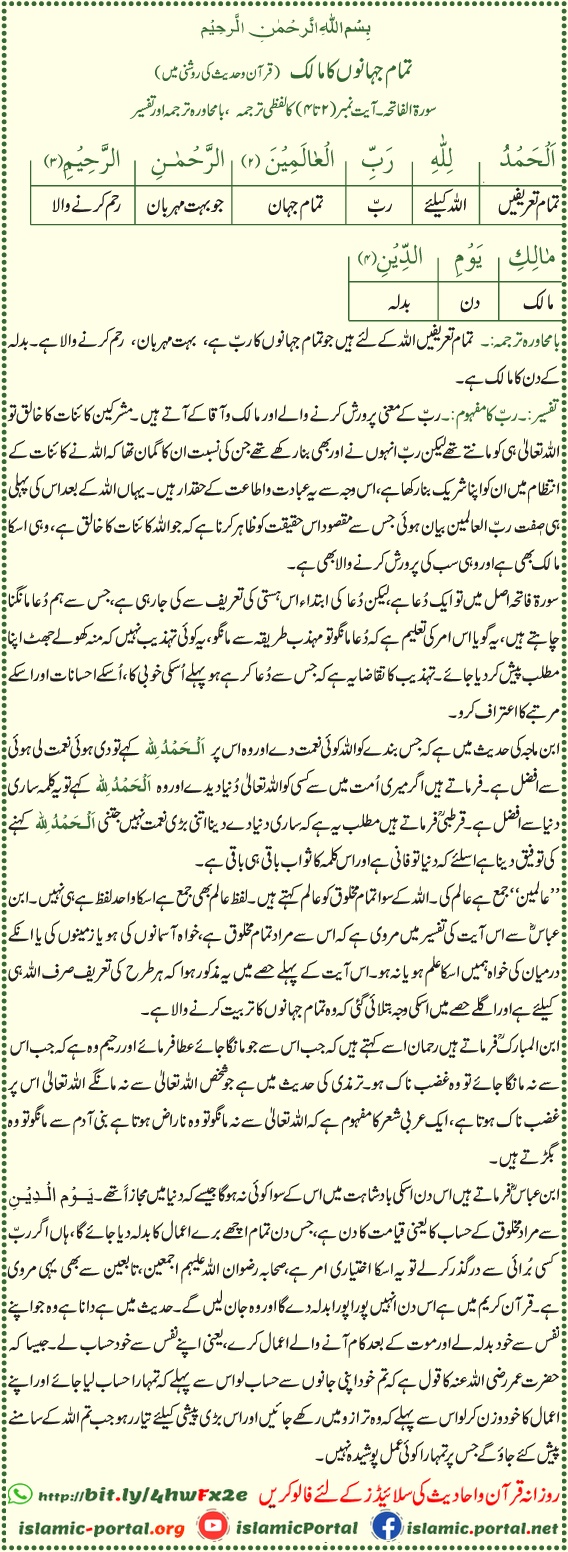
تمام جہانوں کا مالک
(قرآن وحدیث کی روشنی میں)
سورۃ الفاتحہ۔ آیت نمبر (۲ تا ۴) کا لفظی ترجمہ ، بامحاورہ ترجمہ اور تفسیر

بامحاورہ ترجمہ :۔ تمام تعریفیں اللہ کے لئے ہیں جو تمام جہانوں کا رب ہے، بہت مہربان، رحم کرنے والا ہے۔ بدلہ کے دن کا مالک ہے۔
تفسیر :۔ رب کا مفہوم:۔
رب کے معنی پرورش کرنے والے اور مالک و آقا کے آتے ہیں۔ مشرکین کائنات کا خالق تو اللہ تعالیٰ ہی کو مانتے تھے لیکن رب انہوں نے اور بھی بنا رکھے تھے جن کی نسبت ان کا گمان تھا کہ اللہ نے کائنات کے انتظام میں ان کو اپنا شریک بنا رکھا ہے، اس وجہ سے یہ عبادت واطاعت کے حقدار ہیں۔ یہاں اللہ کے بعد اس کی پہلی ہی صفت رب العالمین بیان ہوئی جس سے مقصود اس حقیقت کو ظاہر کرنا ہے کہ جو اللہ کائنات کا خالق ہے، وہی اسکا مالک بھی ہے اور وہی سب کی پرورش کرنے والا بھی ہے۔
سورۃ فاتحہ اصل میں تو ایک دُعا ہے، لیکن دُعا کی ابتداء اس ہستی کی تعریف سے کی جارہی ہے، جس سے ہم دُعا مانگنا چاہتے ہیں، یہ گویا اس امر کی تعلیم ہے کہ دُعا مانگو تو مہذب طریقہ سے مانگو، یہ کوئی تہذیب نہیں کہ منہ کھولے جھٹ اپنا مطلب پیش کر دیا جائے۔ تہذیب کا تقاضا یہ ہے کہ جس سے دُعا کر رہے ہو پہلے اُسکی خوبی کا، اُسکے احسانات اور اُسکے مرتبے کا اعتراف کرو۔
ابن ماجہ کی حدیث میں ہے کہ جس بندے کو اللہ کوئی نعمت دے اور وہ اس پر اَلْحَمْدُ لِلّٰهِ کہے تو دی ہوئی نعمت لی ہوئی سے افضل ہے۔ فرماتے ہیں اگر میری اُمت میں سے کسی کو اللہ تعالیٰ دُنیا دے اور وہ اَلْحَمْدُ لِلّٰهِ کہے تو یہ کلمہ ساری دنیا سے افضل ہے۔ قرطبیؒ فرماتے ہیں مطلب یہ ہے کہ ساری دنیا دے دینا اتنی بڑی نعمت نہیں جتنی اَلْحَمْدُ لِلّٰهِ کہنے کی توفیق دینا ہے اسلئے کہ دنیا تو فانی ہے اور اس کلمہ کا ثواب باقی ہی باقی ہے۔
”عالمین“ جمع ہے عالم کی۔ اللہ کے سوا تمام مخلوق کو عالم کہتے ہیں۔ لفظ عالم بھی جمع ہے اسکا واحد لفظ ہے ہی نہیں۔ ابن عباسؓ سے اس آیت کی تفسیر میں مروی ہے کہ اس سے مراد تمام مخلوق ہے، خواہ آسمانوں کی ہو یا زمینوں کی یا انکے درمیان کی خواہ ہمیں اسکا علم ہو یا نہ ہو۔ اس آیت کے پہلے حصے میں یہ مذکور ہوا کہ ہر طرح کی تعریف صرف اللہ ہی کیلئے ہے اور اگلے حصے میں اسکی وجہ بتلائی گئی کہ وہ تمام جہانوں کا تربیت کرنے والا ہے۔
ابن المبارکؒ فرماتے ہیں رحمان اسے کہتے ہیں کہ جب اس سے جو مانگا جائے عطا فرمائے اور رحیم وہ ہے کہ جب اس سے نہ مانگا جائے تو وہ غضب ناک ہو۔ ترمذی کی حدیث میں ہے جو شخص اللہ تعالیٰ سے نہ مانگے اللہ تعالیٰ اس پر غضب ناک ہوتا ہے، ایک عربی شعر کا مفہوم ہے کہ اللہ تعالیٰ سے نہ مانگو تو وہ ناراض ہوتا ہے بنی آدم سے مانگو تو وہ بگڑتے ہیں۔
ابن عباسؓ فرماتے ہیں اس دن اسکی بادشاہت میں اس کے سوا کوئی نہ ہوگا۔ جیسے کہ دنیا میں مجازاً تھے۔ يَوْمِ الدِّيْنِ سے مراد مخلوق کے حساب کا یعنی قیامت کا دن ہے، جس دن تمام اچھے برے اعمال کا بدلہ دیا جائے گا، ہاں اگر رب کسی بُرائی سے درگزر کر لے تو یہ اسکا اختیاری امر ہے، صحابہ رضوان اللہ علیہم اجمعین، تابعین سے بھی یہی مروی ہے۔ قرآن کریم میں ہے اس دن انہیں پورا پورا بدلہ دے گا اور وہ جان لیں گے۔ حدیث میں ہے دانا ہے وہ جو اپنے نفس سے خود بدلہ لے اور موت کے بعد کام آنے والے اعمال کرے، یعنی اپنے نفس سے خود حساب لے۔ جیسا کہ حضرت عمر رضی اللہ عنہ کا قول ہے کہ تم خود اپنی جانوں سے حساب لو اس سے پہلے کہ تمہارا حساب لیا جائے اور اپنے اعمال کا خود وزن کر لو اس سے پہلے کہ وہ ترازو میں رکھے جائیں اور اس بڑی پیشی کیلئے تیار ہو جب تم اللہ کے سامنے پیش کئے جاؤ گے جس پر تمہارا کوئی عمل پوشیدہ نہیں۔
English Translation
In the name of Allah, the Most Gracious, the Most Merciful
The Lord of All Worlds
(In the Light of the Qur’an and Hadith)
Translation of Sūrah al-Fātiḥah (Verses 2–4)
Idiomatic Translation:
"All praise belongs to Allah, the Lord of all worlds — the Most Gracious, the Most Merciful — Master of the Day of Judgment." (Al-Fātiḥah 2–4)
The Meaning of “Rabb”
The word Rabb means the One who nurtures, sustains, and possesses complete authority as the Master and Lord.
The polytheists acknowledged that Allah alone is the Creator of the universe; however, they had also taken other beings as “lords,” believing that Allah had made them partners in managing the affairs of the universe, and therefore they considered them deserving of worship and obedience.
Here, immediately after mentioning Allah, the Qur’an describes Him with the attribute “Rabb al-ʿĀlamīn” (Lord of all worlds). The purpose is to establish the reality that the One who created the universe is also its true Master and the One who nourishes and sustains all of creation.
The Etiquette of Supplication in Sūrah al-Fātiḥah
Sūrah al-Fātiḥah is essentially a supplication. However, the supplication begins with the praise of the Being from whom the prayer is being requested.
This teaches an important principle of etiquette: when one supplicates, it should be done with proper respect and decorum. It is not refined conduct to immediately present one’s request. True etiquette requires that one first acknowledge the excellence, the favors, and the elevated status of the One to whom the supplication is directed.
The Virtue of Saying “Al-ḥamdu lillāh”
A narration reported in Sunan Ibn Mājah states that when Allah grants a servant a blessing and the servant says “Al-ḥamdu lillāh” (All praise is for Allah), the utterance of this phrase is greater than the blessing that was given.
It is also reported that if Allah were to grant a person from this community the entire world and that person says “Al-ḥamdu lillāh,” this statement would be better than the whole world.
Al-Qurṭubī explains that the meaning is that receiving the entire world is not as great a blessing as being granted the ability to say “Al-ḥamdu lillāh.” The reason is that worldly possessions are temporary, whereas the reward for this phrase remains everlasting.
The Meaning of “ʿĀlamīn” (Worlds)
The word “ʿĀlamīn” is the plural of “ʿālam.” Everything besides Allah is called an ʿālam (world or realm of creation). The term refers collectively to all forms of creation.
It is reported from Ibn ʿAbbās (may Allah be pleased with him) that this verse refers to all creation — whether in the heavens, the earth, or between them — whether we are aware of them or not.
The first part of the verse declares that all praise belongs solely to Allah, and the second part explains the reason: He is the One who nurtures and sustains all the worlds.
The Meaning of “Al-Raḥmān” and “Al-Raḥīm”
Ibn al-Mubārak explains that al-Raḥmān refers to the One who grants when He is asked, while al-Raḥīm refers to the One who becomes displeased when a servant does not ask Him.
A hadith reported in Jāmiʿ al-Tirmidhī states that whoever does not ask Allah, Allah becomes displeased with him.
An Arabic poetic expression conveys the same meaning: if you do not ask Allah, He becomes displeased, but if you ask the children of Adam (human beings), they become annoyed.
The Meaning of “Master of the Day of Judgment”
Ibn ʿAbbās (may Allah be pleased with him) stated that on that Day no one will possess authority except Allah, unlike in the worldly life where authority is held in a limited and temporary sense.
The phrase “Yawm al-Dīn” refers to the Day of Resurrection — the Day when all creation will be judged and every good and evil deed will receive its recompense. However, if the Lord overlooks a wrongdoing, that is by His will and mercy.
This understanding is also reported from the Companions and the Tābiʿīn.
The Qur’an states that on that Day people will receive the full recompense for their deeds and will realize the truth.
A hadith states: “The wise person is the one who holds himself accountable and performs deeds that will benefit him after death.”
Similarly, ʿUmar ibn al-Khaṭṭāb (may Allah be pleased with him) said:
“Take account of yourselves before you are taken to account, and weigh your deeds before they are weighed for you. Prepare yourselves for the great presentation when you will stand before Allah — a Day when none of your deeds will remain hidden.”