بِسْمِ اللّٰهِ الرَّحْمٰنِ الرَّحِيْمِ
انعام یافتہ، مغضوب اور بھٹکے ہوئے
(قرآن وحدیث کی روشنی میں)
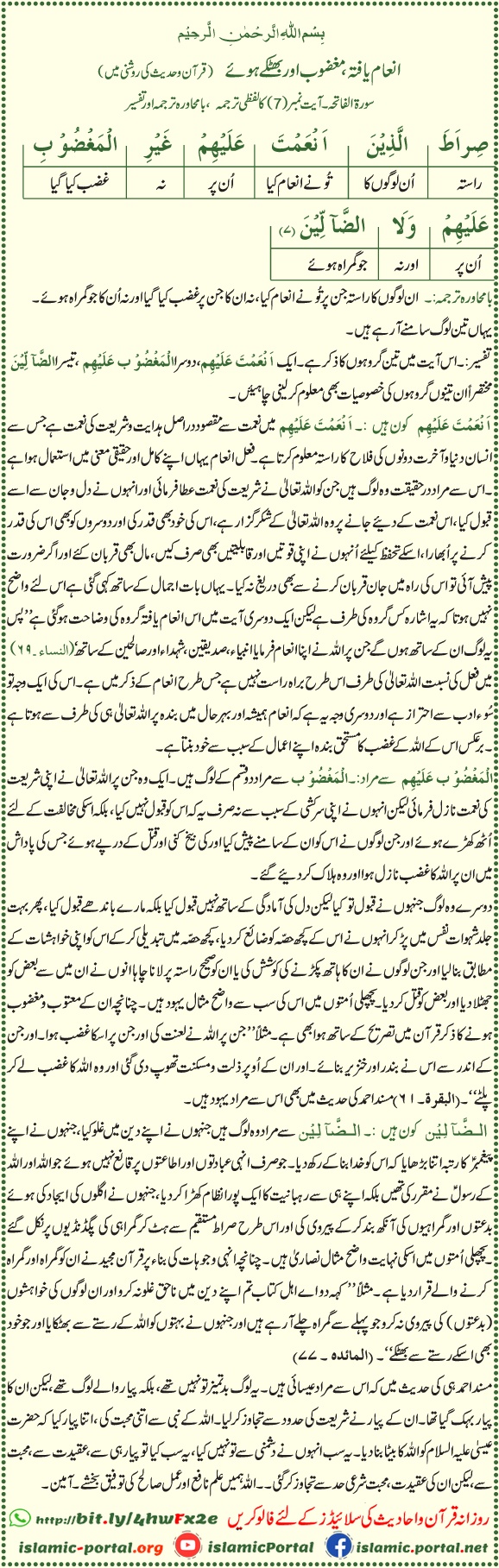
سورۃ الفاتحہ ۔ آیت نمبر (7) کا لفظی ترجمہ ، بامحاورہ ترجمہ اور تفسیر
| صِرَاطَ |
الَّذِيْنَ |
اَنْعَمْتَ |
عَلَيْهِمْ |
غَيْرِ |
الْمَغْضُوْبِ |
| راستہ |
ان لوگوں کا |
تو نے انعام کیا |
ان پر |
نہ |
غضب کیا گیا |
| عَلَيْهِمْ |
وَلَا |
الضَّآلِّيْنَ (۷) |
| ان پر |
اور نہ |
گمراہ ہوئے |
بامحاورہ ترجمہ :۔ ان لوگوں کا راستہ جن پر تو نے انعام کیا، نہ ان کا جن پر غضب کیا گیا اور نہ ان کا جو گمراہ ہوئے۔ یہاں تین لوگ سامنے آرہے ہیں۔
تفسیر :۔ اس آیت میں تین گروہوں کا ذکر ہے۔ ایک اَنْعَمْتَ عَلَيْهِمْ ، دوسرا الْمَغْضُوْبِ عَلَيْهِمْ ، تیسرا الضَّآلِّيْنَ مختصراً ان تینوں گروہوں کی خصوصیات بھی معلوم کر لینی چاہئیں۔
اَنْعَمْتَ عَلَيْهِمْ کون ہیں :۔
اَنْعَمْتَ عَلَيْهِمْ میں نعمت سے مقصود دراصل ہدایت وشریعت کی نعمت ہے جس سے انسان دنیا وآخرت دونوں کی فلاح کا راستہ معلوم کرتا ہے۔ فعل انعام یہاں اپنے کامل اور حقیقی معنی میں استعمال ہوا ہے۔ اس سے مراد درحقیقت وہ لوگ ہیں جن کو اللہ تعالیٰ نے شریعت کی نعمت عطا فرمائی اور انہوں نے دل و جان سے اسے قبول کیا، اس نعمت کے دیئے جانے پر وہ اللہ تعالیٰ کے شکرگزار رہے، اس کی خود بھی قدر کی اور دوسروں کو بھی اس کی قدر کرنے پر اُبھارا، اسکے تحفظ کیلئے اُنہوں نے اپنی قوتیں اور قابلیتیں بھی صرف کیں، مال بھی قربان کئے اور اگر ضرورت پیش آئی تو اس کی راہ میں جان قربان کرنے سے بھی دریغ نہ کیا۔ یہاں بات اجمال کے ساتھ کہی گئی ہے اس لئے واضح نہیں ہوتا کہ یہ اشارہ کس گروہ کی طرف ہے لیکن ایک دوسری آیت میں اس انعام یافتہ گروہ کی وضاحت ہوگئی ہے ’پس یہ لوگ ان کے ساتھ ہوں گے جن پر اللہ نے اپنا انعام فرمایا انبیاء، صدیقین، شہداء اور صالحین کے ساتھ‘ (النساء ۔ ۶۹) میں فعل کی نسبت اللہ تعالیٰ کی طرف اس طرح براہ راست نہیں ہے جس طرح انعام کے ذکر میں ہے۔ اس کی ایک وجہ تو یہ ادب ہے احترام ہے اور دوسری وجہ یہ ہے کہ انعام ہمیشہ اور بہر حال میں بندہ پر اللہ تعالیٰ ہی کی طرف سے ہوتا ہے برعکس اس کے اللہ کے غضب کا مستحق بندہ اپنے اعمال کے سبب سے خود بنتا ہے۔
الْمَغْضُوْبِ عَلَيْهِمْ سے مراد :۔
الْمَغْضُوْبِ سے مراد دو قسم کے لوگ ہیں۔ ایک وہ جن پر اللہ تعالیٰ نے اپنی شریعت کی نعمت نازل فرمائی لیکن انہوں نے اپنی سرکشی کے سبب سے نہ صرف یہ کہ اس کو قبول نہیں کیا، بلکہ اسکی مخالفت کے لئے اُٹھ کھڑے ہوئے اور جن لوگوں نے اس کو ان کے سامنے پیش کیا اور کی حق کشی اور قتل کے درپے ہوئے، جس کی پاداش میں ان پر اللہ کا غضب نازل ہوا اور وہ ہلاک کر دیئے گئے۔ دوسرے وہ لوگ جنہوں نے قبول تو کیا لیکن دل کی آمادگی کے ساتھ نہیں قبول کیا بلکہ مارے باندھے قبول کیا، پھر بہت جلد شہوات نفس میں پڑ کر انہوں نے اس کے کچھ حصہ کو ضائع کر دیا، کچھ حصہ میں تبدیلی کر کے اس کو اپنی خواہشات کے مطابق بنالیا اور جن لوگوں نے ان کا ہاتھ پکڑنے کی کوشش کی یا ان کو صحیح راستہ پر لانا چاہا انہوں نے ان میں سے بعض کو جھٹلا دیا اور بعض کو قتل کر دیا۔ پچھلی اُمتوں میں اس کی سب سے واضح مثال یہود ہیں۔ چنانچہ ان کے معتوب ومغضوب ہونے کا ذکر قرآن میں تصریح کے ساتھ ہوا بھی ہے۔ مثلاً ’جن پر اللہ نے لعنت کی اور جن پر اسکا غضب ہوا۔ اور جن کے اندر سے اس نے بندر اور خنزیر بنائے ۔ اور ان کے اُوپر ذلت ومسکنت تھوپ دی گئی اور وہ اللہ کا غضب لے کر پلٹے‘ ۔ (البقرہ ۔ ۶۱) مسند احمد کی حدیث میں بھی اس سے مراد یہود ہیں۔
الضَّآلِّيْنَ کون ہیں :۔
الضَّآلِّيْنَ سے مراد وہ لوگ ہیں جنہوں نے اپنے دین میں غلو کیا، جنہوں نے اپنے پیغمبر کا رتبہ اتنا بڑھایا کہ اس کو خدا بنا کے رکھ دیا۔ جو صرف انہی عبادتوں اور اطاعتوں پر قانع نہیں ہوئے جو اللہ اور اللہ کے رسول نے مقرر کی تھیں بلکہ اپنے ہی سے رہبانیت کا ایک پورا نظام کھڑا کر دیا، جنہوں نے اگلوں کی ایجاد کی ہوئی بدعتوں اور گمراہیوں کی آنکھ بند کر کے پیروی کی اور اس طرح صراط مستقیم سے ہٹ کر گمراہی کی پگڈنڈیوں پر نکل گئے ۔ پچھلی اُمتوں میں اسکی نہایت واضح مثال نصاریٰ ہیں۔ چنانچہ انہی وجوہات کی بناء پر قرآن مجید نے ان کو گمراہ اور گمراہ کرنے والے قرار دیا ہے۔ مثلاً ’کہہ دو اے اہل کتاب تم اپنے دین میں ناحق غلو نہ کرو اور ان لوگوں کی خواہشوں (بدعتوں) کی پیروی نہ کرو جو پہلے سے گمراہ چلے آرہے ہیں اور جنہوں نے بہتوں کو اللہ کے رستے سے بھٹکا دیا اور جو خود بھی اسکے رستے سے بھٹکے‘ ۔ (المائدہ ۔ ۷۷) مسند احمد ہی کی حدیث میں کہ اس سے مراد عیسائی ہیں۔ یہ لوگ بدتمیز تو نہیں تھے، بلکہ پیار والے لوگ تھے، لیکن ان کا پیار بہک گیا تھا۔ ان کے پیار نے شریعت کی حدود سے تجاوز کرلیا۔ اللہ کے نبی سے اتنی محبت کی، اتنا پیار کیا کہ حضرت عیسیٰ علیہ السلام کو اللہ کا بیٹا بنادیا۔ یہ سب انہوں نے دشمنی سے تو نہیں کیا، یہ سب کیا تو پیار ہی سے، عقیدت سے، محبت سے، لیکن ان کی عقیدت، محبت شرعی حد سے تجاوز کرگئی۔۔ اللہ ہمیں علم نافع اور عمل صالح کی توفیق بخشے۔ آمین۔
English Translation
In the name of Allah, the Most Gracious, the Most Merciful
Those Who Are Favored, Those Who Incurred Wrath, and Those Who Went Astray
(In the Light of the Qur’an and Hadith)
Translation of Sūrah al-Fātiḥah (Verse 7)
Arabic:
صِرَاطَ الَّذِينَ أَنْعَمْتَ عَلَيْهِمْ غَيْرِ الْمَغْضُوبِ عَلَيْهِمْ وَلَا الضَّالِّينَ
Transliteration:
Ṣirāṭa alladhīna anʿamta ʿalayhim ghayri al-maghḍūbi ʿalayhim wa-lā al-ḍāllīn
Literal Translation:
The path | of those | You have favored | upon them | not | those who incurred wrath | upon them | nor | those who went astray
Idiomatic Translation:
“The path of those upon whom You have bestowed Your favor, not of those who incurred Your wrath, nor of those who went astray.” (Al-Fātiḥah 7)
The Three Groups Mentioned in This Verse
In this verse three categories of people are mentioned:
-
Those upon whom Allah has bestowed His favor (al-munʿam ʿalayhim)
-
Those who incurred the wrath (al-maghḍūb ʿalayhim)
-
Those who went astray (al-ḍāllīn)
It is beneficial to briefly understand the characteristics of each of these groups.
Those Upon Whom Allah Bestowed His Favor
The favor mentioned here primarily refers to the blessing of guidance and divine law (sharīʿah) through which human beings come to know the path of success in both this world and the Hereafter.
The expression of divine favor here carries its complete and true meaning. It refers to those people to whom Allah granted the blessing of divine guidance, and who accepted it wholeheartedly. They showed gratitude to Allah for this blessing, valued it themselves, encouraged others to value it, and devoted their abilities and efforts to preserving it.
They sacrificed their wealth in its cause, and when necessary, they did not hesitate even to sacrifice their lives for it.
Although the verse mentions this group in a general manner, another Qur’anic verse clarifies who they are:
Arabic:
فَأُولَٰئِكَ مَعَ الَّذِينَ أَنْعَمَ اللَّهُ عَلَيْهِم مِّنَ النَّبِيِّينَ وَالصِّدِّيقِينَ وَالشُّهَدَاءِ وَالصَّالِحِينَ
Transliteration:
Fa-ulāʾika maʿa alladhīna anʿama Allāhu ʿalayhim mina al-nabiyyīn wa-al-ṣiddīqīn wa-al-shuhadāʾ wa-al-ṣāliḥīn
Translation:
“Such people will be with those upon whom Allah has bestowed His favor: the prophets, the truthful, the martyrs, and the righteous.” (Al-Nisāʾ 69)
In this verse the favor is attributed directly to Allah. One reason for this wording is respect and proper etiquette. Another reason is that divine favor always comes solely from Allah, whereas a person becomes deserving of divine wrath through his own deeds.
-
Those Who Incurred Wrath
The term al-maghḍūb ʿalayhim refers to two categories of people.
The first are those upon whom Allah revealed the blessing of divine guidance, yet they rejected it out of arrogance and rebellion. They not only refused to accept it but actively opposed it. They harmed those who conveyed the truth to them and even sought to kill them. As a consequence, they incurred the wrath of Allah.
The second are those who outwardly accepted divine guidance but without sincerity of heart. Later they became absorbed in their desires and corrupted parts of the religion, altering some of its teachings to suit their own wishes. When reformers attempted to correct them, they rejected some of them and even killed others.
Among earlier communities, the clearest example of this category is the Jews. The Qur’an explicitly mentions that they incurred divine anger. For example:
Arabic:
وَبَاءُوا بِغَضَبٍ مِّنَ اللَّهِ
Transliteration:
Wa-bāʾū bi-ghaḍabin mina Allāh
Translation:
“They returned with the wrath of Allah.” (Al-Baqarah 61)
A narration in Musnad Aḥmad also interprets this group as referring to the Jews.
-
Those Who Went Astray
The phrase al-ḍāllīn refers to those who deviated from the straight path through exaggeration and religious innovation.
These are people who exceeded the proper limits within their religion. They elevated the status of their prophet to such an extent that they attributed divinity to him. They were not content with the acts of worship and obedience that Allah and His Messenger prescribed. Instead, they invented systems of monasticism and religious innovations of their own.
They blindly followed the innovations and deviations introduced by earlier people and thus departed from the Straight Path.
Among previous communities, the clearest example of this category is the Christians. The Qur’an describes their deviation as follows:
Arabic:
قُلْ يَا أَهْلَ الْكِتَابِ لَا تَغْلُوا فِي دِينِكُمْ غَيْرَ الْحَقِّ
Transliteration:
Qul yā ahla al-kitābi lā taghlū fī dīnikum ghayra al-ḥaqq
Translation:
“Say: O People of the Book, do not exceed the limits in your religion unjustly.” (Al-Māʾidah 77)
A narration in Musnad Aḥmad explains that the term al-ḍāllīn refers to the Christians.
These people were not necessarily hostile or harsh; rather, many of them acted out of affection and devotion. However, their devotion went beyond the limits set by divine law. Their love for the Prophet ʿĪsā (Jesus) led them to raise him beyond his rightful status and to attribute to him what belongs only to Allah.
Thus their love, although sincere in intention, exceeded the bounds of the revealed law and resulted in misguidance.
May Allah grant us beneficial knowledge and righteous deeds. Āmīn.