بِسْمِ اللّٰهِ الرَّحْمٰنِ الرَّحِيْمِ
تیری ہی عبادت اور مدد
(قرآن وحدیث کی روشنی میں)
سورۃ الفاتحہ ۔ آیت نمبر (۵) کا لفظی ترجمہ ، بامحاورہ ترجمہ اور تفسیر
| اِيَّاكَ |
نَعْبُدُ |
وَ |
اِيَّاكَ |
نَسْتَعِيْنُ (۵) |
| صرف تیری ہی |
عبادت کرتے ہیں |
اور |
صرف تجھ ہی سے |
ہم مدد چاہتے ہیں |
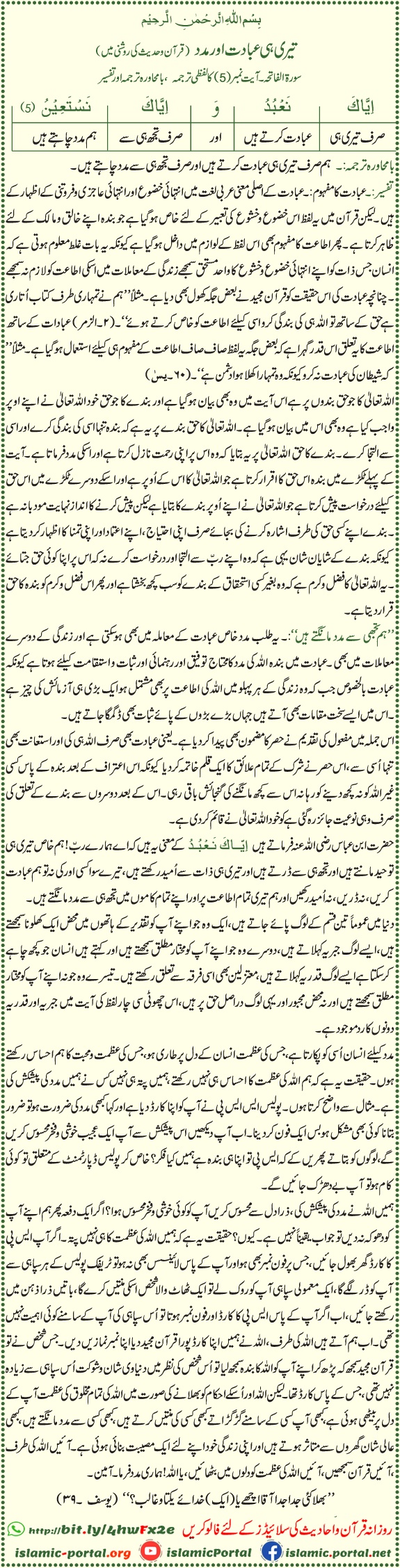
بامحاورہ ترجمہ :۔ ہم صرف تیری ہی عبادت کرتے ہیں اور صرف تجھ ہی سے مدد چاہتے ہیں۔
تفسیر :۔ عبادت کا مفہوم :۔
عبادت کے اصلی معنی عربی لغت میں انتہائی خضوع اور انتہائی عاجزی وفروتنی کے اظہار کے ہیں۔ لیکن قرآن میں یہ لفظ اس خضوع وخشوع کی تعبیر کے لئے خاص ہو گیا ہے جو بندہ اپنے خالق ومالک کے لئے ظاہر کرتا ہے۔ پھر اطاعت کا مفہوم بھی اس لفظ کے لوازم میں داخل ہو گیا ہے کیونکہ یہ بات غلط معلوم ہوتی ہے کہ انسان جس ذات کو اپنے انتہائی خضوع وخشوع کا واحد مستحق سمجھے زندگی کے معاملات میں اسکی اطاعت کو لازم نہ سمجھے۔ چنانچہ عبودیت کی اس حقیقت کو قرآن مجید نے بعض جگہ کھول بھی دیا ہے۔ مثلاً ”ہم نے تمہاری طرف کتاب اُتاری ہے حق کے ساتھ تو اللہ ہی کی بندگی کرو اسی کیلئے اطاعت کو خالص کرتے ہوئے“۔ (الزمر۔۲) عبادت کے ساتھ اطاعت کا یہ تعلق اس قدر گہرا ہے کہ بعض جگہ یہ لفظ صاف صاف اطاعت کے مفہوم ہی کیلئے استعمال ہو گیا ہے۔ مثلاً ”کہ شیطان کی عبادت نہ کرو کیونکہ وہ تمہارا کھلا ہوا دشمن ہے“۔ (یس۔۶۰)
اللہ تعالیٰ کا جو حق بندوں پر ہے اس آیت میں وہ بھی بیان ہو گیا ہے اور بندے کا جو حق خود اللہ تعالیٰ نے اپنے اوپر واجب کیا ہے وہ بھی اس میں بیان ہو گیا ہے۔ اللہ تعالیٰ کا حق بندے پر یہ ہے کہ بندہ تنہا اسی کی بندگی کرے اور اسی سے التجا کرے۔ بندے کا حق اللہ تعالیٰ پر یہ بتایا کہ وہ اس پر اپنی رحمت نازل کرتا ہے اور اسکی مدد فرماتا ہے۔ آیت کے پہلے ٹکڑے میں بندہ اس حق کا اقرار کرتا ہے جو اللہ تعالیٰ کا اس کے اوپر ہے اور اسکے دوسرے ٹکڑے میں اس حق کیلئے درخواست پیش کرتا ہے جو اللہ تعالیٰ نے اپنے اوپر بندے کا بتایا ہے لیکن پیش کرنے کا انداز نہایت مودبانہ ہے۔ بندے اپنے کسی حق کی طرف اشارہ کرنے کی بجائے صرف اپنی احتیاج، اپنے اعتماد اور اپنی تمنا کا اظہار کر دینا ہے کیونکہ بندے کے شایان شان یہی ہے کہ وہ اپنے رب سے التجا اور درخواست کرے نہ کہ اس پر اپنا کوئی حق جتائے۔ یہ اللہ تعالیٰ کا فضل وکرم ہے کہ وہ بغیر کسی استحقاق کے بندے کو سب کچھ بخشتا ہے اور پھر اس فضل وکرم کو بندہ کا حق قرار دیتا ہے۔
ہم تجھی سے مدد مانگتے ہیں :۔
یہ طلب مدد خاص عبادت کے معاملہ میں بھی ہو سکتی ہے اور زندگی کے دوسرے معاملات میں بھی۔ عبادت میں بندہ اللہ کی مدد کا محتاج توفیق اور رہنمائی اور ثبات واستقامت کیلئے ہوتا ہے کیونکہ عبادت بالخصوص جب کہ وہ زندگی کے ہر پہلو میں اللہ کی اطاعت پر بھی مشتمل ہو ایک بڑی ہی آزمائش کی چیز ہے اس میں ایسے سخت مقامات بھی آتے ہیں جہاں بڑے بڑوں کے پائے ثبات بھی ڈگمگا جاتے ہیں۔
اس جملہ میں مفعول کی تقدیم نے حصر کا مضمون بھی پیدا کر دیا ہے۔ یعنی عبادت بھی صرف اللہ ہی کی اور استعانت بھی تنہا اُسی سے، اس حصر نے شرک کے تمام علائق کا ایک قلم خاتمہ کر دیا کیونکہ اس اعتراف کے بعد بندہ کے پاس کسی غیر اللہ کو نہ پوجنے دینے کی گنجائش باقی رہی۔ اس کے بعد دوسروں سے بندے کے تعلق کی صرف وہی نوعیت جائز رہ گئی ہے جو خود اللہ تعالیٰ نے قائم کر دی ہے۔
حضرت ابن عباس رضی اللہ عنہ فرماتے ہیں اِيَّاكَ نَعْبُدُ کے معنی یہ ہیں کہ اے ہمارے رب ہم خاص تیری ہی توحید مانتے ہیں اور تجھ ہی سے ڈرتے ہیں اور تیری ہی ذات سے اُمید رکھتے ہیں، تیرے سوا کسی اور کی نہ تو ہم عبادت کریں، نہ ڈریں نہ اُمید رکھیں اور ہم تیری تمام اطاعت پر اور اپنے تمام کاموں میں تجھ ہی سے مدد مانگتے ہیں۔
دنیا میں عموماً تین قسم کے لوگ پائے جاتے ہیں، ایک وہ جو اپنے آپ کو تقدیر کے ہاتھوں میں محض ایک کھلونا سمجھتے ہیں، ایسے لوگ جبر یہ کہلاتے ہیں۔ دوسرے وہ جو اپنے آپ کو مختار مطلق سمجھتے ہیں اور کہتے ہیں انسان جو کچھ چاہے کر سکتا ہے ایسے لوگ قدریہ کہلاتے ہیں، معتزلین بھی اسی فرقہ سے تعلق رکھتے ہیں۔ تیسرے وہ جو نہ اپنے آپ کو مختار مطلق سمجھتے ہیں اور نہ محض مجبور اور یہی لوگ دراصل حق پر ہیں، اس چھوٹی سی چار لفظ کی آیت میں جبریہ اور قدریہ دونوں کا رد موجود ہے۔
مدد کیلئے انسان اُسی کو پکارتا ہے، جس کی عظمت انسان کے دل پر طاری ہو، جس کی عظمت ومحبت کا ہم احساس رکھتے ہوں۔ حقیقت یہ ہے کہ ہم اللہ کی عظمت کا احساس ہی نہیں رکھتے، ہمیں پتہ ہی نہیں کس نے ہمیں مدد کی پیشکش کی ہے۔ مثال سے واضح کرتا ہوں۔ پولیس ایس ایس پی نے آپ کو اپنا کارڈ دیا ہے اور کہا کبھی مدد کی ضرورت ہو تو ضرور بتانا کوئی بھی مشکل ہو بس ایک فون کر دینا۔ اب آپ دیکھیں اس پیشکش سے آپ ایک عجیب خوشی وفخر محسوس کریں گے، لوگوں کو بتاتے پھریں گے کہ ایس پی تو اپنا ہی بندہ ہے ہمیں کیا فکر؟ خاص کر پولیس ڈیپارٹمنٹ کے متعلق تو کوئی کام ہو تو آپ بے دھڑک جائیں گے۔
ہمیں اللہ نے مدد کی پیشکش کی، ذرا دل سے محسوس کریں آپ کو کوئی خوشی وفخر محسوس ہوا؟ اگر ایک دفعہ پھر ہم اپنے آپ کو دھوکہ نہ دیں تو جواب یقیناً نہیں ہے۔ کیوں؟ حقیقت یہ ہے کہ ہمیں اللہ کی عظمت کا ہی نہیں پتہ۔ اگر آپ ایس پی کا کارڈ گھر بھول جائیں، جس پر فون نمبر بھی ہو اور آپ کے پاس لائسنس بھی نہ ہو تو ٹریفک پولیس کے ہر سپاہی سے آپ کو ڈر لگے گا، ایک معمولی سپاہی آپ کو روک لے تو آپکی طمانت و التجا اسکی منتیں کرے گا باتیں ڈراؤ ہن میں رکھئے جائیں، اب اگر آپ کے پاس ایس پی کا کارڈ اور فون نمبر ہو تو نا اُس سپاہی کی آپ کے سامنے کوئی اہمیت نہیں تھی اب ہم آتے ہیں اللہ کی طرف، اللہ نے ہمیں اپنا کارڈ پورا قرآن مجید دیا اپنا نمبر نمازیں دیں۔ جس شخص نے تو قرآن مجید سمجھ کر پڑھ کر اپنے آپ کو اللہ کا بندہ سمجھ لیا تو اُس شخص کی نظر میں دنیاوی شان وشوکت اُس سپاہی سے زیادہ نہیں تھی، جس کے پاس کارڈ تھا۔ لیکن اللہ اور اُسکے احکام کو بھلانے کی صورت میں اللہ کی تمام مخلوق کی عظمت آپ کے دل پر بیٹھی ہوئی ہے، کبھی آپ کسی کے سامنے گڑگڑاتے کبھی کسی کی منتیں کرتے ہیں، کبھی کسی سے مدد مانگتے ہیں، کبھی مالی شان گھروں سے متاثر ہوتے ہیں اور اپنی زندگی خود اپنے لئے ایک مصیبت بنائی ہوئی ہے۔ آئیں اللہ کی طرف۔ میں قرآن کو سمجھیں، آئیں اللہ کی عظمت کو دلوں میں بٹھائیں۔ یا اللہ! ہماری مدد فرما۔ آمین۔
”بھلا کئی جِدا جِدا آقا اچھے یا (ایک) خدائے یکتا وغالب؟“ (یوسف ۔ ۳۹)
English Translation
In the name of Allah, the Most Gracious, the Most Merciful
Devotion to You Alone and Seeking Help from You Alone
(In the Light of the Qur’an and Hadith)
Arabic:
إِيَّاكَ نَعْبُدُ وَإِيَّاكَ نَسْتَعِينُ
Transliteration:
Iyyāka naʿbudu wa-iyyāka nastaʿīn
Literal Translation:
You alone | we worship | and | from You alone | we seek help
Idiomatic Translation:
“We worship You alone, and from You alone we seek help.” (Al-Fātiḥah 5)
The Meaning of Worship (ʿIbādah)
In the Arabic language, the original meaning of ʿibādah is the expression of the utmost humility, submission, and devotion.
In the Qur’an, however, this word came to specifically describe the humility and reverence that a servant shows exclusively to his Creator and Master. The concept of obedience also became inseparably connected with this word, because it would be contradictory for a person to consider a being worthy of ultimate humility yet not regard obedience to that being as necessary in the affairs of life.
The Qur’an itself clarifies this reality in several places. For example:
Arabic:
إِنَّا أَنْزَلْنَا إِلَيْكَ الْكِتَابَ بِالْحَقِّ فَاعْبُدِ اللَّهَ مُخْلِصًا لَّهُ الدِّينَ
Transliteration:
Innā anzalnā ilayka al-kitāba bil-ḥaqqi faʿbudi Allāha mukhliṣan lahu al-dīn
Translation:
“Indeed, We have sent down to you the Book in truth, so worship Allah, devoting the religion purely to Him.” (Al-Zumar 2)
The connection between worship and obedience is so strong that in some places the word ʿibādah is used directly in the meaning of obedience.
Arabic:
أَلَّا تَعْبُدُوا الشَّيْطَانَ إِنَّهُ لَكُمْ عَدُوٌّ مُّبِينٌ
Transliteration:
Allā taʿbudū al-shayṭāna innahu lakum ʿaduwwun mubīn
Translation:
“Do not worship Satan; indeed, he is to you a clear enemy.” (Yā Sīn 60)
The Rights of Allah and the Servant
This verse also expresses both the right of Allah over His servants and the right of the servant which Allah, by His grace, has taken upon Himself.
The right of Allah upon His servant is that the servant worship Him alone and turn to Him alone in supplication.
The right of the servant upon Allah, as mentioned here, is that Allah bestows His mercy upon him and grants him assistance.
In the first part of the verse, the servant acknowledges the right that belongs to Allah. In the second part, he presents his humble request for the mercy and help that Allah has graciously promised.
The manner of expression is extremely respectful. The servant does not explicitly claim any right; rather, he merely expresses his need, reliance, and hope. This is befitting for a servant: to plead and supplicate before his Lord, not to assert any claim upon Him.
It is purely the grace and generosity of Allah that He grants everything to His servant without the servant deserving it, and then He Himself describes that generosity as the servant’s right.
Seeking Help from Allah
The phrase “We seek help from You alone” may refer to seeking assistance in matters of worship as well as in the affairs of life.
In matters of worship, the servant is constantly in need of Allah’s help for guidance, ability (tawfīq), steadfastness, and perseverance. Worship—especially when it includes obedience to Allah in every aspect of life—is a profound test. There are moments within it where even the strongest individuals may struggle to remain firm.
In this sentence, the placement of the object before the verb in Arabic creates a sense of exclusivity. Thus the meaning becomes: worship belongs only to Allah, and help is sought only from Him.
This exclusivity eliminates every form of association with others in matters of worship and reliance. After this declaration, there remains no room for directing acts of worship toward anyone besides Allah.
The relationship with other beings then remains only within the limits that Allah Himself has established.
Explanation from Ibn ʿAbbās (may Allah be pleased with him)
ʿAbdullāh ibn ʿAbbās (may Allah be pleased with him) explained the verse as follows:
The meaning of “Iyyāka naʿbudu” is:
“O our Lord, we affirm Your oneness alone; we fear only You; and we place our hope only in You. We worship none besides You, we fear none besides You, and we place our hope in none besides You. In all matters and in all our affairs, we seek help only from You.”
-
The Balance Between Human Effort and Divine Decree
In the world there are generally three types of people.
The first are those who consider themselves completely powerless, believing that human beings are merely toys in the hands of destiny. Such people are known as Jabriyyah.
The second are those who believe that human beings possess complete and independent power, claiming that a person can do whatever he wishes without limitation. Such people are known as Qadariyyah, and the Muʿtazilah are also associated with this view.
The third group neither considers human beings absolutely independent nor completely powerless. They recognize both human responsibility and divine decree. This group represents the balanced and correct understanding.
Remarkably, this short verse of only four words contains a refutation of both extreme positions.
True Reliance Upon Allah
A person calls for help only from the one whose greatness truly occupies his heart.
In reality, many people do not fully recognize the greatness of Allah. If the majesty of Allah were truly realized in the heart, one’s sense of reliance and trust would naturally be directed toward Him alone.
When a person understands the Qur’an and truly recognizes himself as a servant of Allah, worldly prestige and authority lose their overwhelming influence upon the heart. Instead of depending upon people, one turns directly to Allah for help.
Therefore, the call is to return to Allah, to understand the Qur’an, and to allow the awareness of Allah’s greatness to settle firmly in the heart.
Qur’anic Reminder
Arabic:
أَأَرْبَابٌ مُّتَفَرِّقُونَ خَيْرٌ أَمِ اللَّهُ الْوَاحِدُ الْقَهَّارُ
Transliteration:
A-arbābun mutafarriqūna khayrun amillāhu al-wāḥidu al-qahhār
Translation:
“Are many different lords better, or Allah, the One, the All-Dominant?” (Yūsuf 39)