بِسْمِ اللّٰهِ الرَّحْمٰنِ الرَّحِيْمِ
ایمان کا سیدھا راستہ
(قرآن وحدیث کی روشنی میں)
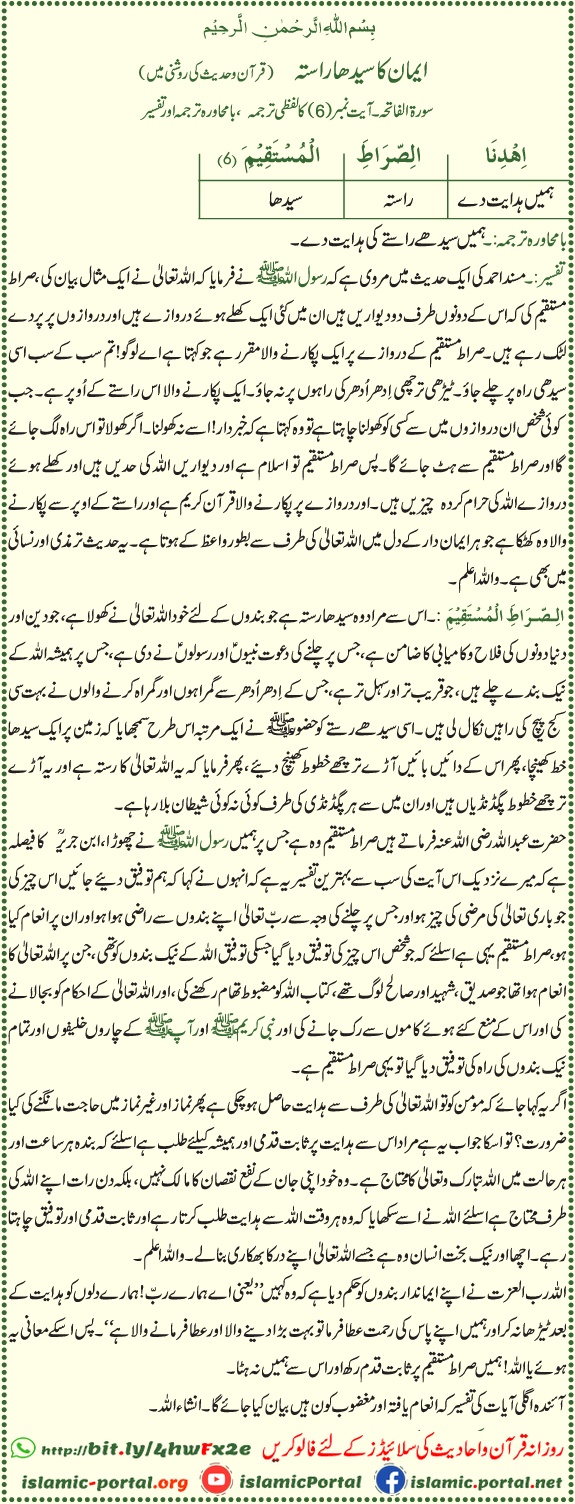
سورۃ الفاتحہ ۔ آیت نمبر (6) کا لفظی ترجمہ ، بامحاورہ ترجمہ اور تفسیر
| اِهْدِنَا |
الصِّرَاطَ |
الْمُسْتَقِيْمَ (۶) |
| ہمیں ہدایت دے |
راستہ |
سیدھا |
بامحاورہ ترجمہ :۔ ہمیں سیدھے راستے کی ہدایت دے۔
تفسیر: مسند احمد کی ایک حدیث میں مروی ہے کہ رسول اللہ ﷺ نے فرمایا کہ اللہ تعالیٰ نے ایک مثال بیان کی، صراط مستقیم کی کہ اس کے دونوں طرف دو دیواریں ہیں ان میں کئی ایک کھلے ہوئے دروازے ہیں اور دروازوں پر پردے لٹک رہے ہیں۔ صراط مستقیم کے دروازے پر ایک پکارنے والا مقرر ہے جو کہتا ہے اے لوگو! تم سب کے سب اسی سیدھی راہ پر چلے جاؤ۔ ٹیڑھی ترچھی اِدھر اُدھر کی راہوں پر نہ جاؤ۔ ایک پکارنے والا اس راستے کے اوپر ہے۔ جب کوئی شخص ان دروازوں میں سے کسی کو کھولنا چاہتا ہے تو وہ کہتا ہے کہ خبردار! اسے نہ کھولنا۔ اگر کھولو گے تو اس راہ لگ جاؤ گے اور صراط مستقیم سے ہٹ جاؤ گے۔ پس صراط مستقیم تو اسلام ہے اور دیواریں اللہ کی حدیں ہیں اور کھلے ہوئے دروازے اللہ کی حرام کردہ چیزیں ہیں۔ اور دروازے پر پکارنے والا قرآن کریم ہے اور راستے کے اوپر سے پکارنے والا وہ کھٹکا ہے جو ہر ایمان دار کے دل میں اللہ تعالیٰ کی طرف سے بطور واعظ کے ہوتا ہے۔ یہ حدیث ترمذی اور نسائی میں بھی ہے۔ واللہ اعلم۔
اَلصِّرَاطَ الْمُسْتَقِيْمَ :۔
اس سے مراد وہ سیدھا راستہ ہے جو بندوں کے لئے خود اللہ تعالیٰ نے کھولا ہے، جو دین اور دنیا دونوں کی فلاح و کامیابی کا ضامن ہے، جس پر چلنے کی دعوت نبیوں اور رسولوں نے دی ہے، جس پر ہمیشہ اللہ کے نیک بندے چلے ہیں، جو قریب تر اور سہل تر ہے، جس کے اِدھر اُدھر سے گمراہوں اور گمراہ کرنے والوں نے بہت سی کج پیچ کی راہیں نکال لی ہیں۔ اسی سیدھے راستے کو حضور ﷺ نے ایک مرتبہ اس طرح سمجھایا کہ زمین پر ایک سیدھا خط کھینچا، پھر اس کے دائیں بائیں آڑے ترچھے خطوط کھینچ دیئے، پھر فرمایا کہ یہ اللہ تعالیٰ کا راستہ ہے اور یہ آڑے ترچھے خطوط پگڈنڈیاں ہیں اور ان میں سے ہر پگڈنڈی کی طرف کوئی نہ کوئی شیطان بلا رہا ہے۔
حضرت عبداللہ رضی اللہ عنہ فرماتے ہیں صراط مستقیم وہ ہے جس پر ہمیں رسول اللہ ﷺ نے چھوڑا، ابن جریر کا فیصلہ ہے کہ میرے نزدیک اس آیت کی سب سے بہترین تفسیر یہ ہے کہ انہوں نے کہا کہ ہم توفیق دیئے جائیں اس چیز کی جو باری تعالیٰ کی مرضی کی چیز ہو اور جس پر چلنے کی وجہ سے رب تعالیٰ اپنے بندوں سے راضی ہوا ہو اور ان پر انعام کیا ہو، صراط مستقیم یہی ہے اسلئے کہ جو شخص اس چیز کی توفیق دیا گیا جس کی توفیق اللہ کے نیک بندوں کو تھی، جن پر اللہ تعالیٰ کا انعام ہوا تھا جو صدیق، شہید اور صالح لوگ تھے، کتاب اللہ کو مضبوط تھام رکھنے کی، اور اللہ تعالیٰ کے احکام کو بجالانے کی اور اس کے منع کئے ہوئے کاموں سے رک جانے کی اور نبی کریم ﷺ اور آپ ﷺ کے چاروں خلیفوں اور تمام نیک بندوں کی راہ کی توفیق دیا گیا تو یہی صراط مستقیم ہے۔
اگر یہ کہا جائے کہ مومن کو تو اللہ تعالیٰ کی طرف سے ہدایت حاصل ہو چکی ہے پھر نماز اور غیر نماز میں حاجت مانگنے کی کیا ضرورت؟ تو اس کا جواب یہ ہے کہ مراد اس سے ہدایت پر ثابت قدمی اور ہمیشہ کیلئے طلب ہے اسلئے کہ بندہ ہر ساعت اور ہر حالت میں اللہ تبارک و تعالیٰ کا محتاج ہے۔ وہ خود اپنی جان کے نفع نقصان کا مالک نہیں، بلکہ دن رات اپنے اللہ کی طرف محتاج ہے اسلئے اللہ نے اسے سکھایا کہ وہ ہر وقت اللہ سے ہدایت طلب کرتا رہے اور ثابت قدمی اور توفیق چاہتا رہے۔ اچھا اور نیک بخت انسان وہ ہے جسے اللہ تعالیٰ اپنے در کا بھکاری بنالے۔ واللہ اعلم۔
اللہ رب العزت نے اپنے ایماندار بندوں کو حکم دیا ہے کہ وہ کہیں ’یعنی اے ہمارے رب! ہمارے دلوں کو ہدایت کے بعد ٹیڑھا نہ کر اور ہمیں اپنے پاس کی رحمت عطا فرما تو بہت بڑا دینے والا اور عطا فرمانے والا ہے‘۔ پس اسکے معانی یہ ہوئے یا اللہ! ہمیں صراط مستقیم پر ثابت قدم رکھ اور اس سے ہمیں نہ ہٹا۔
English Translation
In the name of Allah, the Most Gracious, the Most Merciful
The Straight Path of Faith
(In the Light of the Qur’an and Hadith)
Translation of Sūrah al-Fātiḥah (Verse 6)
Arabic:
اهْدِنَا الصِّرَاطَ الْمُسْتَقِيمَ
Transliteration:
Ihdinā al-ṣirāṭa al-mustaqīm
Literal Translation:
Guide us | the path | the straight
Idiomatic Translation:
“Guide us to the straight path.” (Al-Fātiḥah 6)
Explanation of the Straight Path
A narration reported in Musnad Aḥmad states that the Messenger of Allah ﷺ explained the example of the straight path (al-ṣirāṭ al-mustaqīm).
He said that Allah has presented a parable of a straight path. On both sides of the path there are two walls. In those walls there are several open doors, and over the doors curtains are hanging.
At the entrance of the straight path there is a caller who announces:
“O people, all of you enter upon this straight path and do not deviate toward crooked paths.”
Another caller is positioned above the path. Whenever a person intends to open one of those doors, that caller says:
“Beware! Do not open it. If you open it, you will enter through it and deviate from the straight path.”
The Prophet ﷺ explained:
-
The straight path is Islam.
-
The two walls are the limits set by Allah.
-
The open doors are the things that Allah has forbidden.
-
The caller at the gate of the path is the Qur’an.
-
The caller above the path is the inner admonition placed by Allah in the heart of every believer.
This narration is also reported in Jāmiʿ al-Tirmidhī and Sunan al-Nasāʾī.
Meaning of “al-Ṣirāṭ al-Mustaqīm”
The Straight Path refers to the path that Allah Himself has opened for His servants — the path that guarantees success in both this world and the Hereafter.
It is the path:
-
to which the prophets and messengers called,
-
upon which the righteous servants of Allah have always walked,
-
which is the nearest and most direct way to success,
-
while many deviating and misleading paths have emerged on its sides.
The Messenger of Allah ﷺ once illustrated this by drawing a straight line on the ground, then drawing several crooked lines to the right and left of it. He then said that the straight line represents the path of Allah, while the other lines represent diverging paths, each one being called toward by a devil.
Explanation from the Companions and Scholars
ʿAbdullāh (may Allah be pleased with him) said:
“The Straight Path is the path upon which the Messenger of Allah ﷺ left us.”
Imām Ibn Jarīr al-Ṭabarī explained that the best interpretation of this verse is that it is a supplication asking Allah to grant success in following what pleases Him — the path through which Allah becomes pleased with His servants and bestows His favor upon them.
Thus the Straight Path is the path of those whom Allah has favored: the truthful, the martyrs, and the righteous. It is the path of firmly holding to the Book of Allah, fulfilling His commands, avoiding what He has forbidden, and following the way of the Messenger of Allah ﷺ, his four rightly guided caliphs, and the righteous believers.
Why a Believer Continues to Ask for Guidance
One might ask: if a believer has already been guided by Allah, why does he repeatedly ask for guidance in prayer and in other supplications?
The answer is that the request is for steadfastness upon guidance and its continuation.
A servant remains in constant need of Allah at every moment and in every circumstance. He does not possess control over his own benefit or harm. Rather, day and night he remains dependent upon his Lord.
For this reason, Allah has taught the believer to continually ask Him for guidance, steadfastness, and divine assistance.
A truly fortunate person is the one whom Allah makes a humble supplicant at His door.
Supplication for Steadfastness
Allah instructs His believing servants to say:
Arabic:
رَبَّنَا لَا تُزِغْ قُلُوبَنَا بَعْدَ إِذْ هَدَيْتَنَا وَهَبْ لَنَا مِن لَّدُنكَ رَحْمَةً ۚ إِنَّكَ أَنتَ الْوَهَّابُ
Transliteration:
Rabbanā lā tuzigh qulūbanā baʿda idh hadaytanā wahab lanā min ladunka raḥmah, innaka anta al-wahhāb
Translation:
“Our Lord, do not let our hearts deviate after You have guided us, and grant us mercy from Yourself. Indeed, You are the Bestower.” (Āl ʿImrān 8)
Thus the meaning of the supplication “Guide us to the straight path” is:
“O Allah, keep us firmly established upon the Straight Path and do not allow us to deviate from it.”