بِسْمِ اللّٰهِ الرَّحْمٰنِ الرَّحِيْمِ
متقی کون لوگ ہیں
(قرآن وحدیث کی روشنی میں)
سورۃ البقرہ ۔ آیت نمبر (۱ تا ۲) کا لفظی ترجمہ ، بامحاورہ ترجمہ اور تفسیر
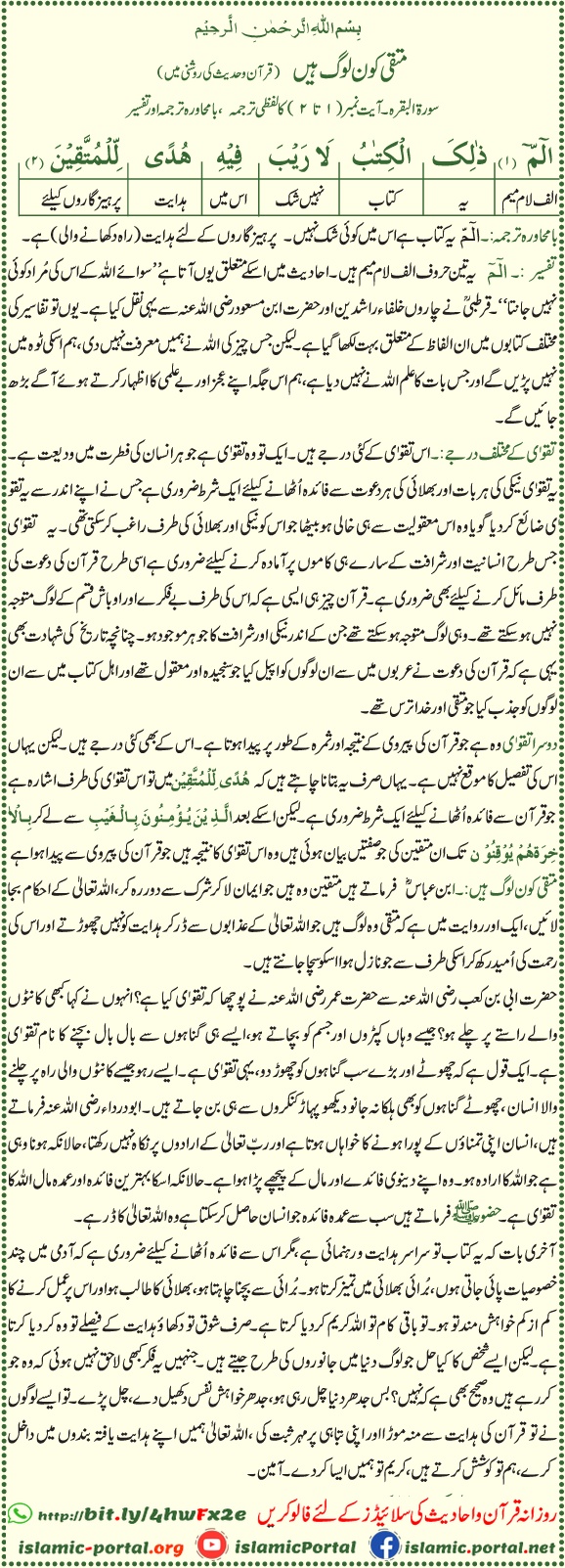
| الٓمّٓ (۱) |
ذٰلِكَ |
الْكِتٰبُ |
لَا رَيْبَ |
فِيْهِ |
هُدًى |
لِّلْمُتَّقِيْنَ (۲) |
| الف لام میم |
یہ |
کتاب |
نہیں شک |
اس میں |
ہدایت |
پرہیزگاروں کیلئے |
بامحاورہ ترجمہ :۔ الٓمّ یہ کتاب ہے اس میں کوئی شک نہیں۔ پرہیزگاروں کے لئے ہدایت (راہ دکھانے والی) ہے۔
تفسیر :۔ الٓمّ یہ تین حروف الف لام میم ہیں۔ احادیث میں اسکے متعلق یوں آتا ہے ”سوائے اللہ کے اس کی مراد کوئی نہیں جانتا“۔ قرطبیؒ نے چاروں خلفاء راشدین اور حضرت ابن مسعود رضی اللہ عنہ سے یہی نقل کیا ہے۔ یوں تو تفاسیر کی مختلف کتابوں میں ان الفاظ کے متعلق بہت لکھا گیا ہے۔ لیکن جس چیز کی اللہ نے ہمیں معرفت نہیں دی، ہم اسکی ٹوہ میں نہیں پڑیں گے اور جس بات کا علم اللہ نے نہیں دیا ہے، ہم اس جگہ اپنے عجز اور بے علمی کا اظہار کرتے ہوئے آگے بڑھ جائیں گے۔
تقویٰ کے مختلف درجے :۔
اس تقویٰ کے کئی درجے ہیں۔ ایک تو وہ تقویٰ ہے جو ہر انسان کی فطرت میں ودیعت ہے۔ یہ تقویٰ نیکی کی ہر بات اور بھلائی کی ہر دعوت سے فائدہ اُٹھانے کیلئے ایک شرط ضروری ہے جس نے اپنے اندر سے یہ تقویٰ ضائع کر دیا گویا وہ اس معقولیت سے ہی خالی ہو بیٹھا جو اس کو نیکی اور بھلائی کی طرف راغب کر سکتی تھی۔ یہ ’تقویٰ‘ جس طرح انسانیت اور شرافت کے سارے ہی کاموں پر آمادہ کرنے کیلئے ضروری ہے اسی طرح قرآن کی دعوت کی طرف مائل کرنے کیلئے بھی ضروری ہے۔ قرآن چیز ہی ایسی ہے کہ اس کی طرف بے فکرے اور اوباش قسم کے لوگ متوجہ نہیں ہو سکتے تھے۔ وہی لوگ متوجہ ہو سکتے تھے جن کے اندر نیکی اور شرافت کا جوہر موجود ہو۔ چنانچہ تاریخ کی شہادت بھی یہی ہے کہ قرآن کی دعوت نے عربوں میں سے ان لوگوں کو اپیل کیا جو سنجیدہ اور معقول تھے اور اہل کتاب میں سے ان لوگوں کو جذب کیا جو متقی اور خدا ترس تھے۔
دوسرا تقویٰ وہ ہے جو قرآن کی پیروی کے نتیجہ اور ثمرہ کے طور پر پیدا ہوتا ہے۔ اس کے بھی کئی درجے ہیں۔ لیکن یہاں اس کی تفصیل کا موقع نہیں ہے۔ یہاں صرف یہ بتانا چاہتے ہیں کہ هُدًى لِّلْمُتَّقِيْنَ میں تو اس تقویٰ کی طرف اشارہ ہے جو قرآن سے فائدہ اُٹھانے کیلئے ایک شرط ضروری ہے۔ لیکن اسکے بعد الَّذِيْنَ يُؤْمِنُوْنَ بِالْغَيْبِ سے لے کر هُمُ الْمُفْلِحُوْنَ تک ان متقین کی جو صفتیں بیان ہوئی ہیں وہ اس تقویٰ کا نتیجہ ہیں جو قرآن کی پیروی سے پیدا ہوا ہے۔
متقی کون لوگ ہیں :۔
ابن عباسؓ فرماتے ہیں متقین وہ ہیں جو ایمان لا کر شرک سے دور رہ کر، اللہ تعالیٰ کے احکام بجا لائیں، ایک اور روایت میں ہے کہ متقی وہ لوگ ہیں جو اللہ تعالیٰ کے عذابوں سے ڈر کر ہدایت کو نہیں چھوڑتے اور اس کی رحمت کی اُمید رکھ کر اسکی طرف سے جو نازل ہوا اسکو سچا جانتے ہیں۔
حضرت ابی بن کعب رضی اللہ عنہ سے حضرت عمر رضی اللہ عنہ نے پوچھا کہ تقویٰ کیا ہے؟ انہوں نے کہا کبھی کانٹوں والے راستے پر چلے ہو؟ جیسے وہاں کپڑوں اور جسم کو بچاتے ہو، ایسے ہی گناہوں سے بال بال بچنے کا نام تقویٰ ہے۔ ایک قول ہے کہ چھوٹے اور بڑے سب گناہوں کو چھوڑ دو، یہی تقویٰ ہے۔ ایسے رہو جیسے کانٹوں والی راہ پر چلنے والا انسان، چھوٹے گناہوں کو بھی ہلکا نہ جانو دیکھو پہاڑ کنکروں سے ہی بن جاتے ہیں۔ ابو درداء رضی اللہ عنہ فرماتے ہیں، انسان اپنی تمناؤں کے پورا ہونے کا خواہاں ہوتا ہے اور رب تعالیٰ کے ارادوں پر نگاہ نہیں رکھتا، حالانکہ ہوتا وہی ہے جو اللہ کا ارادہ ہو۔ وہ اپنے دینوی فائدے اور مال کے پیچھے پڑا ہوا ہے۔ حالانکہ اسکا بہترین فائدہ اور عمدہ مال اللہ کا تقویٰ ہے۔ حضور ﷺ فرماتے ہیں سب سے عمدہ فائدہ جو انسان حاصل کر سکتا ہے وہ اللہ تعالیٰ کا ڈر ہے۔
آخری بات کہ یہ کتاب تو سراسر ہدایت ورہنمائی ہے، مگر اس سے فائدہ اُٹھانے کیلئے ضروری ہے کہ آدمی میں چند خصوصیات پائی جاتی ہوں، بُرائی بھلائی میں تمیز کرتا ہو۔ بُرائی سے بچنا چاہتا ہو، بھلائی کا طالب ہو اور اس پر عمل کرنے کا کم از کم خواہش مند تو ہو۔ جو باقی کام تو اللہ کریم کر دیا کرتا ہے۔ صرف شوق تو دکھاؤ ہدایت کے فیصلے تو وہ کر دیا کرتا ہے۔ لیکن ایسے شخص کا کیا حل جو لوگ دنیا میں جانوروں کی طرح جیتے ہیں۔ جنہیں یہ فکر کبھی لاحق نہیں ہوئی کہ وہ جو کر رہے ہیں وہ صحیح بھی ہے کہ نہیں؟ بس جدھر دنیا چل رہی ہو، جدھر خواہش نفس دھکیل دے، چل پڑے۔ تو ایسے لوگوں نے تو قرآن کی ہدایت سے منہ موڑا اور اپنی تباہی پر مہر ثبت کی، اللہ تعالیٰ ہمیں اپنے ہدایت یافتہ بندوں میں داخل کرے، ہم تو کوشش کرتے ہیں، کریم تو ہمیں ایسا کر دے۔ آمین۔
English Translation
In the name of Allah, the Most Gracious, the Most Merciful
Who Are the God-Conscious (Muttaqīn)
(In the Light of the Qur’an and Hadith)
Translation of Sūrah al-Baqarah (Verses 1–2)
Arabic:
الم
ذَٰلِكَ الْكِتَابُ لَا رَيْبَ فِيهِ هُدًى لِّلْمُتَّقِينَ
Transliteration:
Alif Lām Mīm
Dhālika al-kitābu lā rayba fīhi hudan lil-muttaqīn
Literal Translation:
Alif Lām Mīm
That | the Book | no doubt | in it | guidance | for the God-conscious
Idiomatic Translation:
“Alif Lām Mīm. This is the Book in which there is no doubt; it is guidance for the God-conscious.” (Al-Baqarah 1–2)
The Meaning of “Alif Lām Mīm”
The letters Alif Lām Mīm are among the disconnected letters (ḥurūf muqaṭṭaʿāt) that appear at the beginning of certain chapters of the Qur’an.
Regarding their precise meaning, a narration in the books of hadith states that their true meaning is known only to Allah. Imām al-Qurṭubī reported that the four rightly guided caliphs and ʿAbdullāh ibn Masʿūd (may Allah be pleased with them) held this same view.
Although many interpretations have been discussed in various works of Qur’anic commentary, the appropriate attitude regarding matters whose knowledge Allah has not disclosed is to acknowledge human limitation and refrain from speculation. Where Allah has not given clear knowledge, believers recognize their inability and proceed without claiming certainty.
The Levels of Taqwā (God-Consciousness)
Taqwā has several levels.
One level of taqwā is the innate sense placed within human nature. This inner awareness is the basic condition required for benefiting from every call toward righteousness and goodness. If a person destroys this natural sense of moral awareness, he loses the capacity that encourages him toward goodness.
Just as this innate taqwā is necessary for encouraging noble conduct and moral integrity, it is also necessary for responding positively to the message of the Qur’an.
The Qur’an is such a message that careless and morally indifferent people rarely pay attention to it. Those who respond to it are usually individuals who possess within themselves a sense of seriousness, integrity, and moral awareness.
History itself bears witness that the message of the Qur’an appealed particularly to thoughtful and reasonable individuals among the Arabs, and among the People of the Book it attracted those who were truly God-fearing.
Taqwā as the Result of Following the Qur’an
A second form of taqwā develops as a result of following the Qur’an. This too has multiple levels.
In the phrase “guidance for the God-conscious,” the reference is primarily to the initial level of taqwā that enables a person to benefit from the Qur’an. However, from the description beginning with “those who believe in the unseen” and continuing until “they are the successful,” the Qur’an describes the qualities that arise as the outcome of following its guidance.
Thus the Qur’an both requires a certain level of taqwā to benefit from it and, in turn, nurtures and strengthens that taqwā within believers.
Who Are the God-Conscious (Muttaqīn)?
ʿAbdullāh ibn ʿAbbās (may Allah be pleased with him) explained that the muttaqīn are those who believe in Allah, avoid associating partners with Him, and fulfill the commands of Allah.
Another narration explains that the muttaqīn are those who fear Allah’s punishment and therefore do not abandon guidance, and who hope for His mercy and believe in what He has revealed.
An Illustration of Taqwā
It is reported that ʿUmar ibn al-Khaṭṭāb (may Allah be pleased with him) once asked Ubayy ibn Kaʿb (may Allah be pleased with him) about the meaning of taqwā.
Ubayy replied by asking:
“Have you ever walked on a path covered with thorns?”
ʿUmar said: “Yes.”
Ubayy asked: “What did you do?”
ʿUmar replied: “I gathered my clothes and walked carefully to avoid them.”
Ubayy said: “That is taqwā.”
In other words, just as a person walking on a thorny path carefully protects himself from harm, a believer carefully avoids sins and wrongdoing.
Another statement expresses the same idea:
“Abandon both small and great sins — this is taqwā. Walk through life as a person walking on a path of thorns.”
Small sins should not be considered insignificant, for great mountains are formed from small stones.
The True Benefit of Taqwā
Abū al-Dardāʾ (may Allah be pleased with him) said that people often pursue the fulfillment of their desires while ignoring the will of their Lord, even though ultimately only what Allah wills comes to pass.
People chase worldly gain and wealth, yet the greatest benefit and the finest treasure is taqwā of Allah.
The Messenger of Allah ﷺ said that the finest benefit a person can obtain is fear of Allah.
Benefiting from the Guidance of the Qur’an
The Qur’an is entirely guidance and direction. However, benefiting from it requires certain qualities within a person:
-
the ability to distinguish between right and wrong,
-
the desire to avoid evil,
-
the inclination toward goodness,
-
and at least a sincere willingness to act upon what is right.
When these qualities are present, Allah grants the rest through His mercy.
A person must simply show a genuine desire for guidance; the decision of guidance ultimately belongs to Allah.
However, those who live heedlessly, following only worldly desires without reflecting on whether their actions are right or wrong, turn away from the guidance of the Qur’an and thus bring ruin upon themselves.
May Allah include us among His guided servants. We strive, but it is the Generous Lord who grants true guidance. Āmīn.