
وراثتی اور شعوری ایمان

اشاعت: 16-02-2026
شیئر کریں (صدقہ جاریہ):
warasati aur shaoori iman ki wazahat hadith ki roshni mein

بِسْمِ اللہِ الرَّحْمٰنِ الرَّحِیْمِ

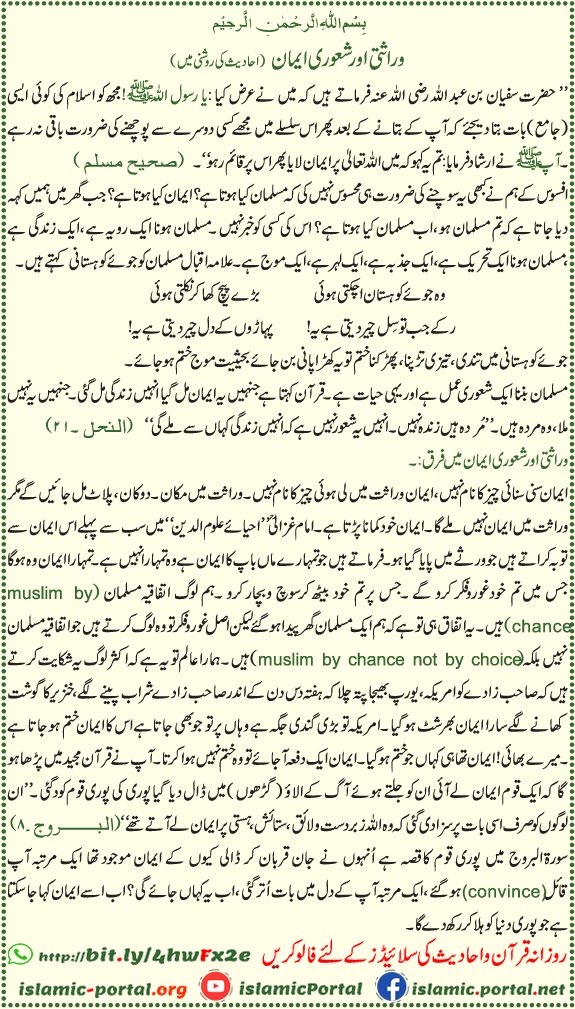
وراثتی اور شعوری ایمان (احادیث کی روشنی میں)

  • ”حضرت سفیان بن عبداللہ رضی اللہ عنہ فرماتے ہیں کہ میں نے عرض کیا : یا رسول اللہ ! مجھ کو اسلام کی کوئی ایسی (جامع) بات بتا دیجئے کہ آپ کے بتانے کے بعد پھر اس سلسلے میں مجھے کسی دوسرے سے پوچھنے کی ضرورت باقی نہ رہے“۔ آپ نے ارشاد فرمایا: تم یہ کہو کہ میں اللہ تعالیٰ پر ایمان لایا پھر اس پر قائم رہو“۔ (صحیح مسلم)

افسوس کے ہم نے کبھی یہ سوچنے کی ضرورت ہی محسوس نہیں کی کہ مسلمان کیا ہوتا ہے؟ ایمان کیا ہوتا ہے؟ جب گھر میں ہمیں کہہ دیا جاتا ہے کہ تم مسلمان ہو، اب مسلمان کیا ہوتا ہے؟ اس کی کسی کو خبر نہیں۔ مسلمان ہونا ایک رویہ ہے، ایک زندگی ہے، مسلمان ہونا ایک تحریک ہے، ایک لہر ہے، ایک موج ہے۔ علامہ اقبال مسلمان کو جوئے کوہستانی کہتے ہیں وہ جوئے کوہستاں اچکتی ہوئی ............. بڑے پیچ کھا کر نکلتی ہوئی رکے جب تو سل چیر دیتی ہے یہ! ........... پہاڑوں کے دل چیر دیتی ہے یہ!

جوئے کوہستانی میں تندی، تیزی تڑپنا، پھڑکنا ختم تو یہ کھڑا پانی بن جائے بحیثیت موج ختم ہو جائے۔ مسلمان بننا ایک شعوری عمل ہے اور یہی حیات ہے۔ قرآن کہتا ہے جنہیں یہ ایمان مل گیا انہیں زندگی مل گئی۔ جنہیں یہ نہیں ملا، وہ مردہ ہیں۔ ”مُردہ ہیں زندہ نہیں۔ انہیں یہ شعور نہیں ہے کہ انہیں زندگی کہاں سے ملے گی“ (النحل ۔ ۲۱)

وراثتی اور شعوری ایمان میں فرق :۔

ایمان سنی سنائی چیز کا نام نہیں، ایمان وراثت میں ملی ہوئی چیز کا نام نہیں۔ وراثت میں مکان ۔ دوکان، پلاٹ مل جائیں گے مگر وراثت میں ایمان نہیں ملے گا۔ ایمان خود کمانا پڑتا ہے۔ امام غزالیؒ ”احیائے علوم الدین“ میں سب سے پہلے اس ایمان سے توبہ کراتے ہیں جو ورثے میں پایا گیا ہو۔ فرماتے ہیں جو تمہارے ماں باپ کا ایمان ہے وہ تمہارا نہیں ہے۔ تمہارا ایمان وہ ہوگا جس میں تم خود غور و فکر کرو گے۔ جس پر تم خود بیٹھ کر سوچ و بچار کرو۔ ہم لوگ اتفاقیہ مسلمان (muslim by chance) ہیں۔ یہ اتفاق ہی تو ہے کہ ہم ایک مسلمان گھر پیدا ہو گئے لیکن اصل غور و فکر تو وہ لوگ کرتے ہیں جو اتفاقیہ مسلمان نہیں بلکہ (muslim by chance not by choice) ہیں۔ ہمارا عالم تو یہ ہے کہ اکثر لوگ یہ شکایت کرتے ہیں کہ صاحب زادے کو امریکہ، یورپ بھیجا پتہ چلا کہ ہفتہ دس دن کے اندر صاحب زادے شراب پینے لگے، خنزیر کا گوشت کھانے لگے سارا ایمان بھُرسٹ ہو گیا۔ امریکہ تو بڑی گندی جگہ ہے وہاں پر تو جو بھی جاتا ہے اس کا ایمان ختم ہو جاتا ہے۔ میرے بھائی! ایمان تھا ہی کہاں جو ختم ہو گیا۔ ایمان ایک دفعہ آجائے تو وہ ختم نہیں ہوا کرتا۔ آپ نے قرآن مجید میں پڑھا ہو گا کہ ایک قوم ایمان لے آئی ان کو جلتے ہوئے آگ کے الاؤ (گڑھوں) میں ڈال دیا گیا پوری کی پوری قوم کود گئی۔ ”ان لوگوں کو صرف اسی بات پر سزا دی گئی کہ وہ اللہ زبردست و لائق ستائش، ہستی پر ایمان لے آئے تھے“ (البروج ۔ ۸) سورۃ البروج میں پوری قوم کا قصہ ہے اُنہوں نے جان قربان کر ڈالی کیوں کے ایمان موجود تھا ایک مرتبہ آپ قائل (convince) ہو گئے، ایک مرتبہ آپ کے دل میں بات اُتر گئی، اب یہ کہاں جائے گی؟ اب اسے ایمان کہا جا سکتا ہے جو پوری دنیا کو ہلا کر رکھ دے گا۔

Inherited and Conscious Iman — In the Light of Hadith

It is narrated from Sufyan ibn ‘Abdullah رضي الله عنه that he said: I submitted, “O Messenger of Allah ! Tell me something comprehensive about Islam such that after you inform me of it, I will not need to ask anyone else regarding it.” He said: “Say: I believe in Allah, then remain steadfast upon it.” (Sahih Muslim)

It is regrettable that we have rarely felt the need to reflect on what it truly means to be a Muslim. What is Iman? When we are told at home that we are Muslims, no one explains what being a Muslim actually entails. Being a Muslim is an attitude, a way of life; it is a movement, a wave, a dynamic force. ‘Allama Iqbal described the Muslim as a mountain stream—swift, forceful, restless, and vibrant—flowing through many turns and paths; when it halts, it cuts through rocks, and it pierces the hearts of mountains. When the vigor, speed, and vitality of that mountain stream disappear, it becomes stagnant water and ceases to be a wave. Becoming a Muslim is a conscious process, and this itself is life. The Quran states that those who receive this Iman receive life, and those who do not are as if lifeless—“dead, not living; and they are unaware of when they will be resurrected.” (النحل ۔ ۲۱)

The Difference Between Inherited and Conscious Iman

Iman is not merely something heard from others, nor is it something inherited. One may inherit a house, a shop, or land, but Iman cannot be inherited. Iman must be earned personally. Imam al-Ghazaliؒ, in Ihya’ ‘Ulum al-Din, begins by urging repentance from an Iman that is merely inherited. He explains that the Iman of one’s parents is not one’s own; true Iman is that which a person reflects upon personally, contemplates deeply, and accepts with conscious conviction. Many of us are Muslims by circumstance—born into Muslim families—but true reflection and conscious choice belong to those who embrace Islam deliberately, not merely by chance.

It is often observed that when some people go abroad—to America or Europe—they soon begin drinking alcohol, eating pork, and abandoning religious practices. It is then said that such environments destroy Iman. In reality, if Iman had truly existed, it would not have vanished so easily. When genuine Iman enters the heart, it does not disappear. The Quran relates the account of a people who accepted faith and were thrown into blazing pits of fire; yet they remained steadfast, sacrificing their lives. “They were punished only because they believed in Allah, the Almighty, the Praiseworthy.” (البروج ۔ ۸)

Surah al-Buruj recounts the story of an entire community that gave their lives because Iman was firmly rooted within them. Once a person becomes truly convinced—once the truth settles deeply in the heart—it cannot be removed. This is the Iman that can shake the entire world.