بِسْمِ اللہِ الرَّحْمٰنِ الرَّحِیْمِ
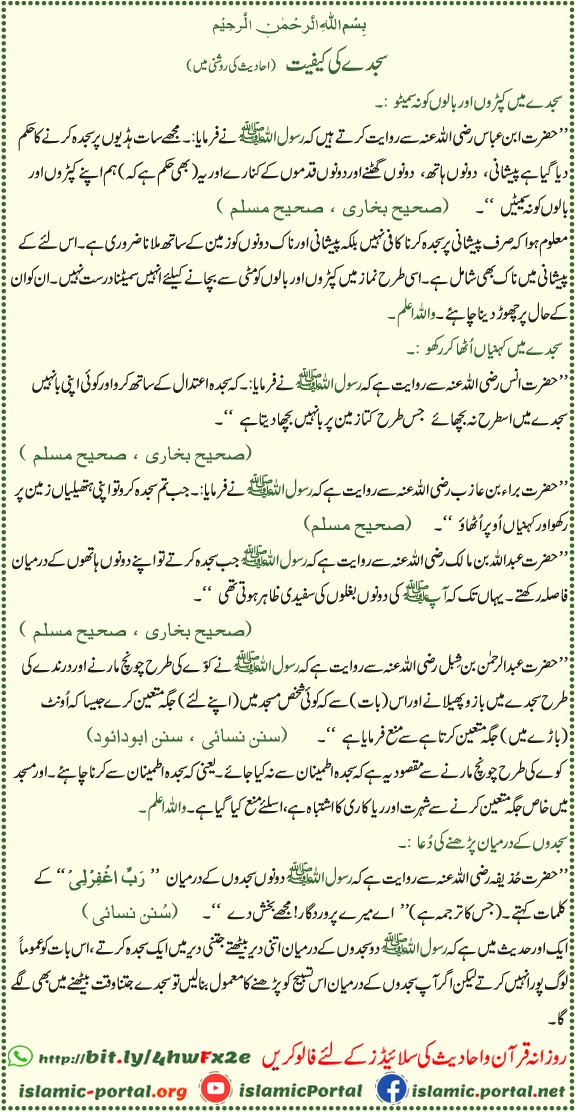
سجدے کی کیفیت (احادیث کی روشنی میں)
سجدے میں کپڑوں اور بالوں کو نہ سمیٹو:-
"حضرت ابن عباس رضی اللہ عنہ سے روایت کرتے ہیں کہ رسول اللہ ﷺ نے فرمایا: مجھے سات ہڈیوں پر سجدہ کرنے کا حکم دیا گیا ہے پیشانی، دونوں ہاتھ، دونوں گھٹنے اور دونوں قدموں کے کنارے اور یہ (بھی حکم ہے کہ) ہم اپنے کپڑوں اور بالوں کو نہ سمیٹیں۔" (صحیح بخاری، صحیح مسلم)
معلوم ہوا کہ صرف پیشانی پر سجدہ کرنا کافی نہیں بلکہ پیشانی اور ناک دونوں کو زمین کے ساتھ ملانا ضروری ہے۔ اس لئے کہ پیشانی میں ناک بھی شامل ہے۔ اسی طرح نماز میں کپڑوں اور بالوں کو مٹی سے بچانے کیلئے انہیں سمیٹنا درست نہیں۔ ان کو ان کے حال پر چھوڑ دینا چاہئے۔ واللہ اعلم۔
سجدے میں کہنیاں اٹھا کر رکھو:-
"حضرت انس رضی اللہ عنہ سے روایت ہے کہ رسول اللہ ﷺ نے فرمایا: کہ سجدہ اعتدال کے ساتھ کرو اور کوئی اپنی بانہیں سجدے میں اسطرح نہ بچھائے جس طرح کتا زمین پر بانہیں بچھادیتا ہے۔" (صحیح بخاری، صحیح مسلم)
"حضرت براء بن عازب رضی اللہ عنہ سے روایت ہے کہ رسول اللہ ﷺ نے فرمایا: جب تم سجدہ کرو تو اپنی ہتھیلیاں زمین پر رکھو اور کہنیاں اوپر اٹھاؤ"۔ (صحیح مسلم)
"حضرت عبداللہ بن مالک رضی اللہ عنہ سے روایت ہے کہ رسول اللہ ﷺ جب سجدہ کرتے تو اپنے دونوں ہاتھوں کے درمیان فاصلہ رکھتے۔ یہاں تک کہ آپ ﷺ کی دونوں بغلوں کی سفیدی ظاہر ہوتی تھی"۔ (صحیح بخاری، صحیح مسلم)
"حضرت عبدالرحمن بن شبل رضی اللہ عنہ سے روایت ہے کہ رسول اللہ ﷺ نے کوے کی طرح چونچ مارنے اور درندے کی طرح سجدے میں بازو پھیلانے اور اس (بات) سے کہ کوئی شخص مسجد میں (اپنے لئے) جگہ متعین کرے جیسا کہ اونٹ (باڑے میں) جگہ متعین کرتا ہے سے منع فرمایا ہے"۔ (سنن نسائی، سنن ابوداؤد)
کوے کی طرح چونچ مارنے سے مقصود یہ ہے کہ سجدہ اطمینان سے نہ کیا جائے۔ یعنی کہ سجدہ اطمینان سے کرنا چاہئے۔ اور مسجد میں خاص جگہ متعین کرنے سے شہرت اور ریاکاری کا اشتباہ ہے، اس لئے منع کیا گیا ہے۔ واللہ اعلم۔
سجدوں کے درمیان پڑھنے کی دُعا:-
"حضرت حذیفہ رضی اللہ عنہ سے روایت ہے کہ رسول اللہ ﷺ دونوں سجدوں کے درمیان ” رَبِّ اغْفِرْلِیْ “ کے کلمات کہتے۔ (جس کا ترجمہ ہے) ”اے میرے پروردگار! مجھے بخش دے“۔ (سُنن نسائی)
ایک اور حدیث میں ہے کہ رسول اللہ ﷺ دو سجدوں کے درمیان اتنی دیر بیٹھتے جتنی دیر میں ایک سجدہ کرتے، اس بات کو عموماً لوگ پورا نہیں کرتے لیکن اگر آپ سجدوں کے درمیان اس تسبیح کو پڑھنے کا معمول بنالیں تو سجدے جتنا وقت بیٹھنے میں بھی لگے گا
English Translation
In the Name of Allah, the Most Gracious, the Most Merciful
The Method of Sujud (In the Light of Hadith)
Do not gather clothes and hair during Sujud
Ibn ‘Abbas رضي الله عنه reported that the Messenger of Allah ﷺ said:
“I have been commanded to prostrate upon seven bones: the forehead, both hands, both knees, and the edges of both feet, and that we should not gather our clothes and hair.”
(Sahih al-Bukhari, Sahih Muslim)
From this Hadith, it is understood that prostration upon the forehead alone is not sufficient; rather, both the forehead and the nose must be placed on the ground, as the nose is included with the forehead. Likewise, it is not correct to gather one’s clothes or hair during Salah in order to protect them from dust; they should be left in their natural state. والله أعلم
Raise the elbows during Sujud
Anas رضي الله عنه reported that the Messenger of Allah ﷺ said:
“Perform Sujud with moderation, and none of you should spread his forearms on the ground like a dog.”
(Sahih al-Bukhari, Sahih Muslim)
Al-Bara’ ibn ‘Azib رضي الله عنه reported that the Messenger of Allah ﷺ said:
“When you perform Sujud, place your palms on the ground and raise your elbows.”
(Sahih Muslim)
‘Abdullah ibn Malik رضي الله عنه reported that when the Messenger of Allah ﷺ performed Sujud, he would keep space between his arms to such an extent that the whiteness of his armpits became visible.
(Sahih al-Bukhari, Sahih Muslim)
‘Abd al-Rahman ibn Shibl رضي الله عنه reported that the Messenger of Allah ﷺ forbade pecking like a crow, spreading the arms like a beast during Sujud, and reserving a fixed place in the mosque as a camel reserves its spot.
(Sunan al-Nasa’i, Sunan Abi Dawud)
“Pecking like a crow” refers to performing Sujud without calmness and composure. Therefore, Sujud should be performed with tranquillity. Reserving a fixed place in the mosque may lead to showing off or seeking recognition; hence it has been discouraged. والله أعلم
Supplication between the two prostrations
Hudhayfah رضي الله عنه reported that the Messenger of Allah ﷺ used to say between the two prostrations:
“رَبِّ اغْفِرْلِیْ”
(Meaning: “My Lord, forgive me.”)
(Sunan al-Nasa’i)
Another Hadith states that the Messenger of Allah ﷺ would sit between the two prostrations for approximately the same duration as a Sujud. This practice is often neglected; however, if one adopts the habit of reciting this supplication between the two prostrations, the sitting will naturally take a duration similar to that of a Sujud.