
خواتین کی نماز

اشاعت: 21-02-2026
شیئر کریں (صدقہ جاریہ):
Khawateen ki namaz hadith - Aurat ki ghar mein namaz aur masjid adaab ka bayan, Abu Dawood & Tirmizi

بِسْمِ اللّٰهِ الرَّحْمٰنِ الرَّحِيْمِ

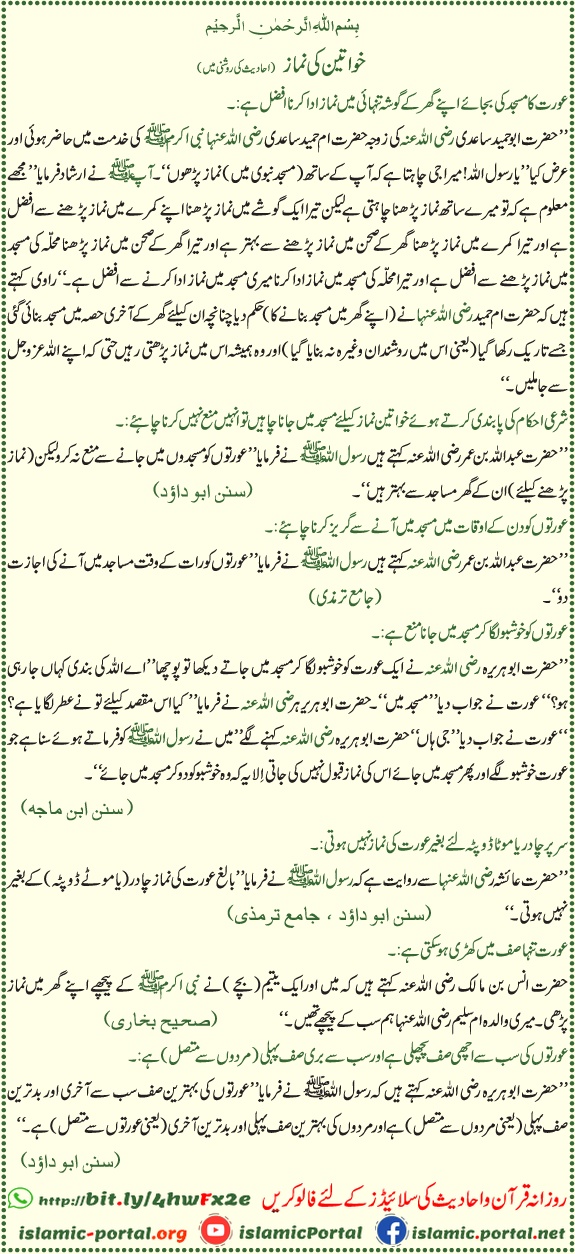
خواتین کی نماز (احادیث کی روشنی میں)

عورت کا مسجد کی بجائے اپنے گھر کے گوشہ تنہائی میں نماز ادا کرنا افضل ہے :-

  • ”حضرت ابوحمید ساعدی رضی اللہ عنہ کی زوجہ حضرت ام حمید ساعدی رضی اللہ عنہا نبی اکرم کی خدمت میں حاضر ہوئی اور عرض کیا ”یا رسول اللہ! میرا جی چاہتا ہے کہ آپ کے ساتھ (مسجد نبوی میں) نماز پڑھوں“۔ آپ نے ارشاد فرمایا ”مجھے معلوم ہے کہ تو میرے ساتھ نماز پڑھنا چاہتی ہے لیکن تیرا ایک گوشے میں نماز پڑھنا اپنے کمرے میں نماز پڑھنے سے افضل ہے اور تیرا کمرے میں نماز پڑھنا گھر کے صحن میں نماز پڑھنے سے بہتر ہے اور تیرا گھر کے صحن میں نماز پڑھنا محلہ کی مسجد میں نماز پڑھنے سے افضل ہے اور تیرا محلہ کی مسجد میں نماز ادا کرنا میری مسجد میں نماز ادا کرنے سے افضل ہے“۔ راوی کہتے ہیں کہ حضرت ام حمید رضی اللہ عنہا نے (اپنے گھر میں مسجد بنانے کا) حکم دیا چنانچہ ان کیلئے گھر کے آخری حصہ میں مسجد بنائی گئی جسے تاریک رکھا گیا (یعنی اس میں روشندان وغیرہ نہ بنایا گیا) اور وہ ہمیشہ اس میں نماز پڑھتی رہیں حتیٰ کہ اپنے اللہ عزوجل سے جاملیں“۔

شرعی احکام کی پابندی کرتے ہوئے خواتین نماز کیلئے مسجد میں جانا چاہیں تو انہیں منع نہیں کرنا چاہئے :-

  • ”حضرت عبداللہ بن عمر رضی اللہ عنہ کہتے ہیں رسول اللہ نے فرمایا ”عورتوں کو مسجدوں میں جانے سے منع نہ کرو لیکن (نماز پڑھنے کیلئے) ان کے گھر مساجد سے بہتر ہیں“۔ (سنن ابو داؤد)

عورتوں کو دن کے اوقات میں مسجد میں آنے سے گریز کرنا چاہئے :-

  • ”حضرت عبداللہ بن عمر رضی اللہ عنہ کہتے ہیں رسول اللہ نے فرمایا ”عورتوں کو رات کے وقت مساجد میں آنے کی اجازت دو“۔ (جامع ترمذی)

عورتوں کو خوشبو لگا کر مسجد میں جانا منع ہے :-

  • ”حضرت ابوہریرہ رضی اللہ عنہ نے ایک عورت کو خوشبو لگا کر مسجد میں جاتے دیکھا تو پوچھا ”اے اللہ کی بندی کہاں جارہی ہو؟“ عورت نے جواب دیا ”مسجد میں“۔ حضرت ابوہریرہ رضی اللہ عنہ نے فرمایا ”کیا اس مقصد کیلئے تو نے عطر لگایا ہے؟“ عورت نے جواب دیا ”جی ہاں“ حضرت ابوہریرہ رضی اللہ عنہ کہنے لگے ”میں نے رسول اللہ کو فرماتے ہوئے سنا ہے جو عورت خوشبو لگائے اور پھر مسجد میں جائے اس کی نماز قبول نہیں کی جاتی الا یہ کہ وہ خوشبو کو دھو کر مسجد میں جائے“۔ (سنن ابن ماجہ)

سر پر چادر یا موٹا ڈوپٹہ لئے بغیر عورت کی نماز نہیں ہوتی :-

  • ”حضرت عائشہ رضی اللہ عنہا سے روایت ہے کہ رسول اللہ نے فرمایا: ”بالغ عورت کی نماز چادر (یا موٹے ڈوپٹہ) کے بغیر نہیں ہوتی“۔ (سنن ابو داؤد ، جامع ترمذی)

عورت تنہا صف میں کھڑی ہو سکتی ہے :-

  • ”حضرت انس بن مالک رضی اللہ عنہ کہتے ہیں کہ میں اور ایک یتیم (بچے) نے نبی اکرم کے پیچھے اپنے گھر میں نماز پڑھی۔ میری والدہ ام سلیم رضی اللہ عنہا ہم سب کے پیچھے تھیں“۔ (صحیح بخاری)

عورتوں کی سب سے اچھی صف پچھلی ہے اور سب سے بری صف پہلی (مردوں سے متصل) ہے :-

  • ”حضرت ابوہریرہ رضی اللہ عنہ کہتے ہیں کہ رسول اللہ نے فرمایا ”عورتوں کی بہترین صف سب سے آخری اور بدترین صف پہلی (یعنی مردوں سے متصل) ہے اور مردوں کی بہترین صف پہلی اور بدترین آخری (یعنی عورتوں سے متصل) ہے“۔ (سنن ابو داؤد)

In the name of Allah, the Most Gracious, the Most Merciful

Women's Prayer (In the Light of Ḥadīth)

  1. It Is More Virtuous for a Woman to Perform Prayer in a Secluded Area of Her Home Rather Than in the Mosque

Ḥaḍrat Abū Ḥumayd al-Sāʿidī (may Allah be pleased with him) narrated that his wife, Ḥaḍrat Umm Ḥumayd al-Sāʿidiyyah (may Allah be pleased with her), came to the Prophet and said: “O Messenger of Allah, I desire to perform prayer with you (in al-Masjid al-Nabawī).” He said: “I know that you desire to pray with me; however, your prayer in a secluded corner is better than your prayer in your room; your prayer in your room is better than your prayer in the courtyard of your house; your prayer in the courtyard of your house is better than your prayer in the mosque of your locality; and your prayer in the mosque of your locality is better than your prayer in my mosque.” The narrator says that Ḥaḍrat Umm Ḥumayd (may Allah be pleased with her) ordered that a place of prayer be designated for her in the farthest part of her house. It was kept dark (that is, no skylight or opening was made in it), and she continued to perform her prayers there until she met her Lord, the Mighty and Majestic.

  1. Women Should Not Be Prevented from Going to the Mosque If They Observe the Prescribed Sharʿī Guidelines

Ḥaḍrat ʿAbdullāh ibn ʿUmar (may Allah be pleased with him) reported that the Messenger of Allah said: “Do not prevent women from going to the mosques, but their homes are better for them (for prayer).” (Sunan Abī Dāwūd)

  1. Women Should Avoid Coming to the Mosque During Daytime Hours

Ḥaḍrat ʿAbdullāh ibn ʿUmar (may Allah be pleased with him) reported that the Messenger of Allah said: “Permit women to come to the mosques at night.” (Jāmiʿ al-Tirmidhī)

  1. It Is Prohibited for Women to Go to the Mosque Wearing Perfume

Ḥaḍrat Abū Hurayrah (may Allah be pleased with him) saw a woman who had applied perfume and was going to the mosque. He asked: “O servant of Allah, where are you going?” She replied: “To the mosque.” He said: “Have you applied perfume for this purpose?” She replied: “Yes.” Abū Hurayrah (may Allah be pleased with him) said: “I heard the Messenger of Allah say: ‘Any woman who applies perfume and then goes to the mosque, her prayer is not accepted unless she washes off the perfume before going to the mosque.’” (Sunan Ibn Mājah)

  1. The Prayer of a Woman Is Not Valid Without Covering Her Head with a Shawl or Thick Veil

Ḥaḍrat ʿĀʾishah (may Allah be pleased with her) narrated that the Messenger of Allah said: “The prayer of a mature woman is not valid without a shawl (or thick veil).” (Sunan Abī Dāwūd, Jāmiʿ al-Tirmidhī)

  1. A Woman May Stand Alone in a Row

Ḥaḍrat Anas ibn Mālik (may Allah be pleased with him) reported: “An orphan boy and I performed prayer behind the Prophet in our house, and my mother Umm Sulaym (may Allah be pleased with her) stood behind all of us.” (Ṣaḥīḥ al-Bukhārī)

  1. The Best Row for Women Is the Last Row, and the Worst Is the First (Adjacent to Men)

Ḥaḍrat Abū Hurayrah (may Allah be pleased with him) reported that the Messenger of Allah said: “The best row for women is the last, and the worst is the first (that is, the one adjacent to the men); and the best row for men is the first, and the worst is the last (that is, the one adjacent to the women).” (Sunan Abī Dāwūd)