بِسْمِ اللّٰهِ الرَّحْمٰنِ الرَّحِيْمِ
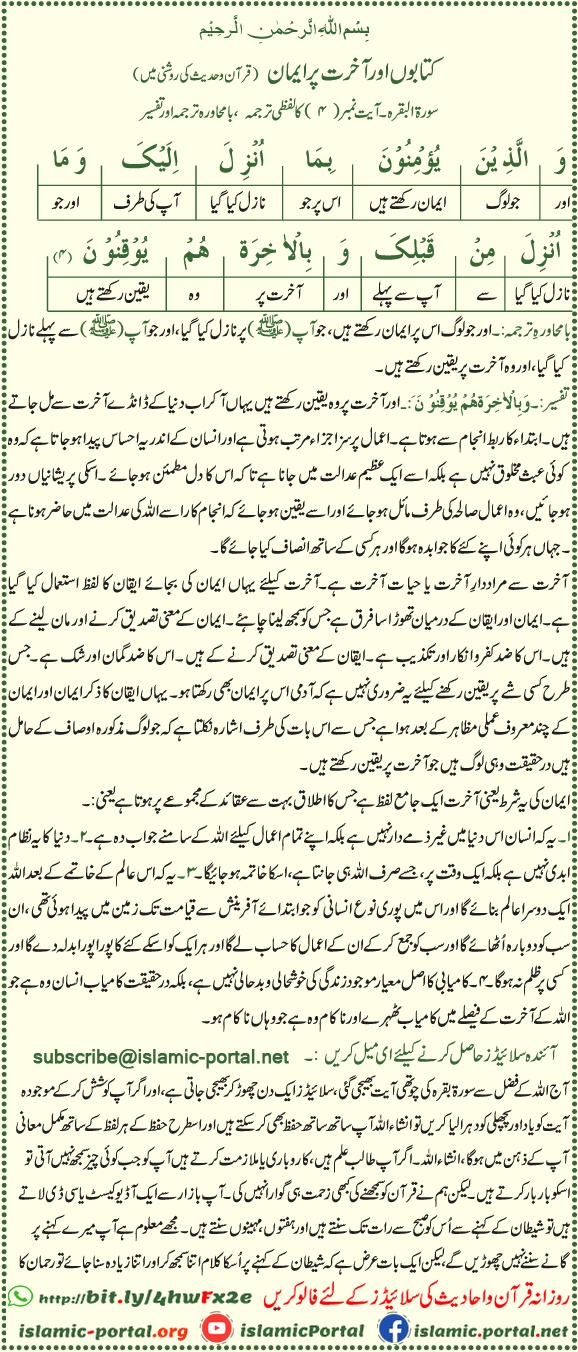
کتابوں اور آخرت پر ایمان
(قرآن وحدیث کی روشنی میں)
سورۃ البقرہ ۔ آیت نمبر (۴) کا لفظی ترجمہ ، بامحاورہ ترجمہ اور تفسیر
| وَ |
الَّذِيْنَ |
يُؤْمِنُوْنَ |
بِمَا |
اُنْزِلَ |
اِلَيْكَ |
وَمَا |
| اور |
جو لوگ |
ایمان رکھتے ہیں |
اس پر جو |
نازل کیا گیا |
آپ کی طرف |
اور جو |
| اُنْزِلَ |
مِنْ |
قَبْلِكَ |
وَ |
بِالْاٰخِرَةِ |
هُمْ |
يُوْقِنُوْنَ (۴) |
| نازل کیا گیا |
سے |
آپ سے پہلے |
اور |
آخرت پر |
وہ |
یقین رکھتے ہیں |
بامحاورہ ترجمہ :۔ اور جو لوگ اس پر ایمان رکھتے ہیں، جو آپ (ﷺ) پر نازل کیا گیا، اور جو آپ (ﷺ) سے پہلے نازل کیا گیا، اور وہ آخرت پر یقین رکھتے ہیں۔
تفسیر :۔ وَبِالْاٰخِرَةِ هُمْ يُوْقِنُوْنَ :۔
اور آخرت پر وہ یقین رکھتے ہیں یہاں آکر اب دنیا کے ڈانڈے آخرت سے مل جاتے ہیں۔ ابتداء کا ربط انجام سے ہوتا ہے۔ اعمال پر سزا و جزا مرتب ہوتی ہے اور انسان کے اندر یہ احساس پیدا ہو جاتا ہے کہ وہ کوئی عبث مخلوق نہیں ہے بلکہ اسے ایک عظیم عدالت میں جانا ہے تا کہ اس کا دل مطمئن ہو جائے۔ اسکی پریشانیاں دور ہو جائیں، وہ اعمال صالحہ کی طرف مائل ہو جائے اور اسے یقین ہو جائے کہ انجام کار اسے اللہ کی عدالت میں حاضر ہونا ہے جہاں ہر کوئی اپنے کئے کا جوابدہ ہوگا اور ہر کسی کے ساتھ انصاف کیا جائے گا۔
آخرت سے مراد دار آخرت یا حیات آخرت ہے۔ آخرت کیلئے یہاں ایمان کی بجائے ایقان کا لفظ استعمال کیا گیا ہے۔ ایمان اور ایقان کے درمیان تھوڑا سا فرق ہے جس کو سمجھ لینا چاہئے۔ ایمان کے معنی تصدیق کرنے اور مان لینے کے ہیں۔ اس کا ضد کفر و انکار اور تکذیب ہے۔ ایقان کے معنی تصدیق کرنے کے ہیں۔ اس کا ضد گمان اور شک ہے۔ جس طرح کسی شے پر یقین رکھنے کیلئے یہ ضروری نہیں ہے کہ آدمی اس پر ایمان بھی رکھتا ہو۔ یہاں ایقان کا ذکر ایمان اور ایمان کے چند معروف عملی مظاہر کے بعد ہوا ہے جس سے اس بات کی طرف اشارہ نکلتا ہے کہ جو لوگ مذکورہ اوصاف کے حامل ہیں درحقیقت وہی لوگ ہیں جو آخرت پر یقین رکھتے ہیں۔
ایمان کی یہ شرط یعنی آخرت ایک جامع لفظ ہے جس کا اطلاق بہت سے عقائد کے مجموعے پر ہوتا ہے یعنی:۔ ۱۔ یہ کہ انسان اس دنیا میں غیر ذمے دار نہیں ہے بلکہ اپنے تمام اعمال کیلئے اللہ کے سامنے جواب دہ ہے۔ ۲۔ دنیا کا یہ نظام ابدی نہیں ہے بلکہ ایک وقت پر، جسے صرف اللہ ہی جانتا ہے، اسکا خاتمہ ہو جائیگا۔ ۳۔ یہ کہ اس عالم کے خاتمے کے بعد اللہ ایک دوسرا عالم بنائے گا اور اس میں پوری نوع انسانی کو جو ابتدائے آفرینش سے قیامت تک زمین میں پیدا ہوئی تھی، ان سب کو دوبارہ اٹھائے گا اور سب کو جمع کر کے ان کے اعمال کا حساب لے گا اور ہر ایک کو اسکے کئے کا پورا پورا بدلہ دے گا اور کسی پر ظلم نہ ہوگا۔ ۴۔ کامیابی کا اصل معیار موجودہ زندگی کی خوشحالی و بدحالی نہیں ہے، بلکہ درحقیقت کامیاب انسان وہ ہے جو اللہ کے آخرت کے فیصلے میں کامیاب ٹھہرے اور ناکام وہ ہے جو وہاں ناکام ہو۔
English Translation
In the name of Allah, the Most Gracious, the Most Merciful
Books and the Hereafter
(In the Light of the Qur’an and Hadith)
Translation of Sūrah al-Baqarah (Verse 4)
Arabic:
وَالَّذِينَ يُؤْمِنُونَ بِمَا أُنزِلَ إِلَيْكَ وَمَا
أُنزِلَ مِن قَبْلِكَ وَبِالْآخِرَةِ هُمْ يُوقِنُونَ
Transliteration:
Wa alladhīna yuʾminūna bimā unzila ilayka wa mā
unzila min qablika wa bil-ākhirati hum yūqinūn
Literal Translation:
And | those who | believe | in what | was revealed | to you | and what
was revealed | before you | and | in the Hereafter | they | have certainty
Idiomatic Translation:
“And those who believe in what has been revealed to you and what was revealed before you, and they have firm certainty in the Hereafter.” (Al-Baqarah 4)
Certainty in the Hereafter
The phrase “and they have certainty in the Hereafter” connects the present life of this world with the life to come. In this way, the beginning of human life becomes linked with its final outcome.
When a person believes in the Hereafter, he becomes conscious that actions have consequences and that rewards and punishments will follow human deeds. This awareness produces a deep realization within a person that human beings are not created aimlessly. Rather, every individual will stand before a great divine court where justice will be established.
This belief brings inner peace to the heart. It removes anxiety and confusion, directs a person toward righteous actions, and instills the conviction that ultimately everyone must appear before Allah, where each individual will be held accountable for what he has done and where perfect justice will prevail.
The Meaning of the Hereafter
The term Hereafter (al-Ākhirah) refers to the life that begins after the end of this worldly existence.
In this verse, the Qur’an uses the word certainty (yaqīn) rather than simply belief. There is a subtle difference between faith (īmān) and certainty (yaqīn) that deserves attention.
Faith means acceptance and affirmation. Its opposite is disbelief and rejection. Certainty, however, refers to complete conviction without doubt. Its opposite is suspicion or uncertainty.
A person may intellectually acknowledge something, yet still retain elements of doubt. True certainty removes all hesitation and establishes firm conviction within the heart.
In this verse, the Qur’an first mentions belief and several of its practical manifestations, and then concludes with certainty in the Hereafter. This sequence indicates that those who possess the previously mentioned qualities—faith, devotion, and generosity—are the ones who truly attain firm certainty regarding the Hereafter.
The Comprehensive Meaning of Belief in the Hereafter
Belief in the Hereafter is a comprehensive concept that includes several essential beliefs.
First, it affirms that human beings are not irresponsible in this world. Every person is accountable before Allah for his actions.
Second, it acknowledges that the present system of the world is not eternal. At a time known only to Allah, this worldly order will come to an end.
Third, after the end of this world, Allah will create another realm in which all humanity—from the first human being until the Day of Resurrection—will be raised again. They will all be gathered together, their deeds will be examined, and each individual will receive full recompense for what he has done. No one will be wronged.
Fourth, true success is not determined by prosperity or hardship in this worldly life. Real success belongs to the one who succeeds in the judgment of Allah in the Hereafter, and true failure belongs to the one who fails there.