بِسْمِ اللّٰهِ الرَّحْمٰنِ الرَّحِيْمِ
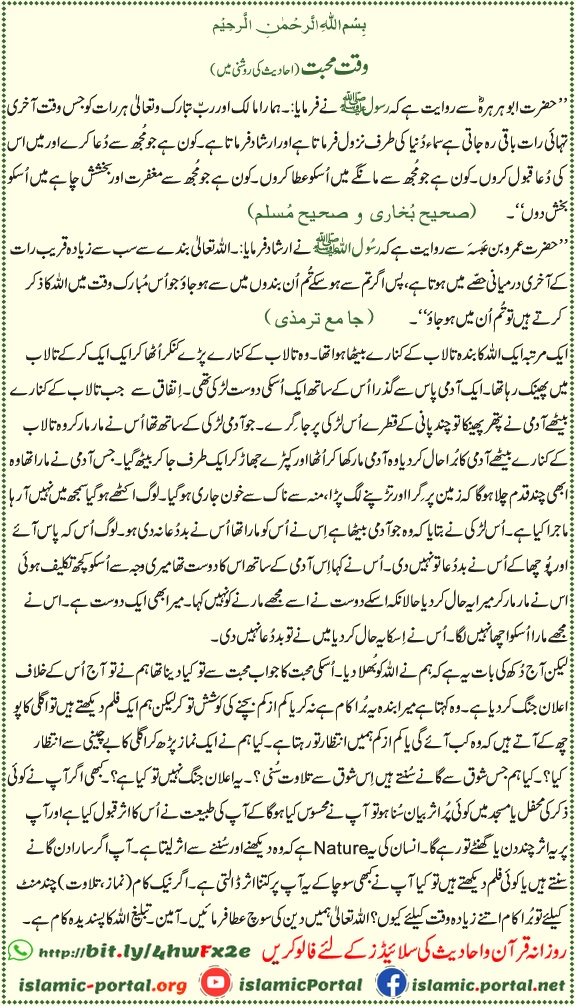
وقت محبت (احادیث کی روشنی میں)
-
”حضرت ابوہریرہ رضی اللہ عنہ سے روایت ہے کہ رسول اللہ ﷺ نے فرمایا: ہمارا مالک اور ربّ تبارک وتعالیٰ ہر رات کو جس وقت آخری تہائی رات باقی رہ جاتی ہے سماء دُنیا کی طرف نزول فرماتا ہے اور ارشاد فرماتا ہے۔ کون ہے جو مجھ سے دُعا کرے اور میں اس کی دُعا قبول کروں۔ کون ہے جو مجھ سے مانگے میں اُسکو عطا کروں۔ کون ہے جو مجھ سے مغفرت اور بخشش چاہے میں اُسکو بخش دوں“۔ (صحیح بخاری و صحیح مسلم)
-
”حضرت عمرو بن عبسہ رضی اللہ عنہ سے روایت ہے کہ رسول اللہ ﷺ نے ارشاد فرمایا:۔ اللہ تعالیٰ بندے سے سب سے زیادہ قریب رات کے آخری درمیانی حصّے میں ہوتا ہے، پس اگر تم سے ہو سکے تُم اُن بندوں میں سے ہو جاؤ جو اُس مُبارک وقت میں اللہ کا ذکر کرتے ہیں تو تُم اُن میں ہو جاؤ“۔ (جامع ترمذی)
ایک مرتبہ ایک اللہ کا بندہ تالاب کے کنارے بیٹھا ہوا تھا۔ وہ تالاب کے کنارے پڑے کنکر اُٹھا کر ایک ایک کر کے تالاب میں پھینک رہا تھا۔ ایک آدمی پاس سے گزرا اُس کے ساتھ ایک اُسکی دوست لڑکی تھی۔ اتفاق سے جب تالاب کے کنارے بیٹھے آدمی نے پتھر پھینکا تو چند پانی کے قطرے اُس لڑکی پر جا گرے۔ جو آدمی لڑکی کے ساتھ تھا اُس نے مار مار کر وہ تالاب کے کنارے بیٹھے آدمی کا بُرا حال کر دیا وہ آدمی مار کھا کر اُٹھا اور کپڑے جھاڑ کر ایک طرف جا کر بیٹھ گیا۔ جس آدمی نے مارا تھا وہ ابھی چند قدم چلا ہوگا کہ زمین پر گر اور تڑپنے لگ پڑا، منہ سے ناک سے خون جاری ہوگیا۔ لوگ اکٹھے ہوگیا سمجھ میں نہیں آرہا ماجرا کیا ہے۔ اُس لڑکی نے بتایا کہ وہ جو آدمی بیٹھا ہے اِس نے اُس کو مارا تھا اُس نے بددُعا نہ دی ہو۔ لوگ اُس کے پاس آئے اور پوچھا کے اُس نے بددُعا تو نہیں دی۔ اُس نے کہا اس آدمی کے ساتھ اس کا دوست تھا میری وجہ سے اُسکو کچھ تکلیف ہوئی اس نے مار مار کر میرا یہ حال کر دیا حالانکہ اسکے دوست نے اسے مجھے مارنے کو نہیں کہا۔ میرا بھی ایک دوست ہے۔ اس نے مجھے مارا اُسکو اچھا نہیں لگا۔ اُس نے اسکا یہ حال کر دیا میں نے تو بددُعا نہیں دی۔
لیکن آج دُکھ کی بات یہ ہے کہ ہم نے اللہ کو بھلا دیا۔ اُسکی محبت کا جواب محبت سے تو کیا دینا تھا ہم نے تو آج اُس کے خلاف اعلانِ جنگ کر دیا ہے۔ وہ کہتا ہے میرا بندہ یہ بُرا کام ہے نہ کر یا کم از کم بچنے کی کوشش تو کر لیکن ہم ایک فلم دیکھتے ہیں تو اگلی کا پوچھ کے آتے ہیں کہ وہ کب آئے گی یا کم از کم ہمیں انتظار تو رہتا ہے۔ کیا ہم نے ایک نماز پڑھ کر اگلی کا بے چینی سے انتظار کیا؟۔ کیا ہم جس شوق سے گانے سُنتے ہیں اس شوق سے تلاوت سُنی؟۔ یہ اعلانِ جنگ نہیں تو کیا ہے؟۔ کبھی اگر آپ نے کوئی ذکر کی محفل یا مسجد میں کوئی پُر اثر بیان سُنا ہو تو آپ نے محسوس کیا ہوگا کے آپ کی طبیعت نے اُس کا اثر قبول کیا ہے اور آپ پر یہ اثر چند دن یا گھنٹے تو رہے گا۔ انسان کی یہ Nature ہے کہ وہ دیکھنے اور سُننے سے اثر لیتا ہے۔ آپ اگر سارا دن گانے سنتے ہیں یا کوئی فلم دیکھتے ہیں تو کیا آپ نے کبھی سوچا کے یہ آپ پر کتنا اثر ڈالتی ہے۔ اگر نیک کام (نماز، تلاوت) چند منٹ کیلئے تو بُرا کام اتنے زیادہ وقت کیلئے کیوں؟ اللہ تعالیٰ ہمیں دین کی سمجھ عطا فرمائیں۔ آمین۔ تبلیغ اللہ کا پسندیدہ کام ہے۔
English Translation
In the name of Allah, the Most Gracious, the Most Merciful
The Time of Divine Love (In the Light of Ḥadīth)
Abū Hurayrah (may Allah be pleased with him) narrated that the Messenger of Allah ﷺ said: “Our Lord, Blessed and Exalted, descends every night to the lowest heaven when the last third of the night remains and says: ‘Who is calling upon Me so that I may answer him? Who is asking of Me so that I may grant him? Who is seeking My forgiveness so that I may forgive him?’”
(Ṣaḥīḥ al-Bukhārī, Ṣaḥīḥ Muslim)
ʿAmr ibn ʿAbasah (may Allah be pleased with him) narrated that the Messenger of Allah ﷺ said: “Allah is closest to His servant during the latter part of the night. If you are able to be among those who remember Allah at that blessed time, then be among them.”
(Jāmiʿ al-Tirmidhī)
It is narrated that once a servant of Allah was sitting by the edge of a pond, picking up small pebbles and throwing them into the water one by one. A man passed by with a woman who was his companion. By chance, when the man by the pond threw a stone, a few drops of water splashed onto the woman. The man who was with her beat him severely. The man who had been struck rose, brushed off his clothes, and sat aside. The one who had beaten him had barely taken a few steps when he suddenly fell to the ground and began to writhe in pain, with blood flowing from his mouth and nose. People gathered, unable to understand what had happened. The woman said that perhaps the man sitting there had supplicated against him. The people went to him and asked whether he had made a supplication against the man. He replied: “This man had a companion, and because of me she was inconvenienced, so he beat me severely, even though his companion had not told him to do so. I also have a Companion. He did not like that I was beaten, so He dealt with him accordingly. I did not supplicate against him.”
Yet today, it is a matter of sorrow that we have forgotten Allah. Far from responding to His love with love, we have, in effect, declared opposition to Him. He tells His servant that a certain act is wrong and that he should refrain from it, or at least strive to avoid it, yet when we watch one film, we inquire about the next and eagerly await it. But have we ever performed one prayer and then awaited the next with such eagerness? Have we listened to the recitation of the Qur’an with the same enthusiasm with which we listen to songs? If this is not a form of opposition, then what is it?
If you have ever attended a gathering of remembrance or listened to a powerful sermon in a mosque, you would have felt its effect upon your heart, though that effect may last only for a few days or hours. It is part of human nature to be influenced by what one sees and hears. If one spends the entire day listening to songs or watching films, has one ever reflected on how deeply these influence the heart? If righteous deeds such as prayer and recitation influence us even for a short time, why should harmful influences not affect us for a much longer time?
May Allah grant us understanding of the religion. Āmīn. Conveying the message of Allah is among the deeds beloved to Him.