بِسْمِ اللہِ الرَّحْمٰنِ الرَّحِیْمِ
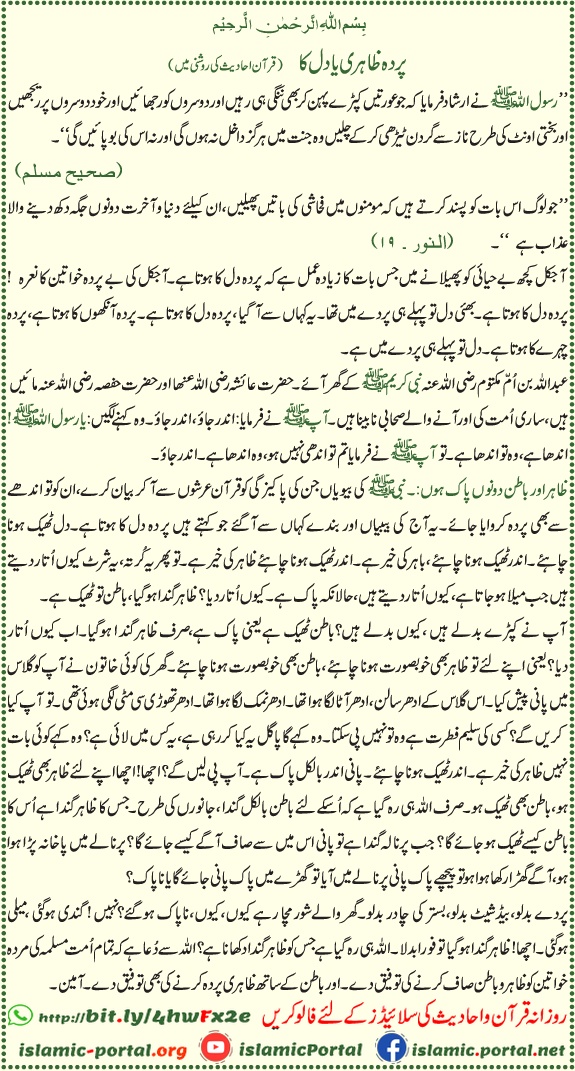
پردہ ظاہری یا دل کا (قرآن احادیث کی روشنی میں)
”رسول اللہ ﷺ نے ارشاد فرمایا کہ جو عورتیں کپڑے پہن کر بھی ننگی ہی رہیں اور دوسروں کو رجھائیں اور خود دوسروں پر ریجھیں اور بختی اونٹ کی طرح ناز سے گردن ٹیڑھی کر کے چلیں وہ جنت میں ہرگز داخل نہ ہوں گی اور نہ اس کی بو پائیں گی“۔ (صحیح مسلم)
”جو لوگ اس بات کو پسند کرتے ہیں کہ مومنوں میں فحاشی کی باتیں پھیلیں، ان کیلئے دنیا و آخرت دونوں جگہ دکھ دینے والا عذاب ہے “۔ (النور ۔ ۱۹)
آجکل کچھ بے حیائی کو پھیلانے میں جس بات کا زیادہ عمل ہے کہ پردہ دل کا ہوتا ہے۔ آجکل کی بے پردہ خواتین کا نعرہ ہے پردہ دل کا ہوتا ہے۔ بھئی دل تو پہلے ہی پردے میں تھا۔ یہ کہاں سے آگیا، پردہ دل کا ہوتا ہے۔ پردہ آنکھوں کا ہوتا ہے، پردہ چہرے کا ہوتا ہے۔ دل تو پہلے ہی پردے میں ہے۔
عبداللہ بن اُم مکتوم رضی اللہ عنہ نبی کریم ﷺ کے گھر آئے۔ حضرت عائشہ رضی اللہ عنہا اور حضرت حفصہ رضی اللہ عنہ مائیں ہیں، ساری اُمت کی اور آنے والے صحابی نابینا ہیں۔ آپ ﷺ نے فرمایا : اندر جاؤ، اندر جاؤ۔ وہ کہنے لگیں: یا رسول اللہ ﷺ ! اندھا ہے، وہ تو اندھا ہے۔ تو آپ ﷺ نے فرمایا تم تو اندھی نہیں ہو، وہ اندھا ہے۔ اندر جاؤ۔
ظاہر اور باطن دونوں پاک ہوں:۔
نبی ﷺ کی بیویاں جن کی پاکیزگی کو قرآن عرشوں سے آکر بیان کرے، ان کو تو اندھے سے بھی پردہ کروایا جائے۔ یہ آج کی بیبیاں اور بندے کہاں سے آگئے جو کہتے ہیں پردہ دل کا ہوتا ہے۔ دل ٹھیک ہونا چاہئے۔ اندر ٹھیک ہونا چاہئے، باہر کی خیر ہے۔ اندر ٹھیک ہونا چاہئے ظاہر کی خیر ہے۔ تو پھر یہ کرتہ، یہ شرٹ کیوں اُتار دیتے ہیں جب میلا ہو جاتا ہے، کیوں اُتار دیتے ہیں، حالانکہ پاک ہے۔ کیوں اُتار دیا؟ ظاہر گندا ہو گیا، باطن تو ٹھیک ہے۔ آپ نے کپڑے بدلے ہیں، کیوں بدلے ہیں؟ باطن ٹھیک ہے یعنی پاک ہے، صرف ظاہر گندا ہو گیا۔ اب کیوں اُتار دیا؟ یعنی اپنے لئے تو ظاہر بھی خوبصورت ہونا چاہئے، باطن بھی خوبصورت ہونا چاہئے۔ گھر کی کوئی خاتون نے آپ کو گلاس میں پانی پیش کیا۔ اس گلاس کے ادھر سالن، ادھر آٹا لگا ہوا تھا۔ ادھر نمک لگا ہوا تھا۔ ادھر تھوڑی سی مٹی لگی ہوئی تھی۔ تو آپ کیا کریں گے؟ کسی کی سلیم فطرت ہے وہ تو نہیں پی سکتا۔ وہ کہے گا پاگل یہ کیا کر رہی ہے، یہ کس میں لائی ہے؟ وہ کہے کوئی بات نہیں ظاہر کی خیر ہے۔ اندر ٹھیک ہونا چاہئے۔ پانی اندر بالکل پاک ہے۔ آپ پی لیں گے؟ اچھا! اچھا اپنے لئے ظاہر بھی ٹھیک ہو، باطن بھی ٹھیک ہو۔ صرف اللہ ہی رہ گیا ہے کہ اُسکے لئے باطن بالکل گندا، جانوروں کی طرح۔ جس کا ظاہر گندا ہے اُس کا باطن کیسے ٹھیک ہو جائے گا؟ جب پرنالہ گندا ہے تو پانی اس میں سے صاف آگے کیسے جائے گا؟ پرنالے میں پاخانہ پڑا ہوا ہو، آگے گھڑا رکھا ہوا ہو تو پیچھے پاک پانی پرنالے میں آیا تو گھڑے میں پاک پانی جائے گا یا ناپاک؟
پردے بدلو، بیڈ شیٹ بدلو، بستر کی چادر بدلو۔ گھر والے شور مچا رہے کیوں، کیوں، ناپاک ہو گئے؟ نہیں! گندی ہوگئی، میلی ہوگئی۔ اچھا! ظاہر گندا ہو گیا تو فورا بدلا۔ اللہ ہی رہ گیا ہے جس کو ظاہر گندا دکھانا ہے؟ اللہ سے دُعا ہے کہ تمام اُمت مسلمہ کی مرد و خواتین کو ظاہر و باطن صاف کرنے کی توفیق دے۔ اور باطن کے ساتھ ظاہری پردہ کرنے کی بھی توفیق دے۔ آمین۔
English Translation
In the name of Allah, the Most Gracious, the Most Merciful
Purdah: External or of the Heart? (In the light of Quran and Hadith)
”The Messenger of Allah ﷺ said: Women who are clothed yet appear naked, who attract others and are themselves attracted, and who walk with swaying necks like Bactrian camels, will never enter Jannah nor even perceive its fragrance.“ (Sahih Muslim)
اِنَّ الَّذِیْنَ یُحِبُّوْنَ اَنْ تَشِیْعَ الْفَاحِشَةُ فِی الَّذِیْنَ اٰمَنُوْا لَهُمْ عَذَابٌ اَلِیْمٌۙ فِی الدُّنْیَا وَ الْاٰخِرَةِؕ وَ اللّٰهُ یَعْلَمُ وَ اَنْتُمْ لَا تَعْلَمُوْنَ
Transliteration: Inna alladhīna yuḥibbūna an tashī‘a al-fāḥishatu fī alladhīna āmanū lahum ‘adhābun alīm, fid-dunyā wal-ākhirah; wallāhu ya‘lamu wa antum lā ta‘lamūn
Translation: “Indeed, those who love that immorality should spread among the believers — for them is a painful punishment in this world and the Hereafter; and Allah knows, while you do not know.” (An-Nur 19)
Nowadays, one of the most common arguments used to spread immodesty is the claim that purdah is only of the heart. It has become a slogan among unveiled women that purdah is of the heart. But the heart was already concealed. Where did this notion come from that purdah is only of the heart? Purdah is of the eyes; purdah is of the face. The heart is already veiled within.
‘Abdullah ibn Umm Maktum رضي الله عنه once came to the house of the Prophet ﷺ. ‘A’ishah رضي الله عنها and Hafsah رضي الله عنها — the Mothers of the Believers — were present, and the Companion who had arrived was blind. The Prophet ﷺ said: Go inside, go inside. They said: O Messenger of Allah ﷺ! He is blind. He ﷺ replied: You are not blind — he is blind. Go inside.
Purity of Both the Outer and the Inner
The wives of the Prophet ﷺ — whose purity was affirmed by the Quran from above the heavens — were instructed to observe purdah even from a blind man. Then who are the people today who say that purdah is only of the heart? They say: the heart should be pure; the outward does not matter.
If that were true, then why do you remove a shirt when it becomes dirty? Why change it, when inwardly you are clean? Why change clothes if only the outward is soiled while the inner self remains pure? This shows that for oneself, both outward and inward cleanliness are considered important.
If someone brings you a glass of water that is smeared on the outside with food, flour, salt, or dirt — would a person of sound nature drink it? He would refuse and say: What is this? Why was it brought in such a state? If told: the inside is clean, only the outside is dirty — would you drink it?
For yourself, you want both the outward and inward to be clean and beautiful. Yet only in relation to Allah do people accept outward impurity, claiming inward purity alone is sufficient. But how can the inward be pure when the outward is corrupt? If the channel is filthy, how can the water flowing through it remain pure?
When bed sheets, covers, or garments become dirty, they are immediately replaced — not because they are impure in a legal sense, but because they appear dirty. If outward impurity is unacceptable in daily life, how can it be acceptable before Allah?
We pray that Allah grants all Muslim men and women the ability to purify both their outward and inward selves, and to observe both the inner modesty and the external purdah. Ameen.