بِسْمِ اللَّهِ الرَّحْمَنِ الرَّحِيمِ
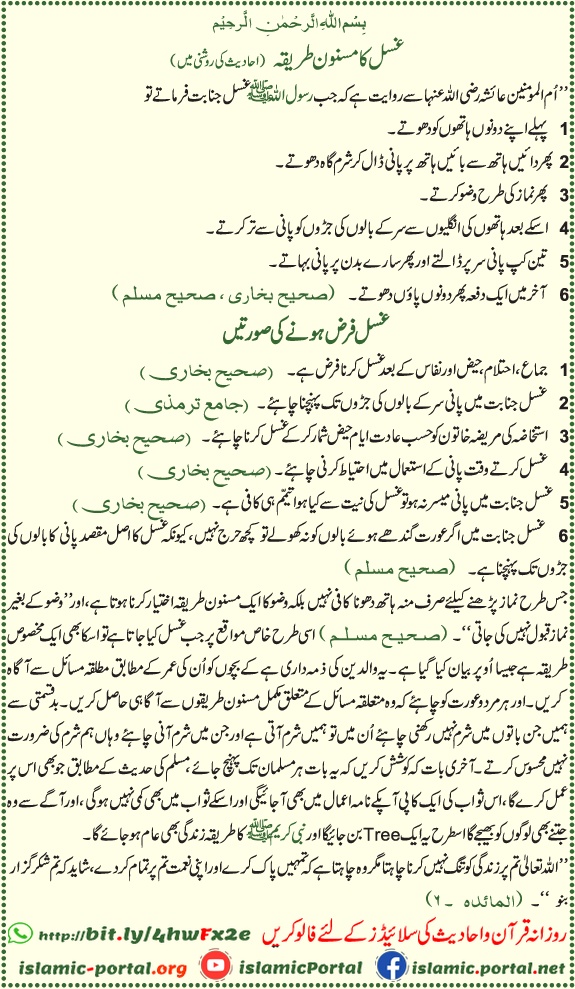
غسل کا مسنون طریقہ (احادیث کی روشنی میں)
” اُم المومنین عائشہ رضی اللہ عنہا سے روایت ہے کہ جب رسول اللہ ﷺ غسل جنابت فرماتے تو
1: پہلے اپنے دونوں ہاتھوں کو دھوتے۔
2: پھر دائیں ہاتھ سے بائیں ہاتھ پر پانی ڈال کر شرم گاہ دھوتے۔
3: پھر نماز کی طرح وضو کرتے۔
4: اسکے بعد ہاتھوں کی انگلیوں سے سر کے بالوں کی جڑوں کو پانی سے تر کرتے۔
5: تین کپ پانی سر پر ڈالتے اور پھر سارے بدن پر پانی بہاتے۔
6: آخر میں ایک دفعہ پھر دونوں پاؤں دھوتے۔ (صحیح بخاری ، صحیح مسلم) “
غسل فرض ہونے کی صورتیں
1: جماع، احتلام، حیض اور نفاس کے بعد غسل کرنا فرض ہے۔ (صحیح بخاری)
2: غسل جنابت میں پانی سر کے بالوں کی جڑوں تک پہنچنا چاہئے۔ (جامع ترمذی)
3: استحاضہ کی مریضہ خاتون کو حسب عادت ایام حیض شمار کر کے غسل کرنا چاہئے۔ (صحیح بخاری)
4: غسل کرتے وقت پانی کے استعمال میں احتیاط کرنی چاہئے۔ (صحیح بخاری)
5: غسل جنابت میں پانی میسر نہ ہو تو غسل کی نیت سے کیا ہوا تیمم ہی کافی ہے۔ (صحیح بخاری)
6: غسل جنابت میں اگر عورت گندھے ہوئے بالوں کو نہ کھولے تو کچھ حرج نہیں، کیونکہ غسل کا اصل مقصد پانی کا بالوں کی جڑوں تک پہنچنا ہے۔ (صحیح مسلم)
جس طرح نماز پڑھنے کیلئے صرف منہ ہاتھ دھونا کافی نہیں بلکہ وضو کا ایک مسنون طریقہ اختیار کرنا ہوتا ہے، اور ”وضو کے بغیر نماز قبول نہیں کی جاتی“۔ (صحیح مسلم) اسی طرح خاص مواقع پر جب غسل کیا جاتا ہے تو اسکا بھی ایک مخصوص طریقہ ہے جیسا اوپر بیان کیا گیا ہے۔ یہ والدین کی ذمہ داری ہے کہ بچوں کو اُن کی عمر کے مطابق مطلقہ مسائل سے آگاہ کریں۔ اور ہر مرد و عورت کو چاہئے کہ وہ متعلقہ مسائل کے متعلق مکمل مسنون طریقوں سے آگاہی حاصل کریں۔ بدقسمتی سے ہمیں جن باتوں میں شرم نہیں رکھنی چاہئے اُن میں تو ہمیں شرم آتی ہے اور جن میں شرم آنی چاہئے وہاں ہم شرم کی ضرورت نہیں محسوس کرتے۔ آخری بات کہ کوشش کریں کہ یہ بات ہر مسلمان تک پہنچ جائے، مسلم کی حدیث کے مطابق جو بھی اس پر عمل کرے گا، اس ثواب کی ایک کاپی آپکے نامہ اعمال میں بھی آجائیگی اور اسکے ثواب میں بھی کمی نہیں ہوگی، اور آگے سے وہ جتنے بھی لوگوں کو بھیجے گا اسطرح یہ ایک Tree بن جائیگا اور نبی کریم ﷺ کا طریقہ زندگی بھی عام ہو جائے گا۔
”اللہ تعالیٰ تم پر زندگی کو تنگ نہیں کرنا چاہتا مگر وہ چاہتا ہے کہ تمہیں پاک کرے اور اپنی نعمت تم پر تمام کر دے، شاید کہ تم شکر گزار بنو“۔ (المآئدہ ۔ ۶)
English Translation
بِسْمِ اللَّهِ الرَّحْمَنِ الرَّحِيمِ
The Sunnah Method of Ghusl — In the Light of Hadith
“Umm al-Mu’minin ‘A’ishah رضي الله عنها narrates that when the Messenger of Allah ﷺ performed ghusl of janabah, he would:
-
First wash both hands.
-
Then pour water with the right hand over the left and wash the private parts.
-
Then perform wudu as for Salah.
-
After that, wet the roots of the hair with his fingers.
-
Pour three handfuls of water over the head and then let water flow over the entire body.
-
Finally, wash both feet once again.” (Sahih Bukhari, Sahih Muslim)
Situations in Which Ghusl Becomes Obligatory
-
Ghusl is obligatory after intercourse, nocturnal emission (ihtilam), menstruation (hayd), and postnatal bleeding (nifas). (Sahih Bukhari)
-
During ghusl of janabah, water must reach the roots of the hair. (Jami‘ Tirmizi)
-
A woman suffering from istihadah should count her habitual menstrual days and perform ghusl accordingly. (Sahih Bukhari)
-
One should be cautious and moderate in the use of water while performing ghusl. (Sahih Bukhari)
-
If water is not available for ghusl of janabah, tayammum performed with the intention of ghusl is sufficient. (Sahih Bukhari)
-
If a woman does not untie her braided hair during ghusl, there is no harm, as the primary purpose is that water reaches the roots of the hair. (Sahih Muslim)
Just as merely washing the face and hands is not sufficient for Salah—rather a prescribed Sunnah method of wudu must be followed, and “Salah is not accepted without wudu” (Sahih Muslim)—similarly, when ghusl becomes necessary on specific occasions, it also has a defined method as described above.
It is the responsibility of parents to teach children these matters according to their age. Likewise, every man and woman should learn the relevant rulings and Sunnah methods properly. Unfortunately, we often feel shy regarding matters in which there should be no hesitation, and where modesty is required, we fail to observe it.
Lastly, try to convey this knowledge to every Muslim. According to a hadith in Sahih Muslim, whoever acts upon a good teaching, its reward is also recorded for the one who conveyed it—without any reduction in the reward of the one who practices it. As this knowledge spreads further from person to person, it forms a growing chain, and the blessed way of life of the Noble Prophet ﷺ becomes widely revived.
Quranic Guidance
اللَّهُ يُرِيدُ لِيُبَيِّنَ لَكُمْ وَلِيَهْدِيَكُمْ سُنَنَ الَّذِينَ مِن قَبْلِكُمْ وَيَتُوبَ عَلَيْكُمْ ۗ وَاللَّهُ عَلِيمٌ حَكِيمٌ
“But Allah intends to purify you and complete His favor upon you that you may be grateful.”
(Surah Al-Ma’idah: 6 — Sahih International)