بِسْمِ اللّٰهِ الرَّحْمٰنِ الرَّحِيْمِ
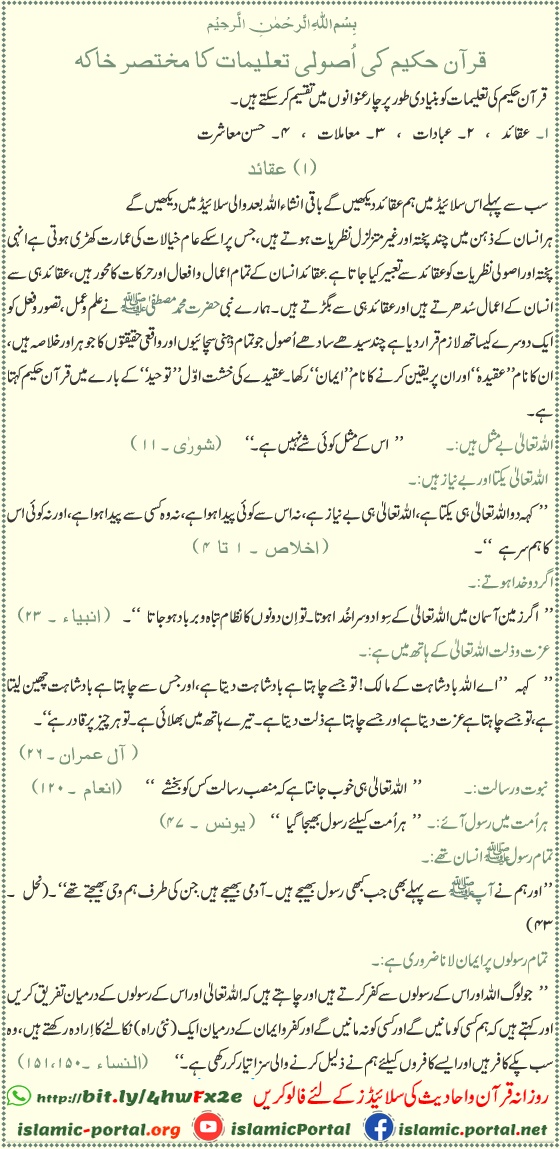
قرآن حکیم کی اُصولی تعلیمات کا مختصر خاکہ
قرآن حکیم کی تعلیمات کو بنیادی طور پر چار عنوانوں میں تقسیم کر سکتے ہیں۔ ۱۔ عقائد ، ۲۔ عبادات ، ۳۔ معاملات ، ۴۔ حسن معاشرت
(۱) عقائد
سب سے پہلے اس سلائیڈ میں ہم عقائد دیکھیں گے باقی انشاء اللہ بعد والی سلائیڈ میں دیکھیں گے
ہر انسان کے ذہن میں چند پختہ اور غیر متزلزل نظریات ہوتے ہیں، جس پر اسکے عام خیالات کی عمارت کھڑی ہوتی ہے انہی پختہ اور اصولی نظریات کو عقائد سے تعبیر کیا جاتا ہے۔ عقائد انسان کے تمام اعمال وافعال اور حرکات کا محور ہیں، عقائد ہی سے انسان کے اعمال سدھرتے ہیں اور عقائد ہی سے بگڑتے ہیں۔ ہمارے نبی حضرت محمد مصطفیٰ ﷺ نے علم وعمل ، تصور وفعل کو ایک دوسرے کیساتھ لازم قرار دیا ہے چند سیدھے سادھے اُصول جو تمام ذہنی سچائیوں اور واقعی حقیقتوں کا جوہر اور خلاصہ ہیں، ان کا نام ”عقیدہ“ اور ان پر یقین کرنے کا نام ”ایمان“ رکھا۔ عقیدے کی خشتِ اوّل ”توحید“ کے بارے میں قرآن حکیم کہتا ہے:
اللہ تعالیٰ بے مثل ہیں :۔
” اس کے مثل کوئی شے نہیں ہے ۔“ (شوریٰ ۔ ۱۱)
اللہ تعالیٰ یکتا اور بے نیاز ہیں :۔
”کہہ دو اللہ تعالیٰ ہی یکتا ہے، اللہ تعالیٰ ہی بے نیاز ہے، نہ اس سے کوئی پیدا ہوا ہے، نہ وہ کسی سے پیدا ہوا ہے، اور نہ کوئی اس کا ہمسر ہے “۔ (اخلاص ۔ ۱ تا ۴)
اگر دو خدا ہوتے :۔
”اگر زمین و آسمان میں اللہ تعالیٰ کے سوا دوسرا خدا ہوتا۔ تو ان دونوں کا نظام تباہ وبرباد ہو جاتا “۔ (انبیاء ۔ ۲۲)
عزت وذلت اللہ تعالیٰ کے ہاتھ میں ہے :۔
”کہہ ” اے اللہ بادشاہت کے مالک! تو جسے چاہتا ہے بادشاہت دیتا ہے، اور جس سے چاہتا ہے بادشاہت چھین لیتا ہے، تو جسے چاہتا ہے عزت دیتا ہے اور جسے چاہتا ہے ذلت دیتا ہے۔ تیرے ہاتھ میں بھلائی ہے۔ تو ہر چیز پر قادر ہے“۔ (آل عمران ۔ ۲۶)
نبوت ورسالت :۔
”اللہ تعالیٰ ہی خوب جانتا ہے کہ منصب رسالت کس کو بخشے “ (انعام ۔ ۱۲۴)
ہر اُمّت میں رسول آئے :۔
” ہر اُمّت کیلئے رسول بھیجا گیا “ (یونس ۔ ۴۷)
تمام رسول ﷺ انسان تھے :۔
”اور ہم نے آپ ﷺ سے پہلے بھی جب کبھی رسول بھیجے ہیں۔ آدمی بھیجے ہیں جن کی طرف ہم وحی بھیجتے تھے“۔ (نحل ۔ ۴۳)
تمام رسولوں پر ایمان لانا ضروری ہے :۔
”جو لوگ اللہ اور اس کے رسولوں سے کفر کرتے ہیں اور چاہتے ہیں کہ اللہ تعالیٰ اور اس کے رسولوں کے درمیان تفریق کریں اور کہتے ہیں کہ ہم کسی کو مانیں گے اور کسی کو نہ مانیں گے اور کفر و ایمان کے درمیان ایک (نئی راہ) نکالنے کا ارادہ رکھتے ہیں، وہ سب پکے کافر ہیں اور ایسے کافروں کیلئے ہم نے ذلیل کرنے والی سزا تیار کر رکھی ہے“۔ (النساء ۔ ۱۵۰ ، ۱۵۱)
English Translation
In the name of Allah, the Most Gracious, the Most Merciful
Principles of the Teachings of the Holy Qur’an — A Brief Outline
-
The Fundamental Categories of Qur’anic Teachings
The teachings of the Holy Qur’an can fundamentally be divided into four categories:
-
Beliefs (ʿAqāʾid)
-
Acts of Worship (ʿIbādāt)
-
Social and Financial Dealings (Muʿāmalāt)
-
Good Social Conduct (Ḥusn al-Muʿāsharah)
In this slide, we will first examine beliefs, while the remaining topics will be discussed in the subsequent slide, God willing.
Every human being holds certain firm and unshakable convictions in the mind upon which the structure of his general thoughts is built. These firm and foundational convictions are referred to as beliefs (ʿaqāʾid).
Beliefs form the central axis of all human actions and conduct. Through correct beliefs a person’s actions are rectified, and through corrupted beliefs they become distorted.
Our Prophet, Muḥammad Muṣṭafā ﷺ, declared knowledge and action, as well as thought and practice, to be inseparable from one another. A few simple and straightforward principles that represent the essence and summary of all intellectual truths and real realities are called “belief (ʿaqīdah)”, and affirming them with conviction is called “faith (īmān).”
The first foundation stone of belief is tawḥīd (the Oneness of Allah). Concerning this, the Holy Qur’an states:
-
Allah Is Incomparable
Arabic:
لَيْسَ كَمِثْلِهِ شَيْءٌ
Transliteration:
Laysa ka-mithlihi shayʾ
Translation:
"There is nothing like unto Him." (Al-Shūrā 11)
-
Allah Is One and Self-Sufficient
Arabic:
قُلْ هُوَ اللَّهُ أَحَدٌ
اللَّهُ الصَّمَدُ
لَمْ يَلِدْ وَلَمْ يُولَدْ
وَلَمْ يَكُن لَّهُ كُفُوًا أَحَدٌ
Transliteration:
Qul huwa Allāhu aḥad
Allāhu al-ṣamad
Lam yalid wa-lam yūlad
Wa-lam yakun lahu kufuwan aḥad
Translation:
"Say: He is Allah, the One.
Allah, the Self-Sufficient.
He neither begets nor is born,
and there is none comparable to Him." (Al-Ikhlāṣ 1–4)
-
If There Were Two Gods
Arabic:
لَوْ كَانَ فِيهِمَا آلِهَةٌ إِلَّا اللَّهُ لَفَسَدَتَا
Transliteration:
Law kāna fīhimā ālihatun illā Allāhu la-fasadatā
Translation:
"If there had been within them gods besides Allah, they both would have been ruined." (Al-Anbiyāʾ 22)
-
Honor and Humiliation Are in Allah’s Hand
Arabic:
قُلِ اللَّهُمَّ مَالِكَ الْمُلْكِ تُؤْتِي الْمُلْكَ مَن تَشَاءُ وَتَنزِعُ الْمُلْكَ مِمَّن تَشَاءُ وَتُعِزُّ مَن تَشَاءُ وَتُذِلُّ مَن تَشَاءُ ۖ بِيَدِكَ الْخَيْرُ ۖ إِنَّكَ عَلَىٰ كُلِّ شَيْءٍ قَدِيرٌ
Transliteration:
Quli Allāhumma mālika al-mulki tuʾtī al-mulka man tashāʾ wa-tanziʿu al-mulka mimman tashāʾ wa-tuʿizzu man tashāʾ wa-tudhillu man tashāʾ, bi-yadika al-khayr, innaka ʿalā kulli shayʾin qadīr
Translation:
"Say: O Allah, Owner of Sovereignty! You give sovereignty to whom You will and take sovereignty away from whom You will; You honor whom You will and You humble whom You will. In Your hand is all good. Indeed, You have power over all things." (Āl ʿImrān 26)
-
Prophethood and Messengership
Arabic:
اللَّهُ أَعْلَمُ حَيْثُ يَجْعَلُ رِسَالَتَهُ
Transliteration:
Allāhu aʿlamu ḥaythu yajʿalu risālah
Translation:
"Allah knows best where He places His message." (Al-Anʿām 124)
-
A Messenger Was Sent to Every Nation
Arabic:
وَلِكُلِّ أُمَّةٍ رَّسُولٌ
Transliteration:
Wa-li-kulli ummatin rasūl
Translation:
"And for every nation there is a messenger." (Yūnus 47)
-
All Messengers Were Human Beings
Arabic:
وَمَا أَرْسَلْنَا مِن قَبْلِكَ إِلَّا رِجَالًا نُّوحِي إِلَيْهِمْ
Transliteration:
Wa-mā arsalnā min qablika illā rijālan nūḥī ilayhim
Translation:
"And We did not send before you except men to whom We revealed." (Al-Naḥl 43)
-
Belief in All Messengers Is Obligatory
Arabic:
إِنَّ الَّذِينَ يَكْفُرُونَ بِاللَّهِ وَرُسُلِهِ وَيُرِيدُونَ أَن يُفَرِّقُوا بَيْنَ اللَّهِ وَرُسُلِهِ وَيَقُولُونَ نُؤْمِنُ بِبَعْضٍ وَنَكْفُرُ بِبَعْضٍ وَيُرِيدُونَ أَن يَتَّخِذُوا بَيْنَ ذَٰلِكَ سَبِيلًا
أُولَٰئِكَ هُمُ الْكَافِرُونَ حَقًّا ۚ وَأَعْتَدْنَا لِلْكَافِرِينَ عَذَابًا مُّهِينًا
Transliteration:
Inna alladhīna yakfurūna bi-Allāhi wa-rusulih wa-yurīdūna an yufarriqū bayna Allāhi wa-rusulih wa-yaqūlūna nuʾminu bi-baʿḍin wa-nakfuru bi-baʿḍin wa-yurīdūna an yattakhidhū bayna dhālika sabīlā
Ulāʾika humu al-kāfirūna ḥaqqā, wa-aʿtadnā li-al-kāfirīna ʿadhāban muhīnā
Translation:
"Indeed, those who disbelieve in Allah and His messengers and seek to make a distinction between Allah and His messengers, saying, 'We believe in some and disbelieve in others,' and wish to adopt a path in between — those are truly the disbelievers. And We have prepared for the disbelievers a humiliating punishment." (Al-Nisāʾ 150–151)